White Perch Index of Abundance

$_EscapeTool.xml($img_display)
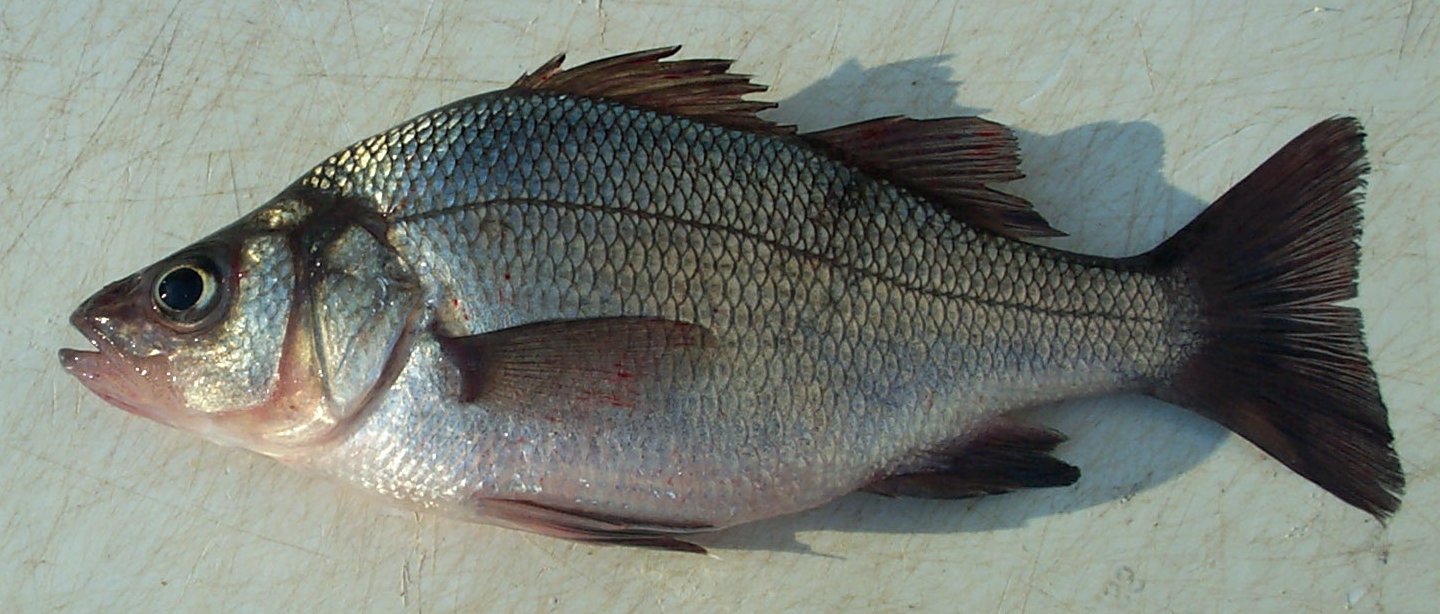
Adult White Perch White Perch are abundant year-round in Chesapeake Bay and found in all its tributaries. They are an important species recreationally and commercially, and can grow up to 48 centimeters (1.6 feet) in length.
$_EscapeTool.xml($img_display)
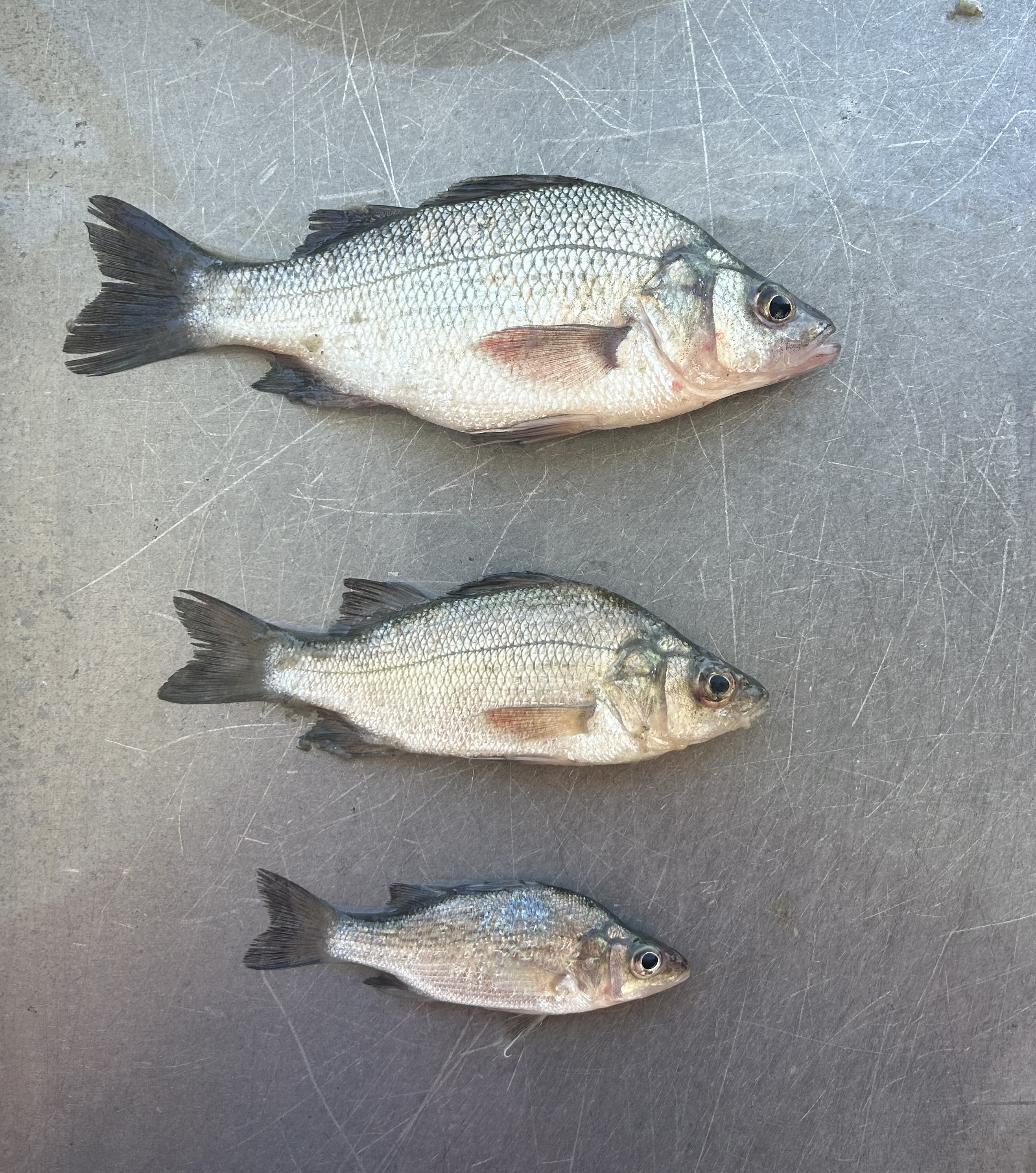
White Perch Sizes White perch are a semi-anadromous species, meaning they travel to fresh and low-salinity waters to spawn. This migration typically occurs from April through June.
stpwp
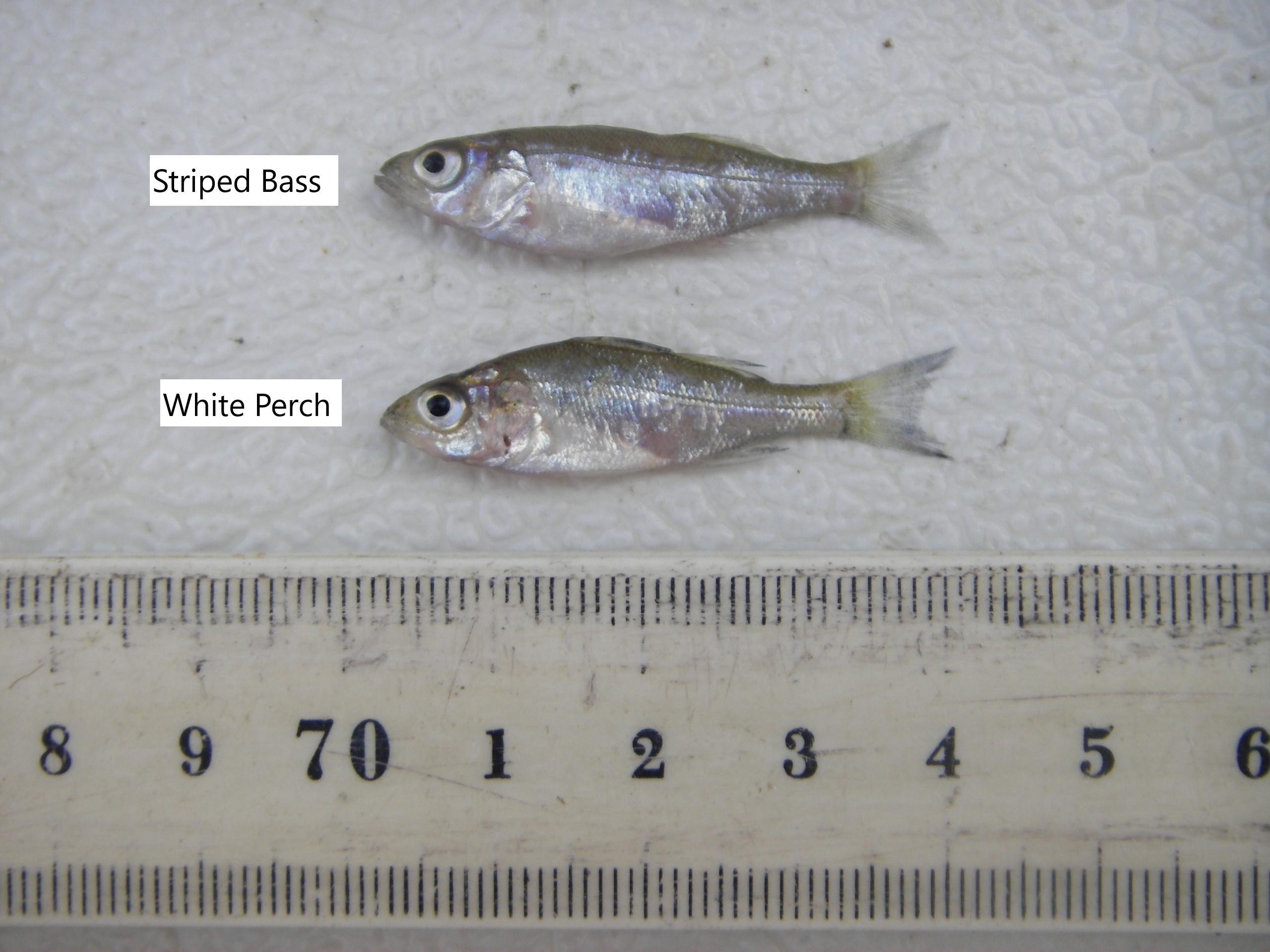
White Perch vs Striped Bass Juvenile Striped Bass (top) and White Perch (bottom), which are both part of the temperate bass family known as Moronidae, often exhibit a striking similarity in their appearance. These two juvenile species are commonly found coexisting in similar habitats.
stpwp
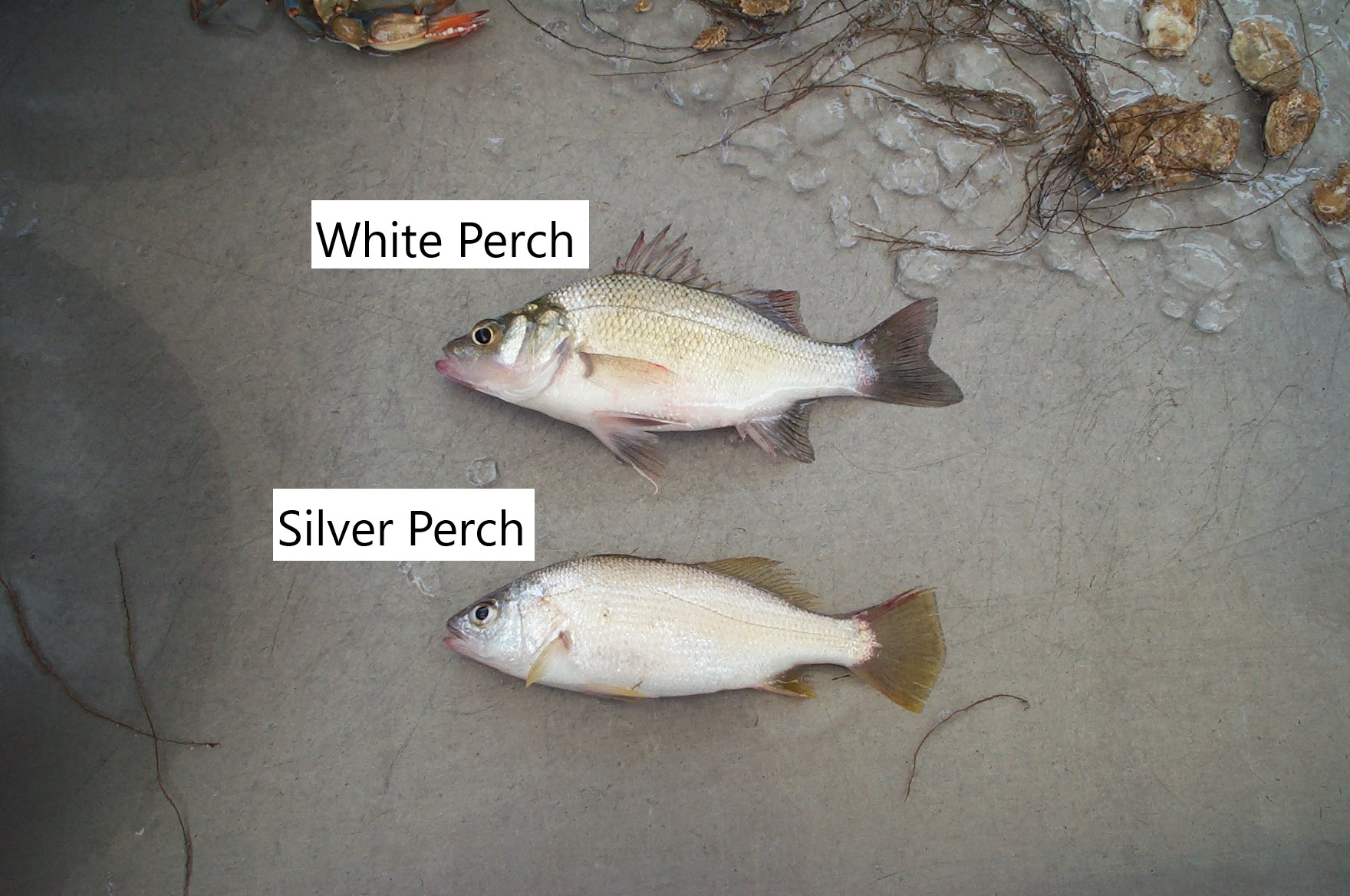
White Perch vs Silver Perch While White Perch (top) and Silver Perch may be similar in name, they are actually from distinct families. White Perch belong to the Moronidae family (temperate basses) while Silver Perch belong to the Sciaenidae family (drums).
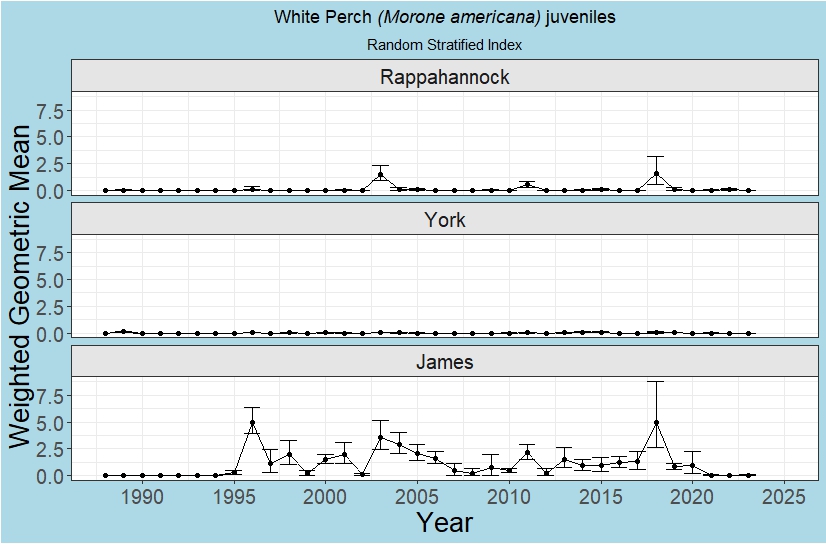
White Perch young-of-year index of abundance figure. Each graph shows White Perch young-of-year indices of abundance for the Rappahannock River (top), York River (middle), and James River (bottom) from 1988 to 2023,

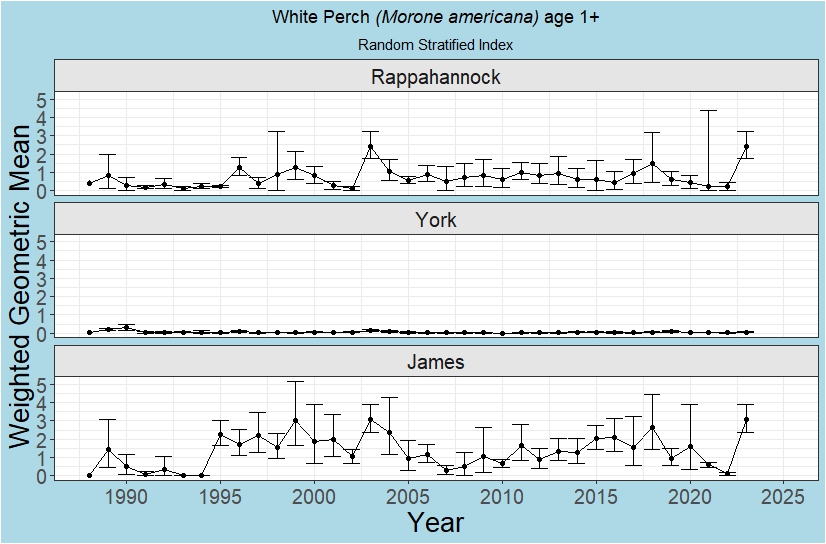
White Perch age 1+ index of abundance figure. Each graph shows White Perch age 1+ indices of abundance for the Rappahannock River (top), York River (middle), and James River (bottom) from 1988 to 2023.

About the data

This species first recruits to the survey gear in May. Because White Perch are restricted in their distribution, an index of abundance is calculated for each river. Only stations in the upper portions of the rivers are used to calculate the indices. In 2018, the recruitment window for young-of-year White Perch was changed from December to February to August to October. Similarly, the recruitment window for age 1+ White Perch was changed from November to February to August to October. All annual indices for White Perch were recalculated to reflect the new recruitment period.

The young-of-year cutoff values are as follows (index months are listed in bold):

  • August: 0-80 mm.
  • September: 0-85 mm.
  • October: 0-85 mm.
  • November: 0-130 mm.
  • December: 0-165 mm.
  • January: 0-165 mm.
  • February: 0-165 mm.
  • March: 0-165 mm.
  • April: 0-95 mm.
  • May: 0-35 mm.
  • June: 0-65 mm.
  • July: 0-73 mm.

Data collected after the transition to a new vessel and net in June 2015 have been adjusted by a species-specific calibration factor.

White Perch Excel file (Microsoft Excel download)