

Atlantic Croaker Index of Abundance
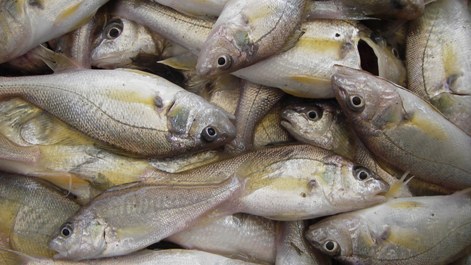
Pile of Atlantic Croaker
Atlantic Croaker can grow to 50 centimeters (20 inches) and are found throughout the western Atlantic, from Massachusetts to Florida, as well as the Gulf of Mexico.
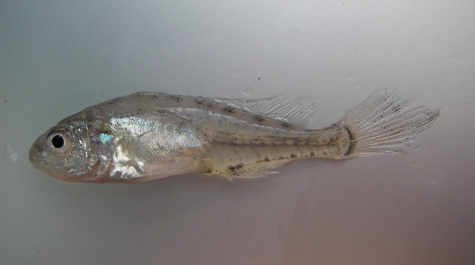
Larval Atlantic Croaker
Laval Atlantic Croaker begin to enter Chesapeake Bay in August and typically recruit to the survey gear in September.
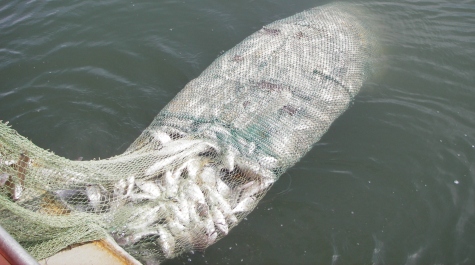
Full Net of Atlantic Croaker
The cod end of the net in this photo is full of Atlantic Croaker from the lower James River. This tow contained about 500 individuals, far below the record of over 14,000 individuals caught in one tow in February 2004.
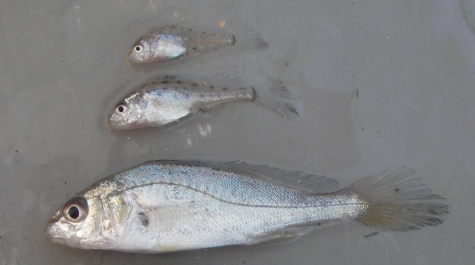
Three Atlantic Croaker Sizes Caught in One Net
All life stages of Atlantic Croaker are caught by the survey gear. In the tow haul pictured, scientists measured fish ranging from 18 millimeters to 218 millimeters (0.75-8.5 inches).
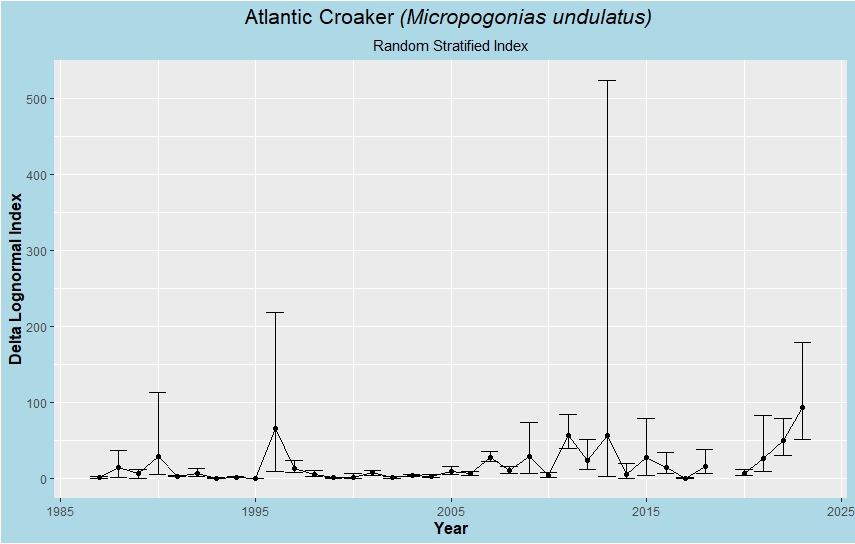
 About the data
This species first recruits to the survey gear in September. All bay and river stations are used to calculate the index of abundance.
The young-of-year cutoff values are as follows (index months are listed in bold):
- September: 0-50 mm.
- October: 0-80 mm.
- November: 0-100 mm.
- December: 0-100 mm.
- January: 0-100 mm.
- February: 0-100 mm.
- March: 0-100 mm.
- April: 0-110 mm.
- May: 0-135 mm.
- June: 0-160 mm.
- July: 0-180 mm.
- August: 0-220 mm.
Data collected after the transition to a new vessel and net in June 2015 have been adjusted by a species-specific calibration factor.
Atlantic Croaker Excel file (Microsoft Excel download)
For more information on how this species is managed please visit the ASMFC website.