Meet the sharks of Virginia: Surveying the apex predators of the sea
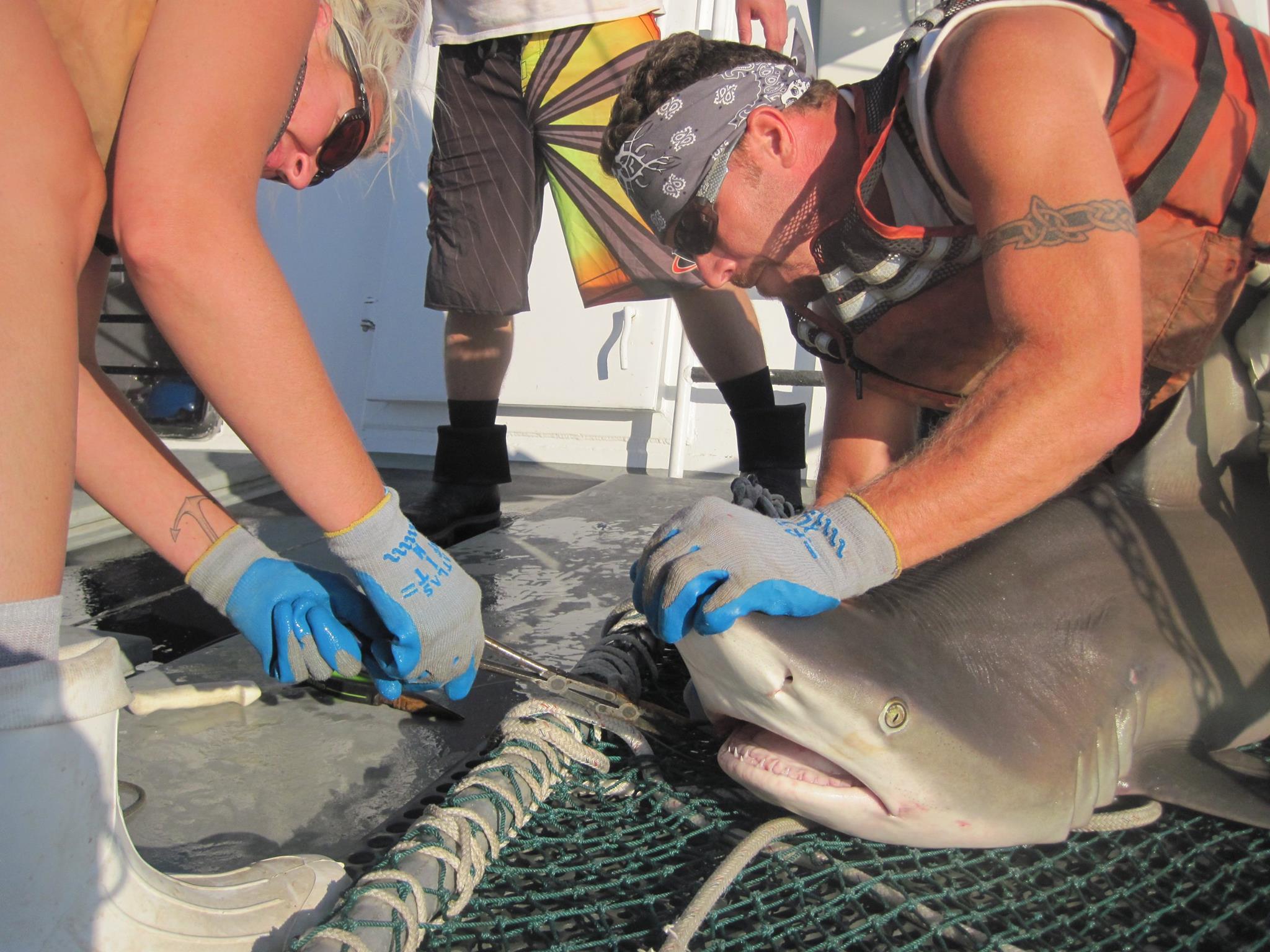
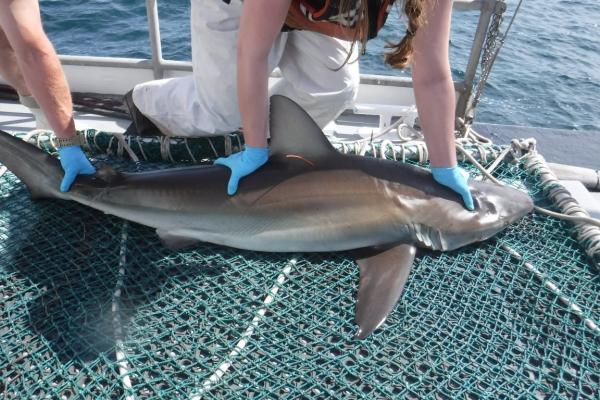
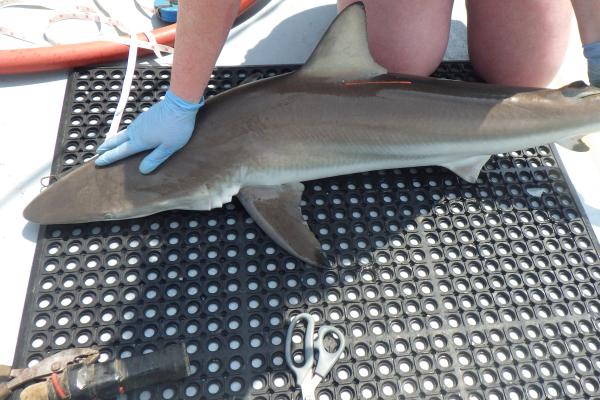
VIMS shark survey team removes hook on a Sandbar shark before releasing it.

Yes, there are sharks in the Chesapeake Bay and off the coasts of Virginia Beach and the Eastern Shore. In fact, they’re making a comeback, in part thanks to the work of William & Mary’s VIMS & Batten School, whose decades-long shark surveys have informed fisheries management and helped reduce over-fishing of these animals.

But don’t worry — more sharks in the water is not cause for concern. These apex predators serve a critical role in their ecosystems, stabilizing populations lower in the food chain, and interactions with humans are rare.

In addition to advising fisheries regulation, VIMS shark surveys have allowed scientists to learn more about these cartilaginous fish: their biology, how they interact with their habitat, their migration patterns, and more. The surveys must be rigorously consistent for scientific accuracy, but the findings themselves are often anything but predictable. 

In May 2024, for instance, the VIMS team caught seven Great White sharks on one cruise, the highest catch total in one month for that species in over 50 years of surveys.

“Large sharks are always exciting,” said senior Marine Scientist Jameson Gregg. “Even when you’ve seen them numerous times, you’ll get something big and, yeah, it’s just cool. They’re amazing to look at.”
Sharks at VIMS

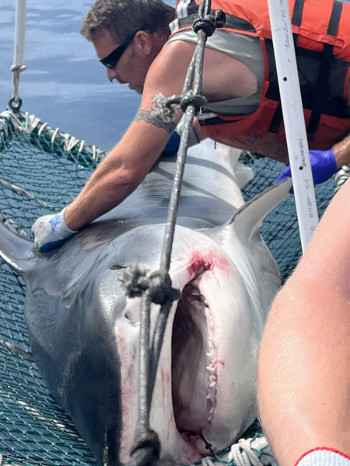
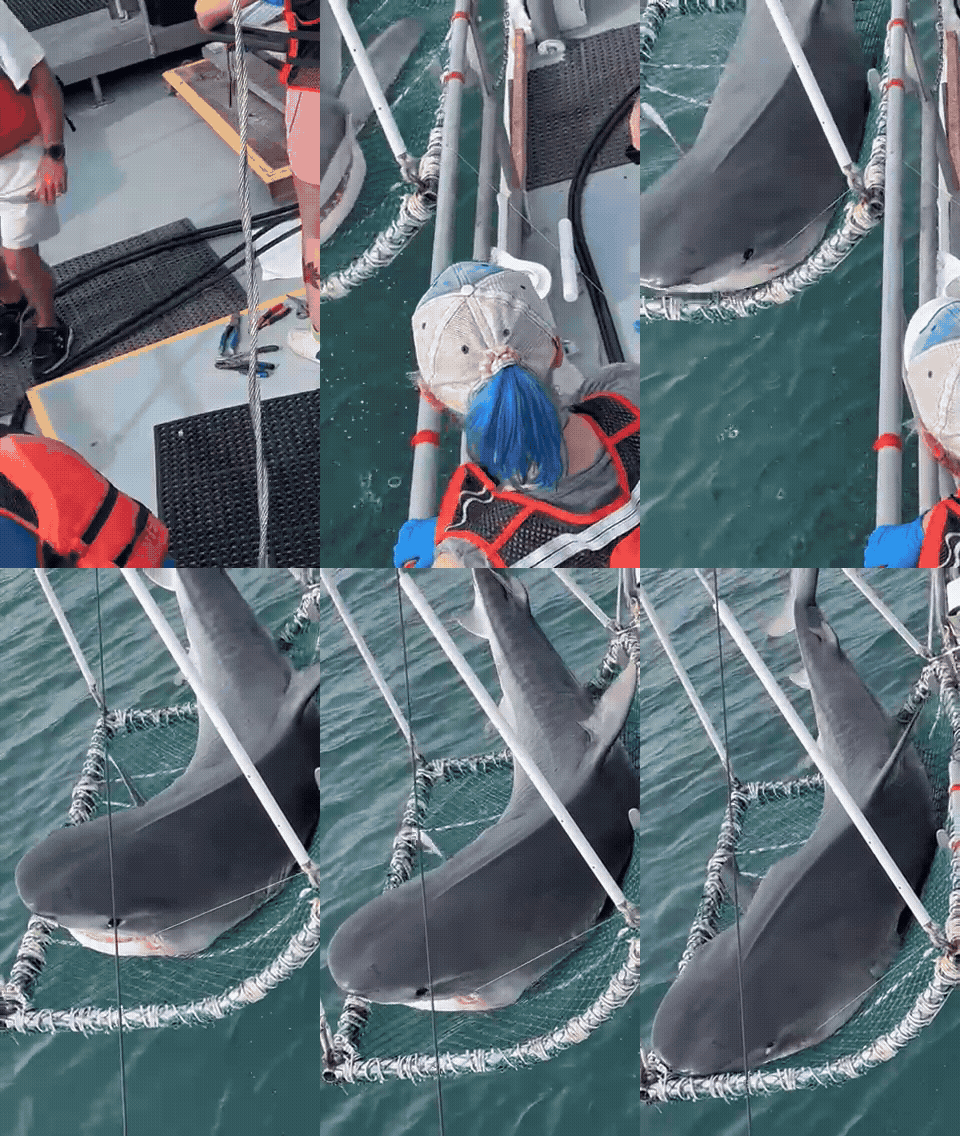
The largest shark ever tagged by VIMS team, a 13-foot Tiger shark, lays on the boat gurney as team member takes measurements

The biggest shark ever tagged

The largest shark ever tagged by the VIMS Virginia Shark Monitoring and Assessment Program (VASMAP) was a massive 13-foot female Tiger shark, caught offshore of Virginia Beach in 2023. Once common in the Virginia region, Tiger sharks are less seen in the mid-Atlantic today. Females can grow to be as big as 18 feet and produce as many as 70 pups per litter.

How scientists catch sharks for science

How scientists catch sharks for science

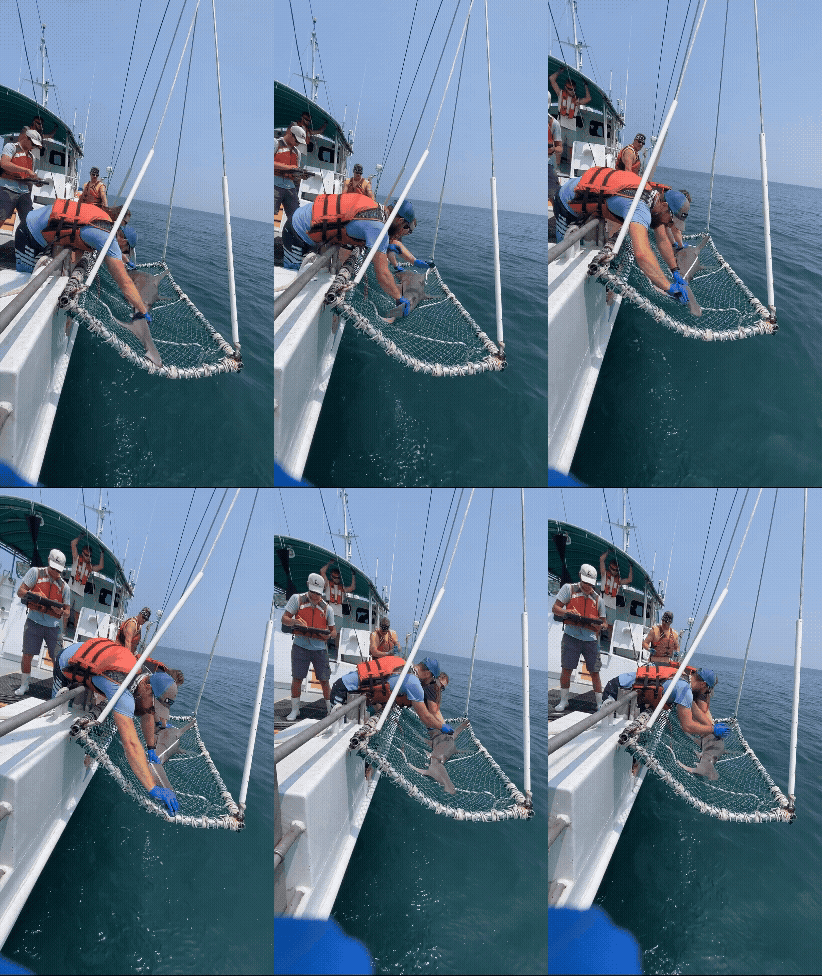
A Tiger shark, largest ever tagged at 13 feet, moves on gurney during VIMS Longline Survey. Click to watch full video. Recorded by Bubba Hogge.

The only downtime on a shark survey cruise is traveling out to the sampling stations, but after that it’s a busy back-to-back routine of laying down fishing lines, circling back to previous stations to reel in the sharks, taking measurements, then tagging and releasing.

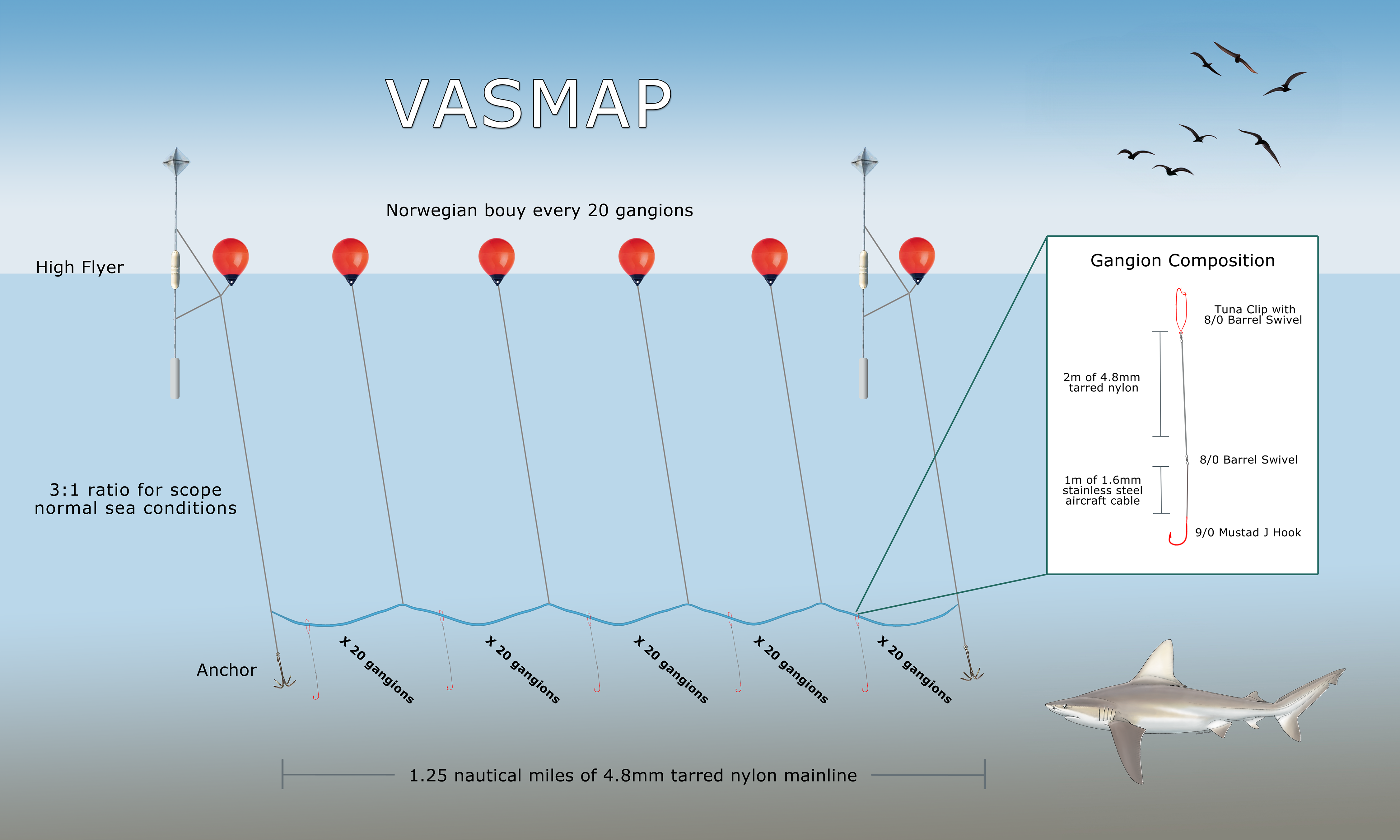
For the VIMS Longline Survey, started in 1974, each nylon mainline used is 1.25 nautical miles long with an anchor on both ends and hooks snapped on every 20 meters. Floats are attached every 20 hooks in case the line breaks.

After the line has soaked for four hours, a hydraulic reel is used to haul everything in.

“With the sharks, anchors and everything, there’s some real weight on there,” said senior research scientist and Batten School of Coastal & Marine Sciences alum Jim Gartland. “We have a series of blocks that run back to the reel, so you pick the line up, run it through the blocks, and then it’s all hydraulically operated.”

The crew then moves the smaller sharks to workup tables to note lengths, weight and sex, but for the bigger sharks they use a gurney on the side of the boat.

The Multispecies Research Group (MRG) at VIMS, which has been running the Longline Survey since 2011, started another shark survey called COASTSPAN in 2013 as part of a collaborative NOAA effort which focuses on juvenile sharks in the Chesapeake Bay and Eastern Shore lagoons.

What kind of sharks do the surveys find?

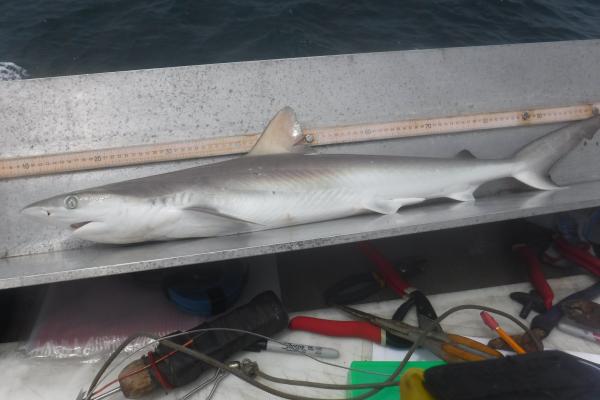
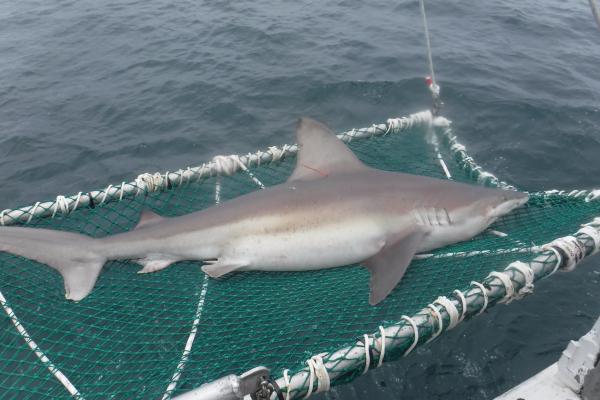
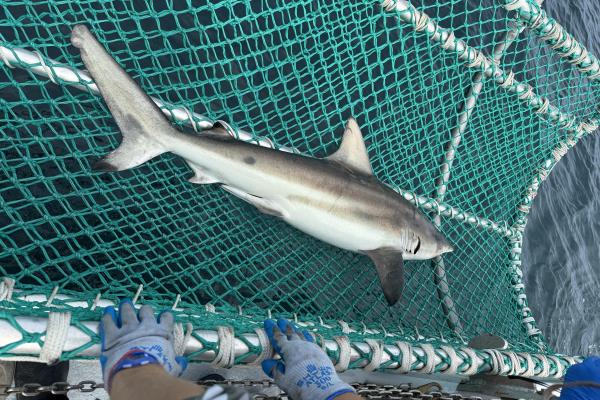
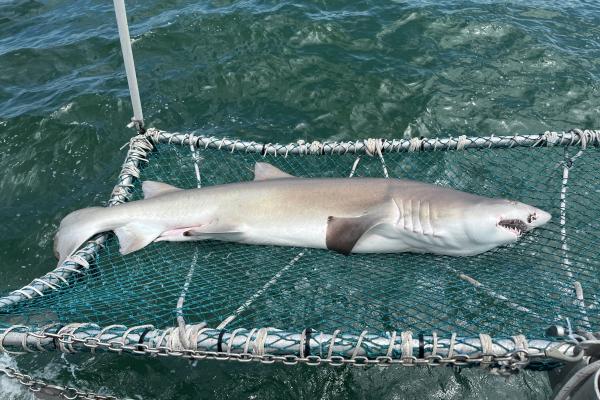
Here are the sharks most often caught on the VIMS shark surveys. Altogether, the team has encountered 27 shark species on the longline survey. Click any species to learn about their diet, range, and more.

Tracking sharks

Tracking shark journeys in Virginia and beyond

VIMS Shark survey team measures a Sandbar shark and then tags it. Click to watch full video. Recorded by Lydia Jenner.VIMS scientists began tagging sharks in 1990 and since then have tagged and released over 8,000 sharks. Those tags have VIMS contact information so that when commercial or recreational fishers catch them, they can notify the MRG team and shed light on their movements and how they’ve grown over time.

VIMS researchers use nylon dart tags for juvenile and smaller sharks, and stainless steel versions for sharks larger than 100 cm. As participants in the NOAA Northeast Fisheries Science Center Apex Predators Program, the team also uses colored rototags for the COASTSPAN survey as a way to observe tag retention.

Tagging studies have uncovered some amazing trips taken by sharks on the U.S. East Coast. One sandbar shark tagged by the VIMS crew on September 24, 1996 in Mockhorn Bay off the Eastern shore was recaptured off Boca Grande, Florida, on December 20, 2023. Over those 27 years, it had tripled in size, growing from 66 cm to over 214 cm. This recapture was just short of the longest recorded time at liberty for a tagged shark in any of the major tracking databases.

“That tells us these sharks are making the trip around the southern part of Florida,” said Batten School Professor Robert Latour. “It helps us think about what is the true home range of these animals, and how much time they are there versus here.”

In addition to dart tags, acoustic and satellite tags have also been used. In the early 2000s, VIMS researchers followed juvenile sandbar sharks with acoustic tags using a hydrophone and learned more details about how they are able to travel long distances in short timeframes.

If VIMS researchers could have their pick, they’d use more satellite tags, but those can cost thousands of dollars each.

“The acoustic ones are nice, but they depend on the fish swimming past the receiver,” Gartland said. “With the satellite tags, the sharks can motor around and when they get near the surface, the tag sends all the data, and you have a really nice time series of where it’s moved.”

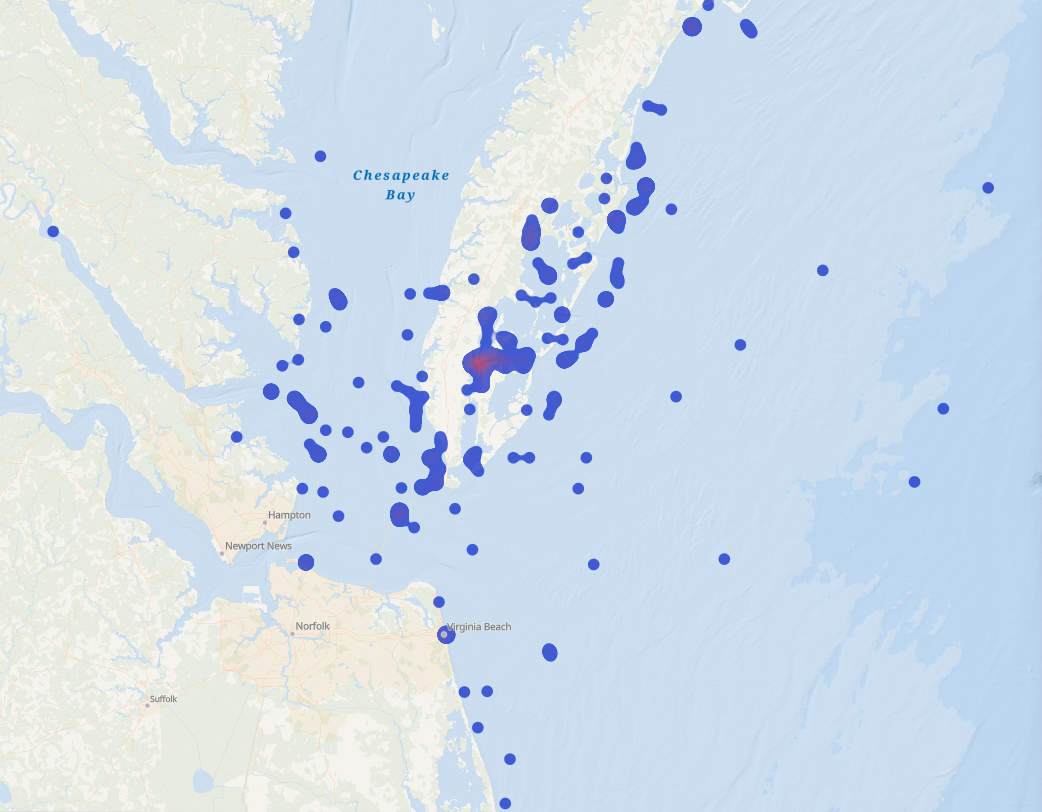
Screenshot of VIMS Recapture Map, with blue dots indicating locations of recaptured sharks in the Chesapeake Bay and offshore

The VIMS Shark Recapture Map

The VIMS Shark Recapture Map displays a heatmap of where tagged sharks have been caught, with warmer colors indicating higher concentrations of reports. Users can filter by species and zoom out to see recapture locations from off the Texas Coast all the way to New England. If you come across a tagged shark, you can submit a Shark Tag Report Form to let the MRG team know and contribute to the tagging studies.

What shark surveys make possible

What shark surveys make possible

The data on sharks collected by VASMAP is used not just for fisheries management regionally but for research around the world. Combined with other datasets, these surveys help researchers better understand how sharks behave at scale, both in terms of space and time. The value that the VIMS shark surveys provide is the 50+ years of consistently sampling a handful of fixed locations multiple times a year.

“These are very long lived animals, and there aren’t long-term records of them collected by federal or state agencies, so we’re unique in that regard,” Latour said.

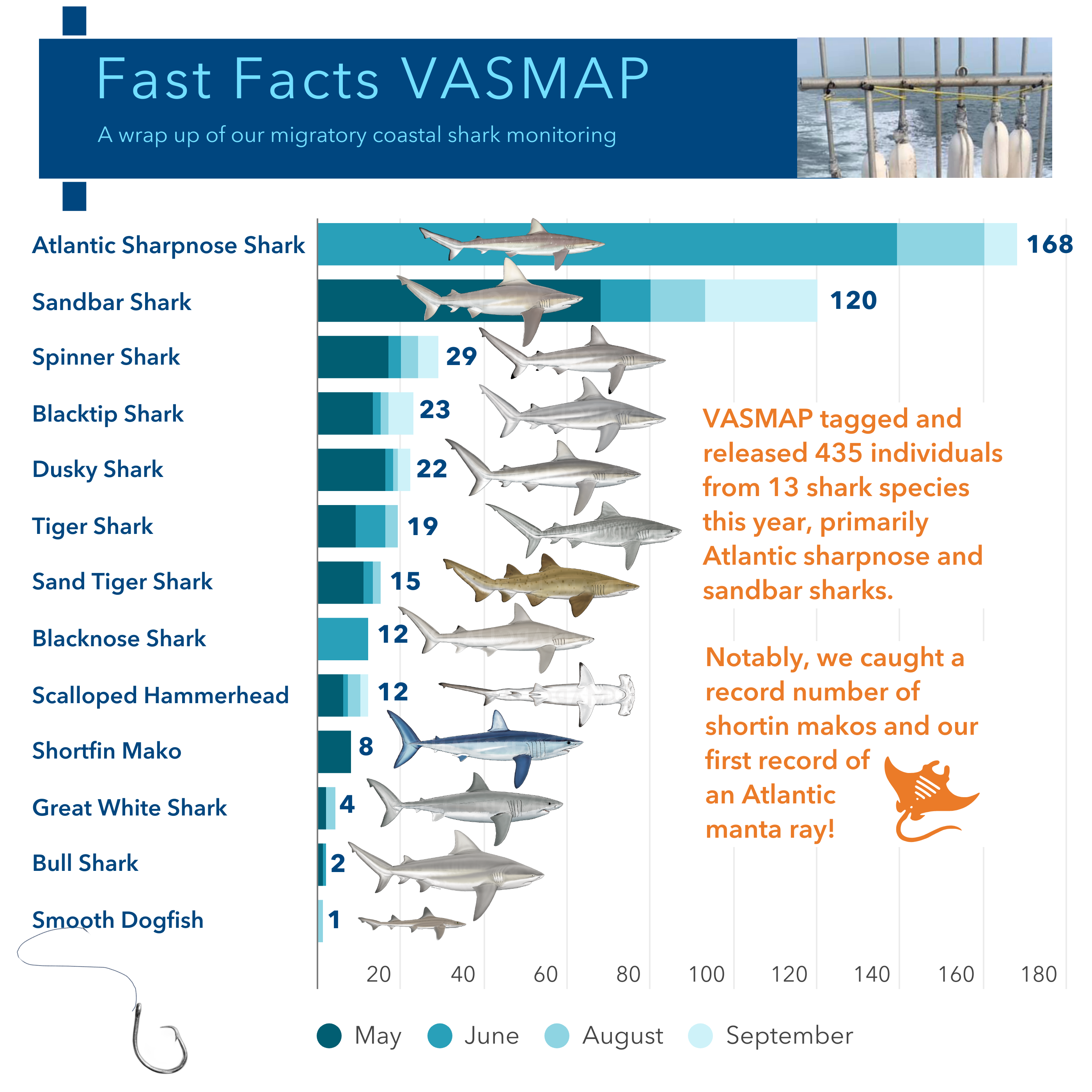
Infographic report with numbers from 2025 shark survey season.The surveys also pick up on global trends, like climate change, which can affect the ranges of different shark species. Many visit Virginia waters, and some species, like Blacknose sharks, are showing up in the surveys more frequently, possibly because of rising temperatures.

When the VIMS crew hauls in the longline, they also take measurements for temperature, salinity, dissolved oxygen and more, which can be the basis for studies on habitat utilization of sharks.

These long-term surveys are key platforms for additional data collection efforts, such as quantifying toxin accumulation from harmful algal blooms and evaluating the prevalence and distribution of microplastics in sharks.

In the future, the team hopes to extend sampling beyond the summer months and add new monitoring sites, including locations in tributaries such as the James and York Rivers.

The VIMS surveys have always been run on a limited budget, but the team is working with federal partners and the Atlantic States Marine Fisheries Commission so that they can continue this important work and unravel more mysteries about these amazing animals.

“You’d think that we’d have a handle on sharks since we’ve been studying them for decades,” said Assistant Research Scientist Gina Ralph. “But when we think we know what they’re going to do, they’ll turn around and do something weird.”

Want to learn more about shark monitoring at VIMS?

Visit MRG’s Shark pages where you can learn about the history of the surveys, browse facts about different species, explore identification guides, view survey trends over time, and more. Please contact the MRG team with any questions about sharks - they'd love to hear from you!