
Sharks at VIMS
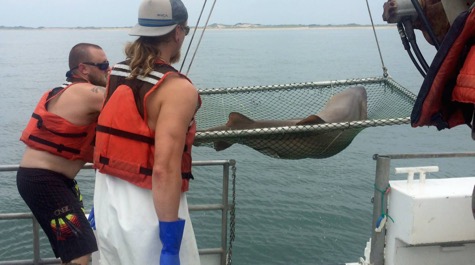
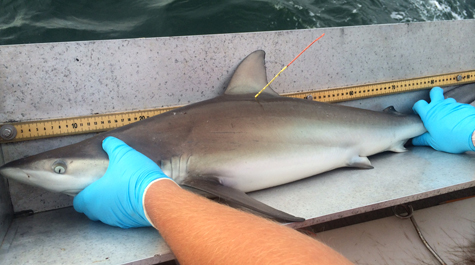
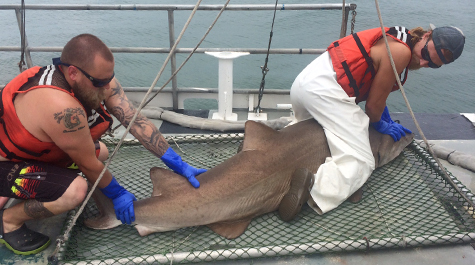
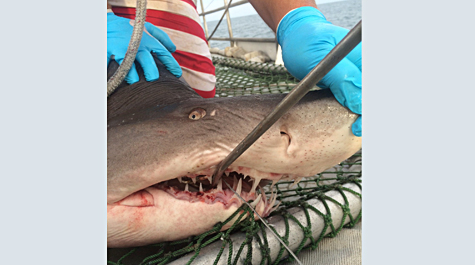
Sharks play a key role in marine ecosystems worldwide. The Virginia Shark Monitoring and Assessment Program (VASMAP) is a key source of data for better understanding and management of sharks in the mid-Atlantic. The systematic study of mid-Atlantic sharks at VIMS began in 1974 and now stands as one of the longest-running fishery-independent studies of shark populations in the world. This longline survey brought global attention to significant declines in shark populations due to overfishing, and led to the first U.S. management plan for sharks, in 1993. Because sexual maturity doesn't occur until age 5 or later, and only 8-10 pups are produced each year, recovery of shark populations from severe depletion can take decades. As fishing regulations help shark populations rebound in U.S. waters, data from shark research programs at VIMS continue to inform stock assessments and fishery management plans at federal and state levels.
Report a tagged shark VIRGINIA Shark ID GuideSHARK FAQsVASMAP 50-YEAR ANNIVERSARYSHARK SPECIESshark data appdeeper dive video
Learn More:
Virginia Sharks |
Three Survey Components |
Management and ConservationData from the VIMS Shark Survey show that populations of large coastal sharks were severely depleted between the late 1970s and the early 1990s. These data informed the implementation of shark-management measures in Virginia in 1990, and by the federal government in 1993. These measures have led to a slow but steady recovery in most mid-Atlantic shark stocks. |
Reports
|
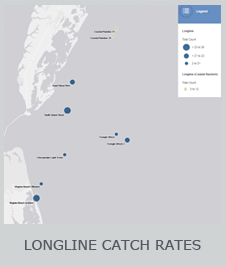
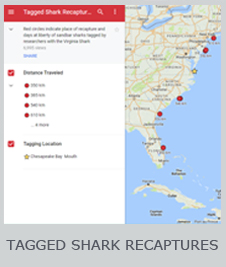
Maps |
FundingVASMAP is currently funded through the Atlantic States Marine Fisheries Commission.
|