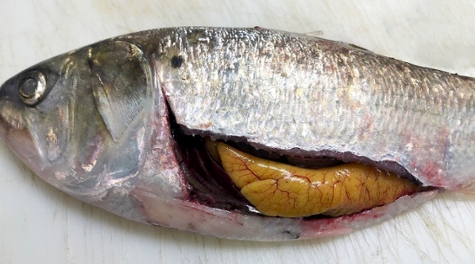
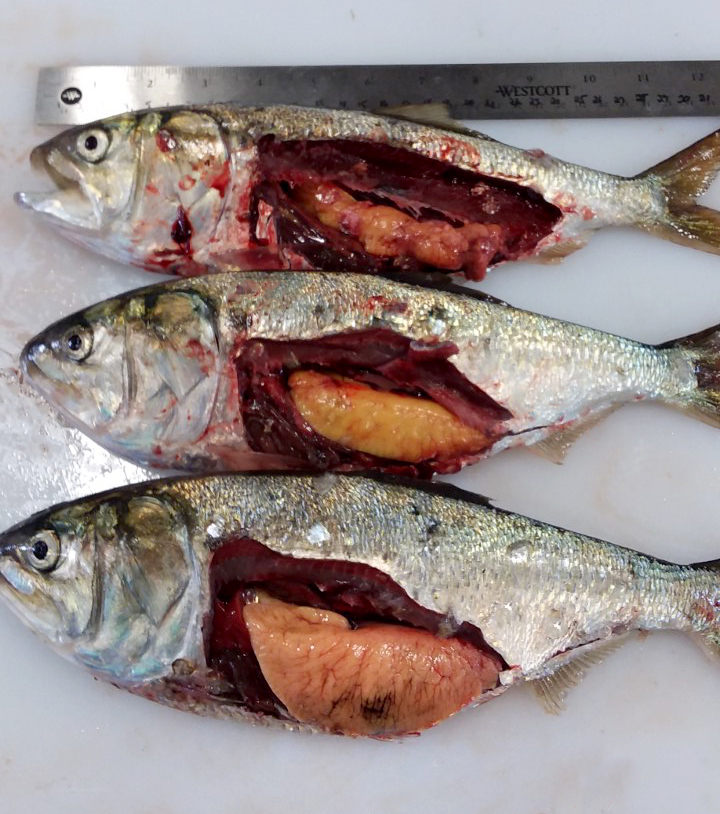
Atlantic Menhaden cut open showing ovaries
Laboratory processing of each fish includes: fork length, whole & eviscerated weight, sex, macroscopic maturity classification, paired ovary weight, scale and otolith removal.
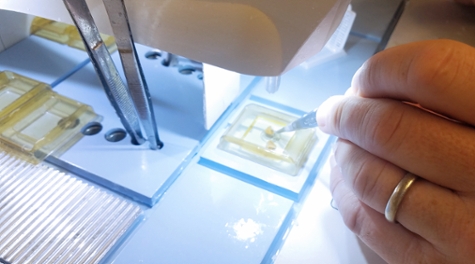
Embedding histological sample in paraffin
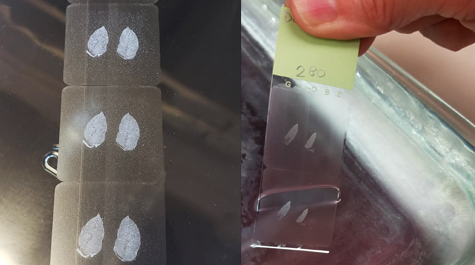
Ovarian tissue sections in paraffin wax
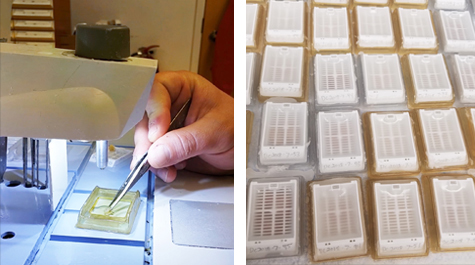
Embedding ovary sections in paraffin and inset view of cartridges containing samples
on the HistoStar™ Embedding Workstation. After the sections are mounted in molten paraffin they are placed on a cooling plate. Once they have fully cooled the samples are popped out of the plastic molds.
histological Sections form a ribbon
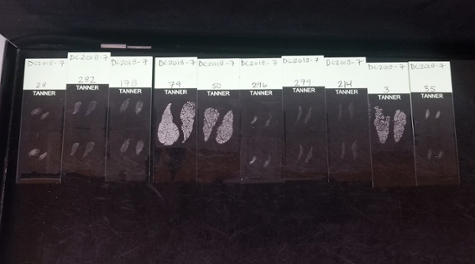
Ideally 5-6 good sections are stuck together. The sections are removed using forceps and a wet paint brush and carefully laid on top of 42° C water bath. Choose the best 1-2 sections (depending on the size of the sample) and position them on a microscope slide. Place in a slide drying rack.
histological section Drying on microscope slides
Once the tissues are mounted on the slides they are placed on a heated slide drying rack overnight.
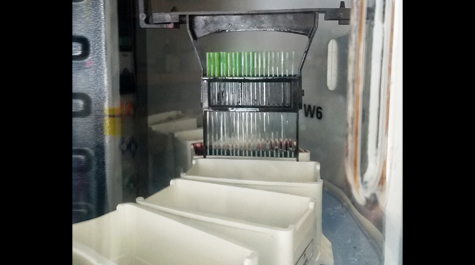
histological sample slides in a staining machine
Once the slides have been dried overnight they are put in racks and placed in the automatic stainer, and ran through a routine staining procedure which takes ~1 hour. Once complete the stained slides are coverslipped and put in the drying oven for ~48 hours.
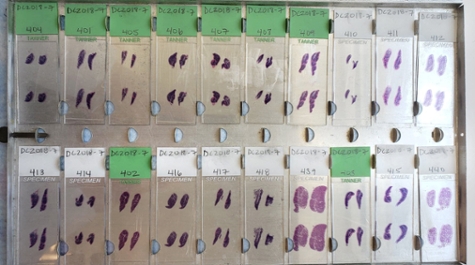
Stained and cover-slipped histological sample slides
Once the slides have been dried overnight they are put in racks and placed in the automatic stainer, and ran through a routine staining procedure which takes ~1 hour. Once complete the stained slides are coverslipped and put in the drying oven for ~48 hours.
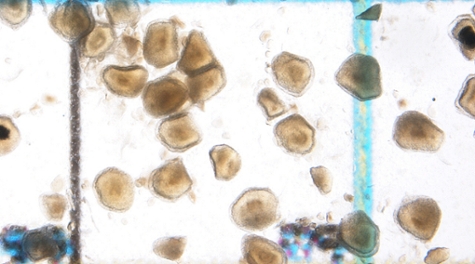
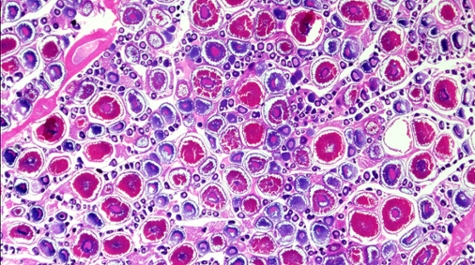
microscopic view of Ova
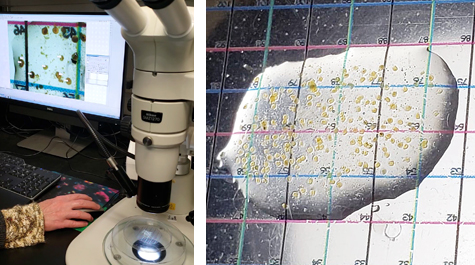
Conduct ova counts based on results of the histological slide interpretation.
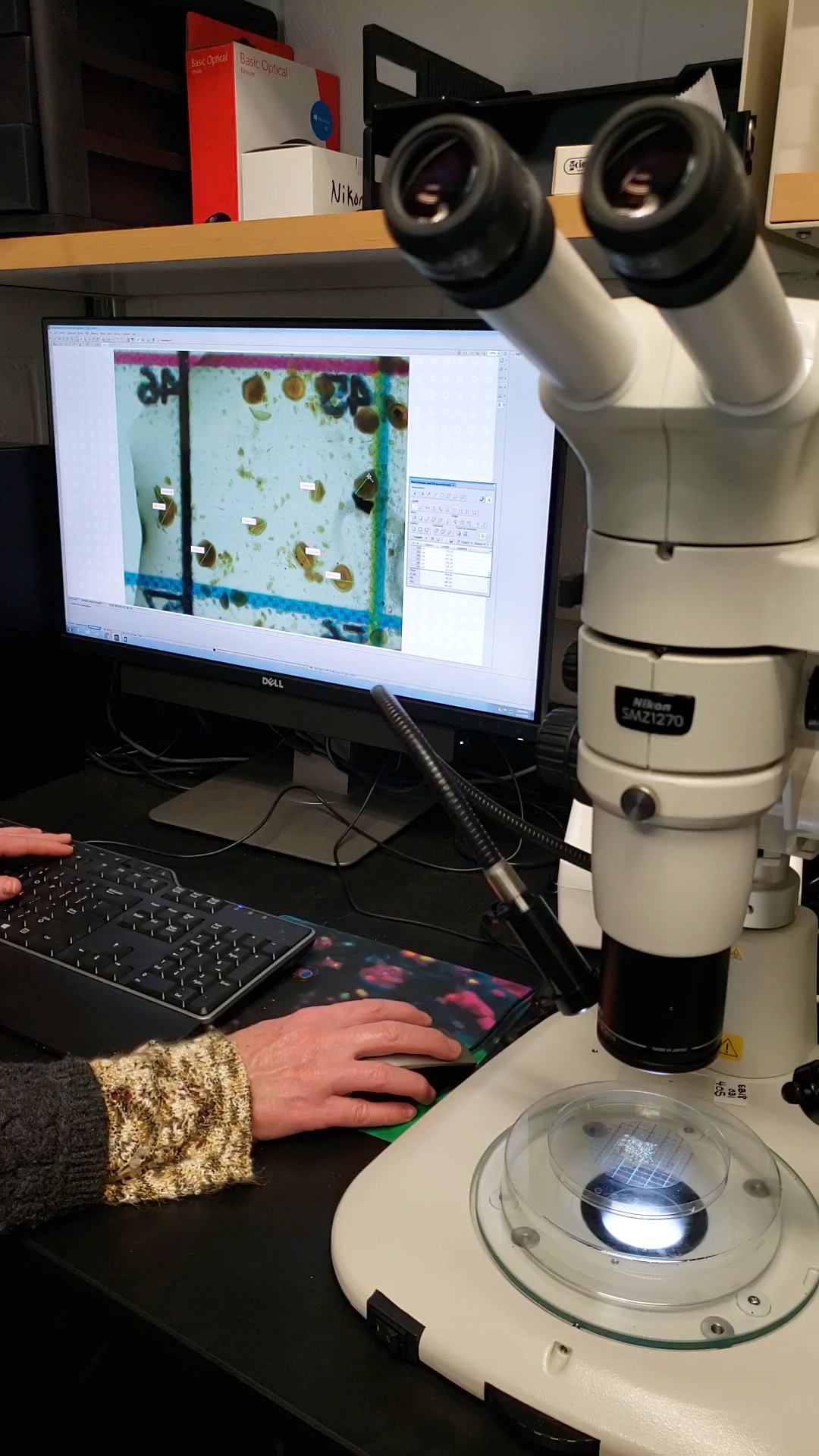
side by side view of computer monitor showing microscopic view of ova and a macroscopic view of a drop of water with ova
Conduct ova counts based on results of the histological slide interpretation.
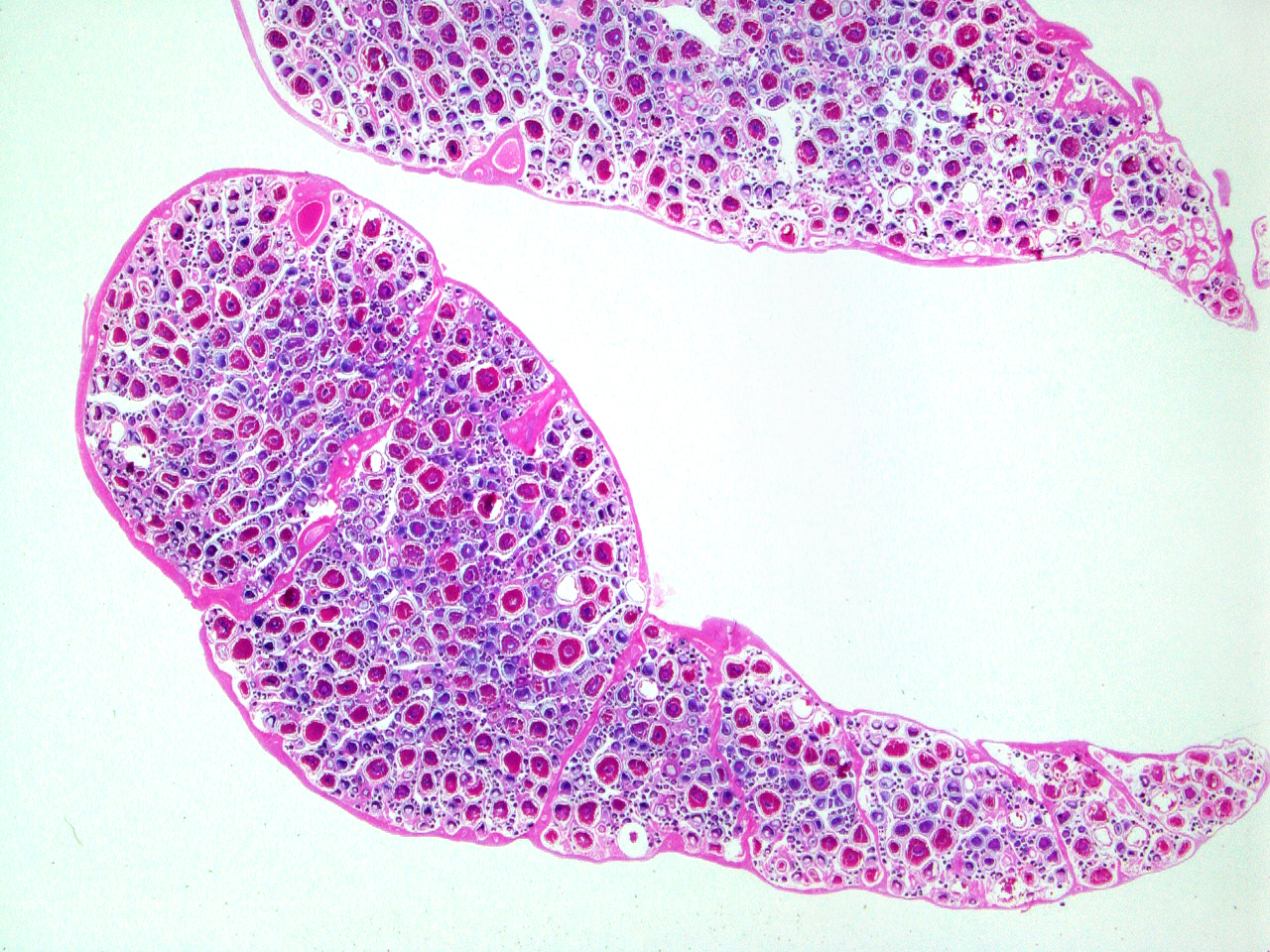
histological cross section showing cells of female gonad
Conduct ova counts based on results of the histological slide interpretation.
Why is the Multispecies Research Group studying the fecundity of Atlantic Menhaden?
Atlantic Menhaden Brevoortia tyrannus support fisheries that yield the largest landings by volume on the U.S. East Coast and fulfill a critical ecological role as a forage species. The spawning reference point of the stock assessment model that is routinely applied to this species requires information on total annual fecundity. The goal of this study was to generate a contemporary, histology-based evaluation of the reproductive biology and fecundity of female Atlantic Menhaden.