

Summer flounder
Paralichthys dentatus
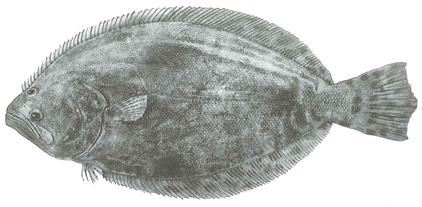
Information and species illustrations courtesy of the Food and Agriculture Organization of the United Nations (FAO).
SizeMaximum size 94 cm total length. |
Diagnostic characters
|
Habitat, biology, and fisheriesOccurring to depths of 185 m, but generally found at depths of 40 m or less. Salt marsh and tidal flat habitats in lower estuary (high salinity) serve as nursery grounds. Feeds primarily on fish and squid, also crabs, shrimp, mysids, molluscs, worms, and sand dollars. Spawning occurs on continental shelf in the Middle Atlantic Bight from September through January, with peaks in October and November. Eggs pelagic, from 0.9 to 1.1 mm in diameter, with an oil globule of 0.18 to 0.31 mm. Pelagic larvae develop in continental shelf waters at sizes from 2 to 13 mm standard length. A good food fish, this species is commercially important from the Carolinas northward. |
DistributionAtlantic coast of the USA from Maine to Florida. |
CitationsCarpenter, K.E. (ed) Carpenter, K.E. (ed) Carpenter, K.E. (ed) |