

Striped bass
Morone saxatilis
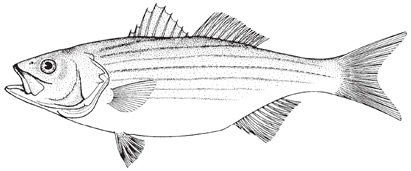
Information and species illustrations courtesy of the Food and Agriculture Organization of the United Nations (FAO).
SizeMaximum 1.8 m, 57 kg. |
Diagnostic characters
|
Habitat, biology, and fisheriesThe anadromous striped bass occurs in rivers, estuaries, and near-shore waters; it is tolerant of turbid water and found in a variety of habitats: shallow bays, along sandy beaches, and also in rocky areas. Normally gonochoristic, with a rare incidence of hermaphroditic individuals. Males are mature at about 17 cm total length (2 years) and females at 45 to 55 cm total length (4 to 6 years); maximum age has been estimated at about 30 years. Spawning occurs in rivers and at the heads of estuaries from mid-February to July; with discrete populations occurring in the major rivers from the Gulf of Mexico to Nova Scotia; some inland populations live permanently in fresh water. Fecundity estimates range from 15,000 for a 46 cm fish to 4 million for a 13 year-old, 14.5 kg fish. Along the east coast of the USA, some populations undertake seasonal migrations, moving north in late winter or early spring, and back southwards in autumn. Striped bass feed mainly on fishes and |
DistributionInshore waters of the USA from Canada to the St Johns River in northern Florida, and northern Gulf of Mexico from Florida to Louisiana. |
CitationsCarpenter, K.E. (ed) Carpenter, K.E. (ed) Carpenter, K.E. (ed) |