

Oyster toadfish
Opsanus tau
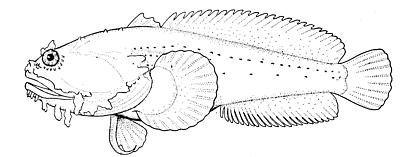
Information and species illustrations courtesy of the Food and Agriculture Organization of the United Nations (FAO).
SizeMaximum size to 381 mm standard length. The IGFA all-tackle gamefish record is 2.23 kg for a fish caught in North Carolina in 1994. |
Diagnostic charactersSmall to medium-sized fishes (to 57 cm) easily recognized by their characteristic Background body pigmentation dark, crossbands on body; snout to anal fin distance shorter, 551 to 609 thousandths of standard length Pectoral fin with definite crossbars, the light areas continuous across the fin; sides and belly with brownish to blackish reticulations, or finely mottled, especially on sides of belly. |
Habitat, biology, and fisheriesBottom-dweller found primarily within and around oyster reefs. Also lives among wrecks, debris, rocks, vegetation and other dark, secluded spots in the shallows during warmer months, moving to the Chesapeake Bay’s deep channels in winter. Spawning occurs in April through October in the Bay’s shallows. Males make a nest in a dark, secluded location, then call for a female mate. The female lays sticky eggs on the top of the nest, then leaves. Oyster toadfish eggs measure about one-fifth of an inch in diameter – the largest eggs of any fish in the Bay. The male protects the eggs and keeps the nest clean by using his fins to fan out debris. After about one month, the eggs hatch. The tadpole-like young remain attached to the nest by a yolk. Once the yolk is fully absorbed, the male guards the young toadlets for a few more weeks, although they are free to swim in and out of the nest. Feeds mostly on small crabs and other crustaceans; will also eat mollusks and small fish. |
DistributionGulf of Maine south to Florida. Abundant throughout the Chesapeake Bay year-round; most common in the middle and lower Bay. |
CitationsCarpenter, K.E. (ed) Carpenter, K.E. (ed) Carpenter, K.E. (ed) |