

Atlantic stingray
Dasyatis sabina
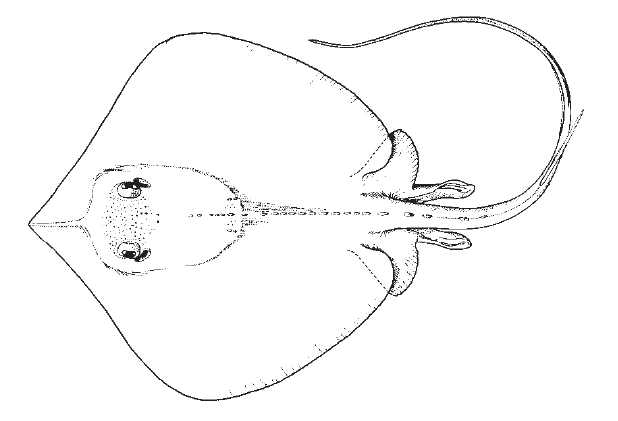
Information and species illustrations courtesy of the Food and Agriculture Organization of the United Nations (FAO).
SizeMaximum size 61 cm disc length (about equal to disc width). |
Diagnostic charactersPreorbital length greater than distance between spiracles; pelvic fins projecting beyond posterior margin of disc by about 1/3 of their length |
Habitat, biology, and fisheriesFemales mature at 16 to 18 cm disc width, and neonates10 cm disc width at birth. Benthic in coastal waters from shoreline to about 20 m, also in estuaries and fresh water. Food consists of polychaetes, crustaceans, and ray-finned fishes. Litters range from 1 to 3 young. Upper surface brown to yellowish brown, sometimes with darker stripe along midline; ventrally whitish occasionally with darker disc outline. |
DistributionRecorded from Chesapeake Bay to Florida Keys, throughout Gulf of Mexico. Records from northern South America and Brazil questionable. |
CitationsCarpenter, K.E. (ed) Carpenter, K.E. (ed) Carpenter, K.E. (ed) |