

Dart & Roto Tags
Researchers at the Virginia Institute of Marine Science use external dart tags and Rototags for tag-recapture studies of sharks collected during the VIMS Shark and COASTSPAN surveys. The majority of tagged animals are juvenile sandbar sharks, which are tagged with Hallprint nylon dart tags. These small dart tags are also used for smooth dogfish, Atlantic sharpnose sharks, and juveniles of other species. Larger sharks—including adult sandbars, duskies, sand tigers and others—are tagged with Hallprint M-type stainless steel dart tags. Supplementing these dart tags with a larger Rototag increases visibility to help ensure that anglers notice a tagged shark.
Report a Tagged Shark
To report a tagged shark, use our Shark Tag Reporting Form. Fishers who report tag data are provided with a summary of shark research at VIMS, a detailed history of the animal they recaptured, and a map indicating the sites of tagging and recapture. Tag reporters also receive a water bottle as reward for their participation and commitment to fostering a collaborative research effort.
Tag Types
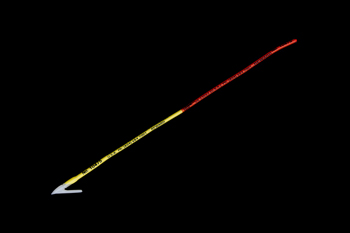 |
Hallprint Nylon dart tag for sharks less than 100 cm total length. Tag is placed below the dorsal fin along the lateral line. |
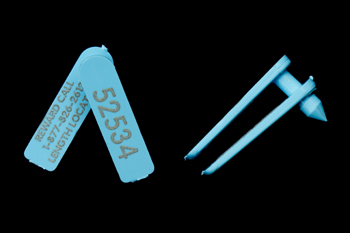 |
Blue rototag used to double-tag sharks in the COASTSPAN survey. Sharks greater than 100 cm in total length are tagged in the dorsal fin. |
|
|
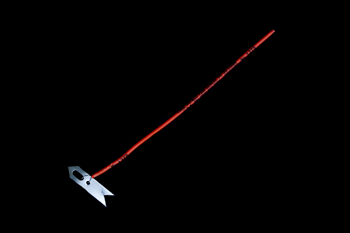
Hallprint stainless steel head dart tags for sharks greater than 100 cm total length. Tag is placed below the dorsal fin along the lateral line. |
|
|
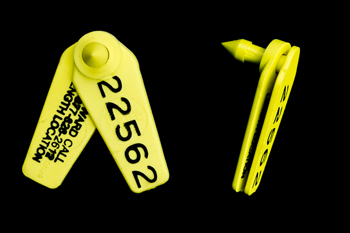
Yellow rototag used to double-tag sharks in the COASTSPAN survey. Sharks greater than 100 cm in total length are tagged in the dorsal fin |
Research Highlights
- A sandbar shark tagged by VIMS near the mouth of Chesapeake Bay was recaptured 6 years later in the northern Gulf of Mexico, 2,800 km from its tagging location.
- Most sandbar sharks return each summer for at least 2 years to the nursery grounds where they were born. They may return to adjacent coastal waters for up to 9 years.
- Juvenile sandbar sharks (ages 1-6) spend the winter off the coast of North Carolina within approximately 12 miles (20 kilometers) of shore. Older juveniles (ages 7-10) overwinter in waters as far as 37 miles (60 km) m from shore.
References
Grubbs, R.D. and J.A. Musick. 2007. Spatial delineation of summer nursery areas for juvenile sandbar sharks in Chesapeake Bay, Virginia. In: C.T. McCandless, N.E. Kohler and H.L. Pratt, Jr. (eds). Shark nursery grounds of the Gulf of Mexico and the East Coast waters of the United States. ISBN: 1888569816. American Fisheries Society. Bethesda, MD.