

Shallow Water Habitats
Ecosystem Processes - Secondary Production
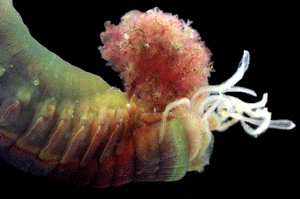 In shallow water estuarine habitats, light from the sun is the
initial source of energy available to living organisms. Autotrophs,
through the process of photosynthesis, produce organic carbon. This is
called primary production.
Heterotrophic organisms cannot photosynthesize and must consume the
products of autotrophic organisms in order to gain necessary energy.
In shallow water estuarine habitats, light from the sun is the
initial source of energy available to living organisms. Autotrophs,
through the process of photosynthesis, produce organic carbon. This is
called primary production.
Heterotrophic organisms cannot photosynthesize and must consume the
products of autotrophic organisms in order to gain necessary energy.
Secondary (and tertiary, or higher) production is the growth of an
organism fueled by the consumption of other organisms by means of
grazing on plants or predation on animals. Due to size and digestion
limitations, many fish and larger invertebrates cannot gain the energy
they need by consuming sediment microbes. Instead they rely on
intermediate species, such as worms, small crustaceans, and clams or snails, which effectively graze on and “package” benthic microalgae
and microbe-rich detritus. The relationships between primary producers
and consumers at various trophic levels are the foundation of the food web.
For
further information about secondary production processes in estuarine
and coastal marine habitats, refer to the following:
Mann, K. H. 2000. Ecology of coastal waters, with implications for
management. Blackwell Publishing; Chapter 8.5 Benthic secondary
production
Valiela, I. 1995. Marine Ecological Processes (2nd Edition). Springer; Chapter 7 – Processing of consumed energy.