

Shallow Water Habitats
Ecosystem Processes - Detritus Formation and Consumption
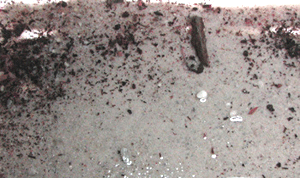 Detritus is a mixture of non-living particulate organic material and the attached microorganisms,
which act to decompose (or remineralize) the material. A variety of
plant materials contribute to detritus in estuaries, including marsh
vegetation, phytoplankton, benthic microalgae, submerged aquatic vegetation, macroalgae and terrestrial vegetation.
Detritus is a mixture of non-living particulate organic material and the attached microorganisms,
which act to decompose (or remineralize) the material. A variety of
plant materials contribute to detritus in estuaries, including marsh
vegetation, phytoplankton, benthic microalgae, submerged aquatic vegetation, macroalgae and terrestrial vegetation.
Detritus
can be used as a source of nutrition by animals, especially in
protected shallow water systems where marshes may line the shore, and
the trapping of fine sediment and organic matter is enhanced. Many bottom-dwelling animals
(benthos) living in mud flats feed, at least in part, on detritus. The
most prominent constituents of detritus are complex carbohydrates,
which are difficult to decompose. Microbes growing on detritus
particles make it more nutritious for consumers because they add
nitrogen and phosphorus from the water or sediment as they grow.
For further information about detritus and its role in estuarine and coastal marine habitats, refer to the following:
Day, J. W., C. S. Hall, W. M. Kemp and A. Yánez-Arancibia. 1989.
Estuarine Ecology. John Wiley and Sons. Chapter 7 – Microbial ecology
and organic detritus in estuaries. (Note: the second edition of this
book is scheduled for release in March 2008)
Mann, K. H. 2000. Ecology of coastal waters, with implications for
management. Blackwell Publishing; Chapter 6 – The fate of macrophyte
detritus.