

Shallow Water Habitats
Shallow Water Communities - Nekton
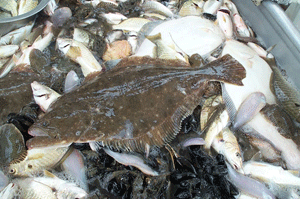 Nekton, including fishes and decapod
crustaceans, are abundant in estuarine and coastal marine ecosystems.
Some nektonic species, such as the mummichog (Fundulus heteroclitus)
spend their entire lives in the shallow waters of estuaries and bays,
while other species use these productive areas as nursery grounds and
then spend their adult lives in open water habitats.
Nekton, including fishes and decapod
crustaceans, are abundant in estuarine and coastal marine ecosystems.
Some nektonic species, such as the mummichog (Fundulus heteroclitus)
spend their entire lives in the shallow waters of estuaries and bays,
while other species use these productive areas as nursery grounds and
then spend their adult lives in open water habitats.
The high abundance and productivity of shallow water benthic communities provides a rich food source for nektonic species. A variety of shrimp feed on meiofauna and juvenile macrofauna. Juvenile spot (Leiostomus xanthurus) feed on harpacticoid copepods, forams, nematodes and small macrofauna. The thin-shelled clam, Macoma balthica, makes up about half the diet of the commercially important blue crab (Callinectes sapidus). Many species of fish that utilize estuarine habitats are generalist feeder organisms in proportion to prey abundance, as long as the prey are large enough to be captured.
Nekton form an integral link among primary producers, consumers, and top predators. They represent a significant portion of the diets of many piscivorous birds and economically valuable fishes. Nekton also respond to ecosystem changes resulting from anthropogenic impacts. For example, fish abundance, species richness, and growth rates may increase in response to enhanced nitrogen loading. Community structure may change in response to alterations in habitat availability or changes in hydrology.
To learn more about nekton of estuarine and coastal marine habitats refer to the following:
Chesapeake Bay Program website
Discovery of Estuarine Environments. University of Rhode Island, Office of Marine Programs website.
E-Refs: An Online Guide to Estuarine Research – Secondary Production in Salt Marsh Ecosystems
E-Refs: An Online Guide to Estuarine Research – Nekton
Mann,
K. H. 2000. Ecology of coastal waters, with implications for
management. Blackwell Publishing; Chapter 9 – Nekton: Fish and
Swimming Invertebrates.
Raposa, K. B. and Roman, C. T. 2001. Monitoring nekton in shallow estuarine habitats. Technical Report, USGS Patuxent Wildlife Research Center, Coastal Research Field Station, Narragansett, RI. 38 pp