

Bull Shark: ID, Range & Chesapeake Bay Sightings
Carcharhinus leucas
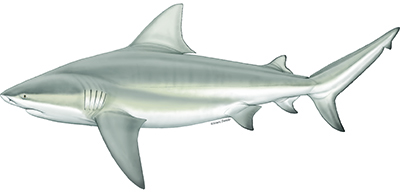
Use these resources to learn how to identify a bull shark, find out what other shark species live in Virginia waters, explore our shark longline data over the years, and find answers to frequently asked questions.
bull SHARK ID GUIDEOTHER VA SHARKSSHARK DATA APP
While bull sharks are known to venture into brackish and freshwater habitats, observations in Chesapeake Bay and its tributaries in the summer months is only rare to occasional. They are large sharks that feed on large prey such as sea turtles, marine mammals, and other sharks, as well as on smaller fishes. Bull sharks are listed third after white and tiger sharks on the ISAF list of total unprovoked attacks by species.
Maximum Size
Around 11 feet (3.4 meters)
Geographic Range
All tropical and subtropical waters. Bull sharks migrate seasonally, moving northward along the U.S. Atlantic coast in the summer and southward again when the water cools in fall. The bull shark is the only species of shark that can exist for long periods in freshwater, and penetrates long distances up large rivers. However, it is uncommon in Chesapeake Bay and other Virginia waters.
Diet
Opportunistic feeders that prey on bony fishes, other sharks, rays, sea turtles, marine mammals, and invertebrates.
Depth Range
Found close inshore, in water ranging from 3 feet (1 meter) to at least 500 feet (152 meters).