

Shallow Water Habitats
Methods - Ecosystem Processes Studies
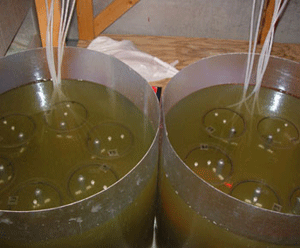 Microbial processes that potentially have important impacts on water
and sediment quality in shallow systems include sediment and water
column metabolism and nutrient cycling processes that impact sediment – water nutrient fluxes. System metabolism can be determined from dawn and dusk measurements of dissolved oxygen measured at fixed stations or on observing systems fitted with a datasonde (YSI or Hydrolab).
Microbial processes that potentially have important impacts on water
and sediment quality in shallow systems include sediment and water
column metabolism and nutrient cycling processes that impact sediment – water nutrient fluxes. System metabolism can be determined from dawn and dusk measurements of dissolved oxygen measured at fixed stations or on observing systems fitted with a datasonde (YSI or Hydrolab).
Metabolism as well as nutrient fluxes may be measured in cores containing sediments with overlying water and cores with water only, incubated under ambient conditions, as described in Anderson et al. (2003). Methods for measuring nitrogen cycling processes such as nitrification, denitrification, mineralization, anammox, and dissimilatory nitrate reduction to ammonium are described in Joye and Anderson (2007).
For further information on ecosystem processes studies, refer to the following:
Anderson, I.C., McGlathery, K. J., and Tyler, A. C. (2003). Microbial mediation of “reactive nitrogen transformations in a temperate lagoon. Mar. Ecol. Prog. Ser. 246:73-84.
Joye, S. B. and I. Anderson, 2007. Nitrogen cycling in Estuarine and Nearshore Sediments. In: Capone, D., Bronk, D., Carpenter, E. and Mulhollond, M. (Eds), Nitrogen in the Marine Environment, Springer Verlag, in