

Flow Cytometry Services
ABC provides flow cytometry services for oyster ploidy analysis and certification, including analysis of diploid, triploid, and tetraploid oysters.
Flow Cytometry Information
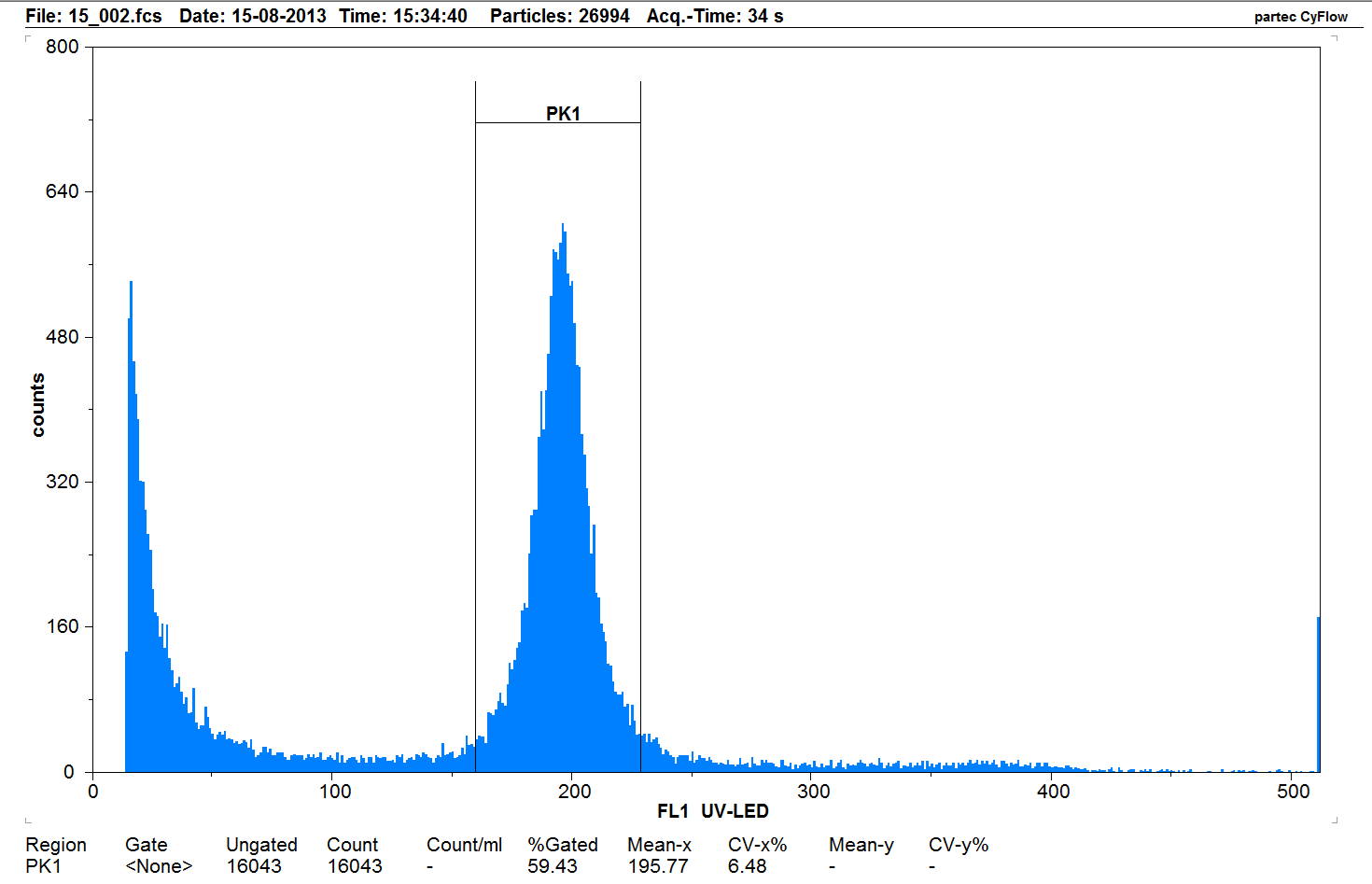
Flow cytometry measures the DNA content of cells present in a tissue sample to determine the ploidy of a sample. For our industry, this frequently means distinguishing between diploid, triploid, and even tetraploid oysters. The DNA of cells within a tissue sample are stained with fluorescent dye prior to analysis. The flow cytometer contains a UV light that causes the stained DNA to fluoresce, the machine reads this fluorescence, and displays it on a histogram. The technician uses the fluorescence readings to determine the ratio of one cell type to another. For example, triploid cells fluoresce 1.5 times more than diploid cells of the same species.
What samples do we take?
- Sperm
- Larvae
- Seed
- Gill
How can you start sending samples?
Companies currently under contract with us are able to send samples free of cost as long as the samples are derived from our broodstock.
Samples from companies not under contract with us, or those that are, and the sample is from material that is not our broodstock, are able to have samples run for a fee that includes labor and operations costs.
If you are interested in learning more about our flow services or getting started with us reach out to:
Libby Hoffeditz (ehoffeditz@vims.edu).