

Not all microplastics are created equal: Researchers find plastic fibers can worsen viral disease in fish
Interdisciplinary study reveals how the shape and timing of microplastic exposure can influence disease severity in rainbow trout
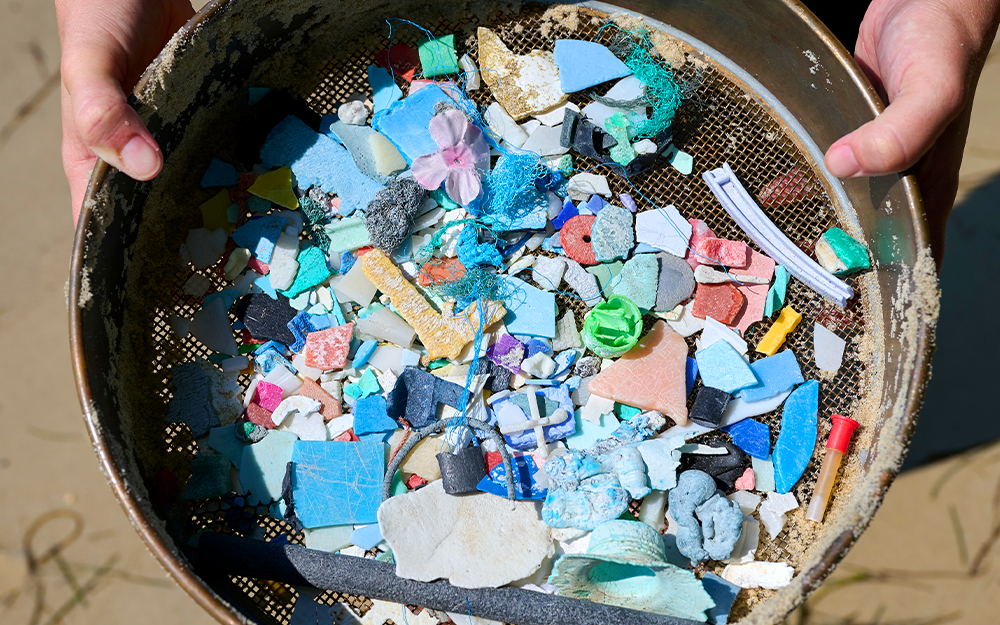 The shape of microplastics can influence how deadly a viral infection can be for fish, according to new research from William & Mary's Virginia Institute of Marine Science (VIMS). The findings suggest that some forms of plastic pollution pose greater biological risks than others, offering scientists a potential path toward reducing the environmental impacts of microplastics.
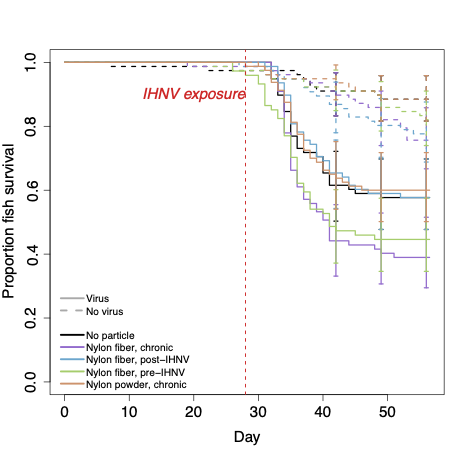
Recently published in Environmental Toxicology and Chemistry, the experimental study found that rainbow trout exposed continuously to nylon microfibers had approximately twice the odds of dying from a viral infection compared with fish exposed to the virus alone. By contrast, exposure to small, rounded nylon particles did not significantly increase virus-related mortality. The research also demonstrated that the timing of exposure mattered, with the greatest effects observed when fish exposure to microplastic fibers began 30 days prior to virus exposure.
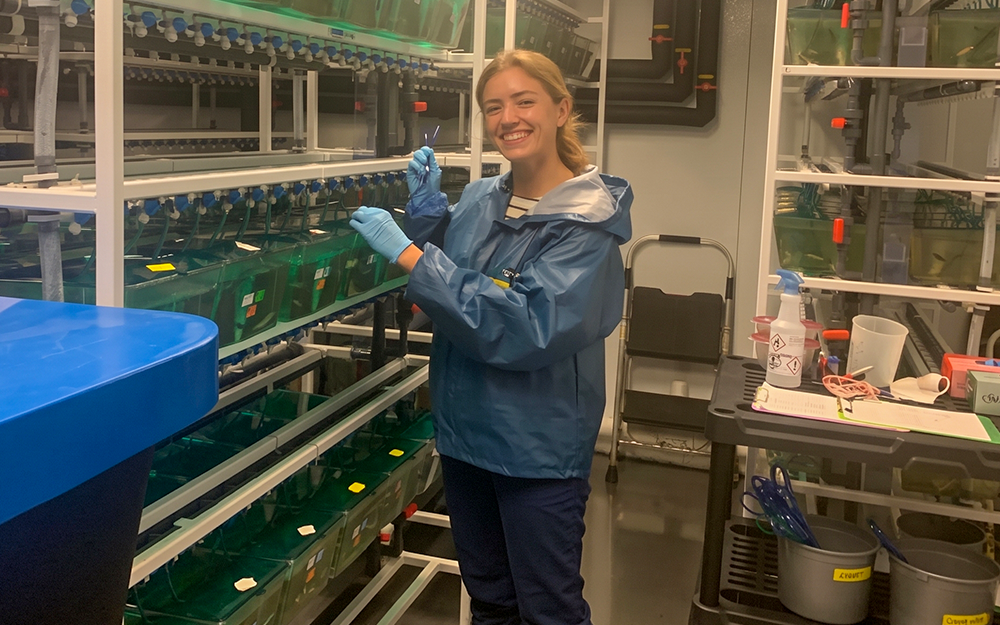
 The study brought together a trio of professors at VIMS & the Batten School of Coastal & Marine Sciences: Meredith Evans Seeley Ph.D. ’21, Robert Hale Ph.D. ’83 and Andrew Wargo. Alongside then-undergraduate student Anna Mehlhorn ’22, the scientists combined their expertise in environmental toxicology, contaminant chemistry and disease ecology to investigate how plastic pollution interacts with infectious disease. They anticipate their findings will help advance our understanding of an emerging environmental threat while revealing potential avenues for the development of practical solutions.
“Not all plastics are created equal, and so that creates an opportunity to identify the worst forms of pollution and come up with solutions,” said Wargo.
Beyond the direct impacts of pollution
Referred to as “microplastics,” plastic particles measuring less than five millimeters are widespread in aquatic environments, originating from the breakdown of larger plastic products and the shedding of synthetic materials such as clothing, fishing nets and ropes.
While their prevalence has raised concerns about environmental and human health, much of the research has focused on whether exposure directly harms or kills organisms.
 However, scientists are increasingly recognizing that pollutants can also have indirect effects, potentially weakening organisms’ ability to withstand other environmental stressors.
“One of the things that was becoming clear to us is that microplastics have really significant impacts, but they're not always lethal,” explained Seeley, the study's lead author. She and her colleagues were particularly interested in whether microplastic exposure could influence infectious disease, an important concern in both wild fisheries and aquaculture.
In an earlier study, the researchers demonstrated that exposure to certain microplastics increased mortality among rainbow trout infected with infectious hematopoietic necrosis virus (IHNV), one of the primary pathogen contributors to production loss of trout aquaculture both in North America and globally. Nylon microfibers produced a particularly pronounced effect, raising questions about what made them different from other plastics.
“We saw the effect with the nylon fibers and had to ask, ‘Is it the fact it's a fiber or is it the fact that it was nylon?’” recalled Hale.
Testing how shape and timing affect disease
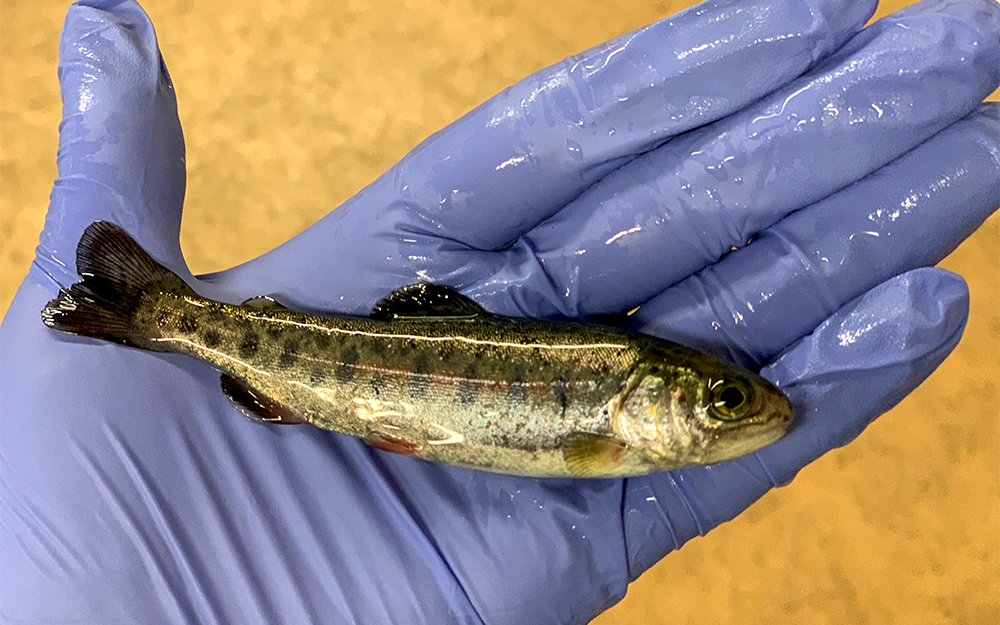
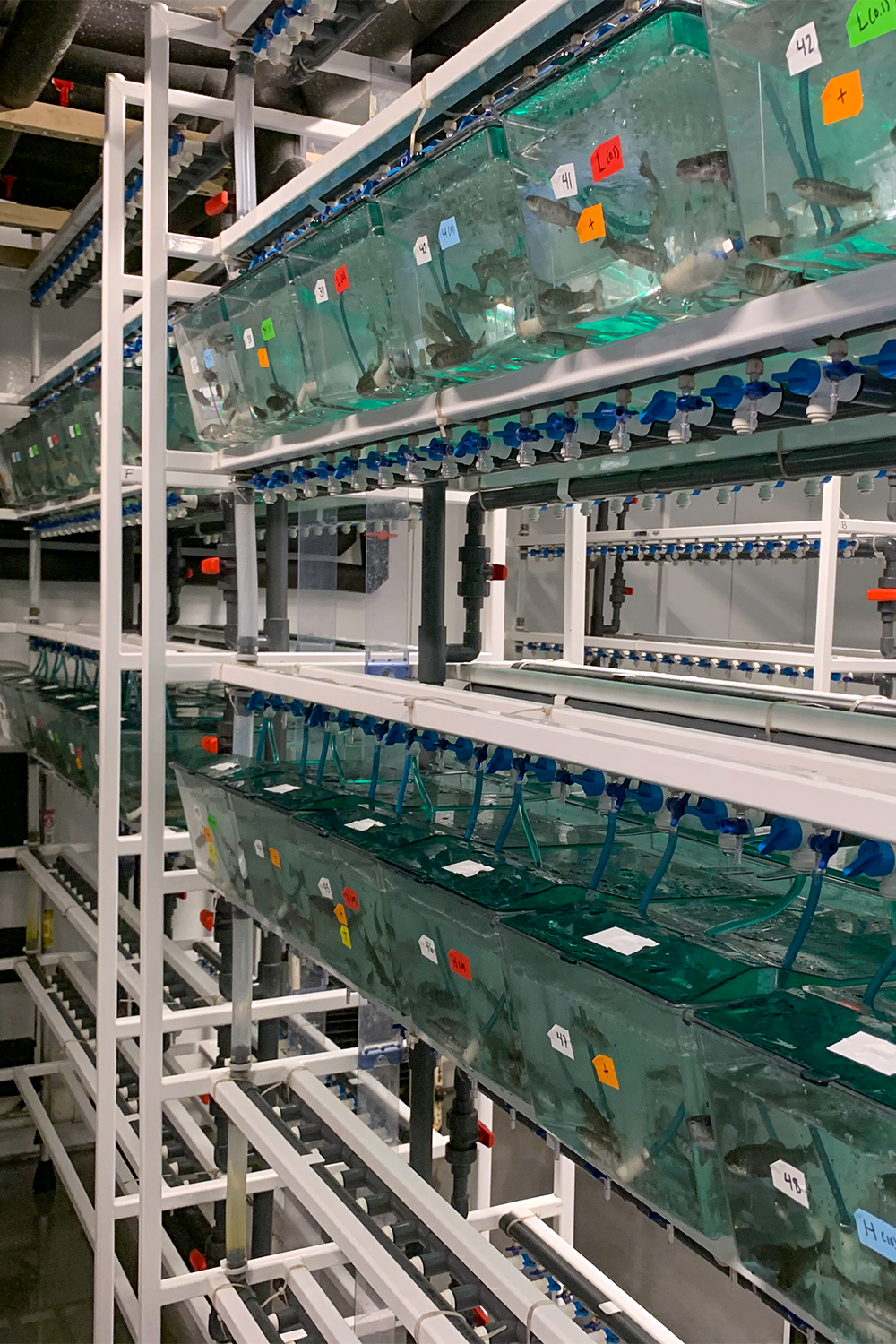
Over eight weeks, the researchers monitored 800 juvenile rainbow trout housed in 40 laboratory tanks at VIMS. Different groups of fish were exposed to either long, thin nylon microfibers or small, rounded nylon particles. Some encountered the plastics throughout the experiment, while others were exposed to fibers only during the first or second half.
Midway through the experiment, designated groups were exposed to IHNV. Researchers then monitored fish survival and periodically collected water samples to measure viral shedding, which is the amount of virus released by infected fish.
 Fish exposed continuously to nylon microfibers experienced significantly greater mortality than those exposed to the virus alone. Fish exposed to fibers only before infection also showed a similar trend, though the difference was not statistically significant. Exposure only after infection produced comparatively little effect.
The researchers suspect that the physical properties of fibers — particularly their elongated shape and rigidity, which they colloquially described as its “pokiness” — may damage protective tissues such as the gills, potentially allowing viruses to enter the body more easily. Exposure might also interfere with immune response.
“It's likely creating an easier path for that virus to infect that host,” Seeley hypothesized.
The precise mechanism is a research area requiring further investigation. Still, the findings reinforce the fact that microplastics are not uniform pollutants. Their size, shape, chemical composition and other physical properties can influence how they interact with living organisms.
Interdisciplinary science for complex problems
The study illustrates how collaboration across disciplines within coastal and marine science can reveal environmental interactions that might otherwise go unnoticed.
 Seeley brought expertise in microplastics and environmental toxicology, Hale contributed decades of experience studying environmental contaminants and Wargo provided specialized knowledge of fish viruses and infectious disease dynamics.
“I think that's what has created the novelty of the work,” said Wargo. “The interactions between all these disciplines allows you to ask really creative questions that nobody thought about before and come up with novel insights.”
For Hale, this approach reflects the reality of environmental systems, where organisms encounter numerous interacting stressors rather than isolated threats. "It's the real world,” he said. “Things don't stay in their boxes; they cross the lines. If you want it to be really applicable, then you’ve got to be interdisciplinary.”
As emerging environmental challenges grow increasingly complex, the researchers see this kind of collaboration as essential to both understanding problems and identifying workable solutions.
Developing science-based applications
Although the study demonstrates that nylon microfibers can exacerbate viral disease under controlled laboratory conditions, the researchers caution that more work is needed to determine how those findings translate to other environments. Future studies may examine different concentrations, particle sizes and exposure durations to better understand real-world risks.
The team is already beginning to bridge that gap through a new collaboration with a commercial trout aquaculture producer, funded by a W&M Applied Research & Innovation Initiative grant through W&M’s Global Research Institute. Working with Sarah Stafford, CSX Professor of Economics and Department Chair of Public Policy, as well as Virginia Microelectronics Consortium Professor Hannes Schniepp, the researchers plan to investigate which microplastics are present in working aquaculture facilities, identify potential sources of exposure and explore alternatives that could reduce impacts without imposing excessive costs on producers.
 The scientists emphasize that this upcoming work is aimed at helping aquaculture farmers produce healthier fish and ultimately higher yields.
“Microplastics might be causing some issues, so what can we do to figure this out together?” Seeley said, describing their approach.
The implications could eventually extend beyond aquaculture. Identifying the characteristics that make certain plastics particularly harmful could inform improved environmental monitoring, more effective pollution-reduction strategies and the development of safer materials.
By bringing together scientists across disciplines to conduct groundbreaking research, and increasingly incorporating partnerships with industry and social scientists, this ongoing research exemplifies VIMS' commitment to bold scientific approaches that can inform the development of solutions to some of the biggest challenges facing our environment.