

Spotted seatrout
Cynoscion nebulosus
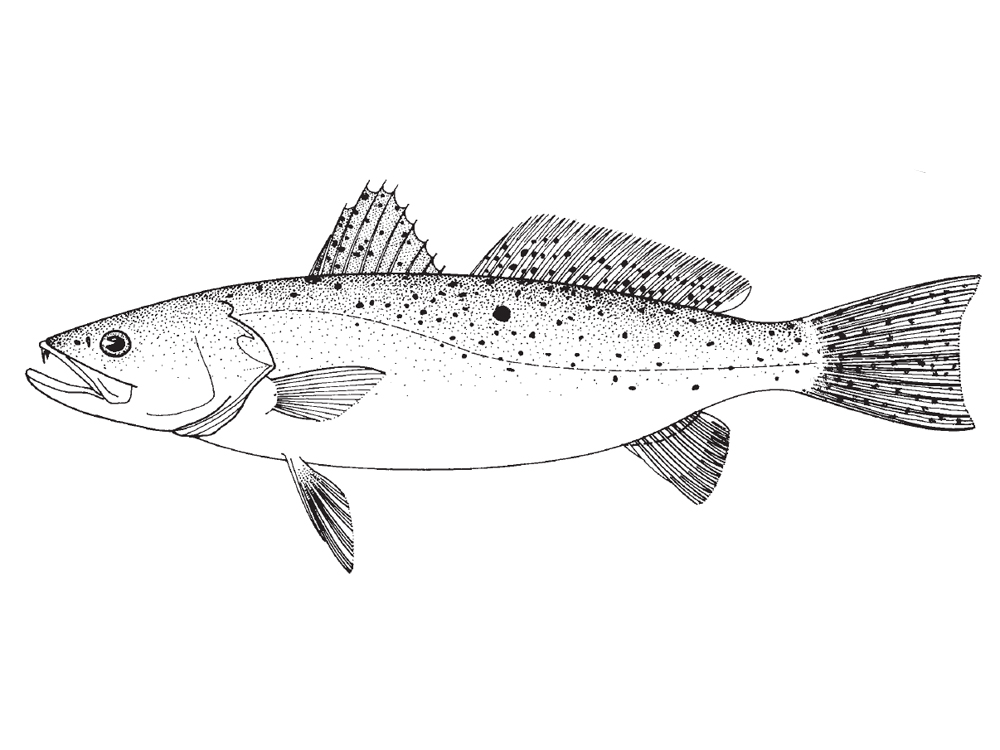
Information and species illustrations courtesy of the Food and Agriculture Organization of the United Nations (FAO).
SizeMaximum 70 cm; common to 40 cm. |
Diagnostic characters
|
Habitat, biology, and fisheriesFound usually in river estuaries and shallow coastal marine waters over sand bottoms, often associated with seagrass beds (as nursery for young); also in salt marshes and tidal pools of high salinity. Feeds mainly on crustaceans and fishes. Caught mainly with pound nets, gill nets, seines, and occasionally with bottom trawls; also by anglers who sometimes land 3 times the commercial catch on west coast of Florida. Marketed mostly fresh; a highly esteemed food fish. Landings totaled 210 000 t globally from 1950 to 2024. Florida landing reduced from 600 t (1980) to less than 100 t. (1995). There is a shift of the fishery to recreational fishing. |
DistributionAtlantic coast from Long Island to Florida and Gulf of Mexico from Florida to Laguna Madre, Mexico. |
CitationsCarpenter, K.E. (ed) Carpenter, K.E. (ed) Carpenter, K.E. (ed) |