

Smooth butterfly ray
Gymnura micrura
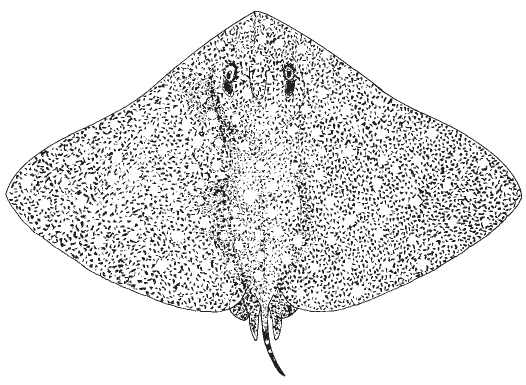
Information and species illustrations courtesy of the Food and Agriculture Organization of the United Nations (FAO).
SizeMaximum size 90 to 120 cm disc width; males mature at 42 cm disc width, females mature at 50 cm disc width, and neonates 16 to 22 cm at birth. |
Diagnostic charactersMedium to large-sized stingrays (maximum disc width over 2 m). Body strongly depressed, with head, trunk, and broadly expanded pectoral fins forming rhomboid disc. Disc at least 1.5 times broad as long. Tail very slender and short (shorter than disc), distinctly demarcated from disc. Pectoral Colour: dorsal surface grey, light green, olive, purple, or dark brown, sometimes with a reddish cast, often marked with spots or lines; ventral surface white, sometimes with a bronze or rusty cast. |
Habitat, biology, and fisheriesBenthic along the coast over sandy bottoms, but also occurs in estuaries. Food consists of bivalve molluscs, crustaceans including mysids, shrimps, crabs, and ray-finned fishes. |
DistributionRecorded from Chesapeake Bay to Brazil, and common in Gulf of Mexico, but unrecorded from the greater and Lesser Antilles. Records of Gymnura micrura from the eastern Atlantic, and Indian and Pacific Oceans probably refer to other species. |
CitationsCarpenter, K.E. (ed) Carpenter, K.E. (ed) Carpenter, K.E. (ed) |