
Molluscan Ecology Education
Graduate Education
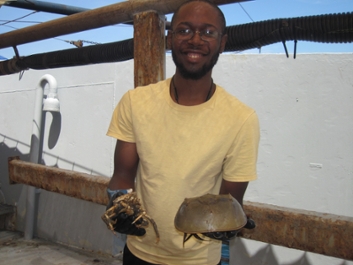
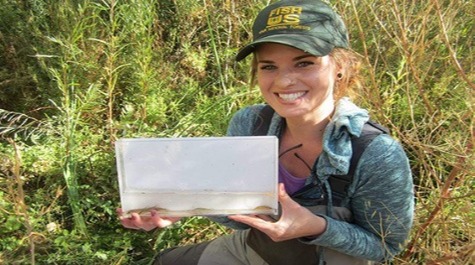
Molluscan Ecology graduate students are enrolled in William & Mary's Batten School of Coastal & Marine Sciences graduate program and are part of the VIMS Natural Resources Section. Both Master's and Ph.D. students complete research projects that lead to Master of Science theses or Doctoral dissertations. These students are an integral part of the Molluscan Ecology program.
Student Research
Research experience is available to graduate, undergraduate, and high school students working in the Molluscan Ecology Lab.
Undergraduate Opportunities
In partnership with the Science Center for Marine Fisheries, the Molluscan Ecology Lab can provide Research Experiences for Undergrads (REUs).
Partnership with W&M Data Science Department and W&M Center for Geospatial Analysis (CGA)
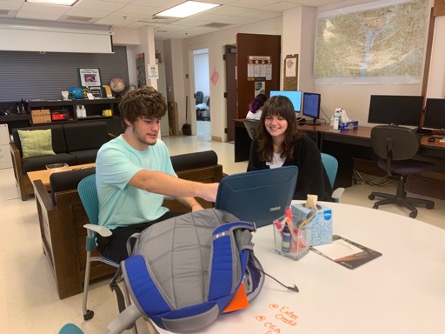
The rapid expansion of data science methods over the past decade offers exciting new tools to enable new avenues in molluscan ecology. A partnership with William & Mary Data Science Department is currently exploring AI applications in both interpretation of sclerochonology sections and stock assessment based on sequential images of marine benthos.
The VIMS Molluscan Ecology (ME) Lab also collaborates with the William & Mary Center for Geospatial Analysis (CGA), partnered by Dr. Shannon White, to provide geographic information system technical support for research projects. The ME Lab was the principal lead on a fisheries management project funded by the Science Center for Marine Fisheries (SCEMFIS) to map and analyze geospatial environmental data related to the northward movement of cod as it relates to temperature change, bathymetry, geologic habitat, and spawning range. This project investigates habitat suitability models for cod, as well as future projections for cod spawning ranges.
In addition, this research provides a template to expand similar methods to other species and areas. Such collaborations are a win-win for the Molluscan Ecology Lab, fisheries managers, and students and fellows at the CGA. Applied research helps inform policymakers considering protected habitat boundaries and fisheries management decisions. As a result of this partnership, students gain rare experiences in research and real-world applications.
Training Opportunities Provided by the VIMS Molluscan Ecology Lab: Graduate Students
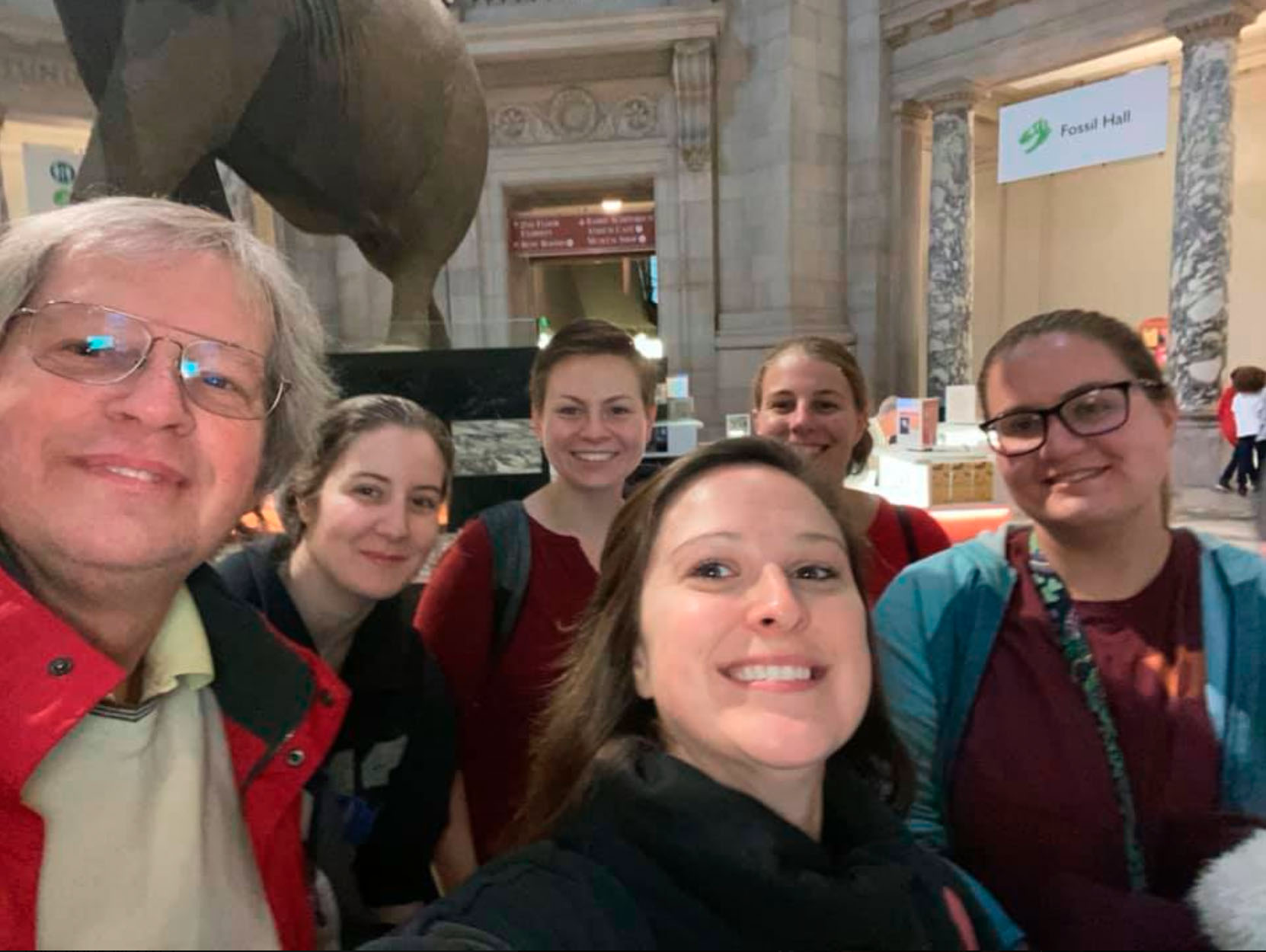
Since 2015, several University of Southern Mississippi graduate students have been trained in shell aging techniques. Kelsey Kuykendall Fleming, Sara Pace, Leanne Poussard, Kathleen Hemeon, Jill Sower and Alyssa Leclaire received individualized tutorials ranging from weeks to months from the VIMS Molluscan Ecology Lab. They learned cutting, grinding, polishing, and aging techniques for various mollusc shells, thus contributing data to their graduate studies and furthering progress related to shellfish projects funded by the Science Center for Marine Fisheries (SCEMFIS).
- Hemeon, K. Ocean quahog (Arctica islandica) population dynamics: sex-based demographics and regional comparisons in the northwest Atlantic (2022). University of Southern Mississippi
- Kuykendall, K. Management strategy evaluation for the Atlantic surfclam, Spisula solidissima, using a fisheries economics model. (2015). University of Southern Mississippi.
- LeClaire, A.M., Powell, E.N., Mann, R., Hemeon, K.M., Pace, S.M., Sower, J.R. and T.E. Redmond (2022). Historical biogeographic range shifts and the influence of climate change on ocean quahogs (Arctica islandica) on the Mid-Atlantic Bight. The Holocene. 1-13.
- Pace, S. Evidence of multidecadal recruitment in ocean quahogs (Arctica islandica) in the western Atlantic Ocean. (2017). University of Southern Mississippi.
- Poussard, L. An Analysis of Dredge Efficiency for Surfclam and Ocean Quahog Commercial Dredges (2020). University of Southern Mississippi.
- Sower, J.R., Robillard, E., E.N. Powell, K.M. Hemeon, and R. Mann (2022) Defining Patterns in Ocean Quahog (Arctica Islandica) Sexual Dimorphism Along the Mid-Atlantic Bight. Journal of Shellfish Research, Vol 41, No. 3, 335-348
Kathleen Hemeon, USM, also co-authored a laboratory techniques manual that aids in the education of future students and technicians.
Non-Graduate Training
Sara Thomas learned to age scallops via shell isotope analysis and, in turn, contributed to instructional and field videos produced by the VIMS Molluscan Ecology Lab.
• Scallop Isotope Preparation (2019)
• Scallop Research Aboard the F/V Celtic (2019)
Stories Inside Shells - VIMS Marine Science Day
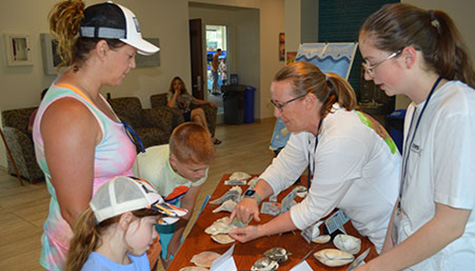
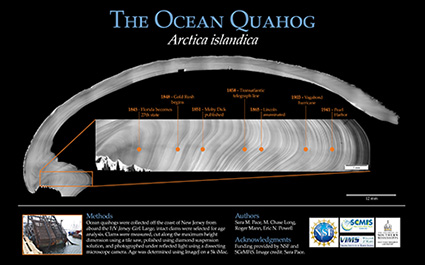
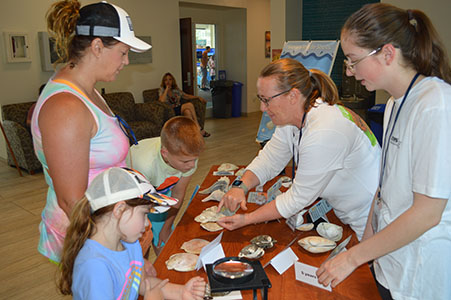 VIMS Ph.D. candidates, Virginia Sea Grant Fellows, and mollusc enthusiasts, Kaitlyn Kowaleski and Alex Marquardt, developed an educational booth titled “Stories Inside Shells” for the 21st Annual VIMS Marine Science Day (MSD). Posters and shells were provided to MSD attendees of all ages to examine and learn about how molluscs create annual growth rings similar to trees. The VIMS Molluscan Ecology Lab counts growth rings to determine age factors that are incorporated into fisheries management models.
See the VIMS Marine Science Day Photo Album here
Formal Graduate Molluscan Ecology Courses
Conversations in Larval Ecology - Focused classroom courses addressing invertebrate larval ecology are few. Conversations in Larval Ecology is a development from a formal classroom course wherein each conversation focuses on one aspect of larval ecology. It is targeted at upper-level undergraduate to graduate level students in marine science.
Musings in Malacology - Musings in Malacology is a development from a traditional classroom course wherein each conversation and paired PowerPoint presentation focuses on one aspect of malacology. It is targeted at upper-level undergraduate to graduate level students in marine science.