Microbiome Lab

Bongkeun SongOver the past decade, the Microbiome Ecology Laboratory has built a research identity around understanding how microbial communities drive nutrient and carbon cycling across coastal and aquatic ecosystems. By integrating metagenomics, amplicon sequencing, functional gene quantification, and direct biogeochemical measurements, the laboratory connects microbial community structure to ecosystem-scale processes.

We study how bacteria, archaea and fungi in estuaries, marshes and coastal sediments transform nitrogen under varying environmental conditions. We also study how microplastics and plastic additive chemicals affect nitrogen-cycling microbes, and how pollution and changing water conditions shape the microbiomes of oysters, lobsters, pteropods and kelp. Our tools range from ¹⁵N isotope tracers to metagenomics, metatranscriptomics and environmental DNA.

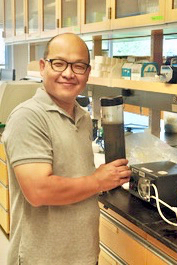
The lab is led by Bongkeun Song, Loretta & Lewis Glucksman Professor of Coastal and Marine Science in the Ecosystem Health Section at the Virginia Institute of Marine Science, William & Mary.
Meet the Team

Research Areas

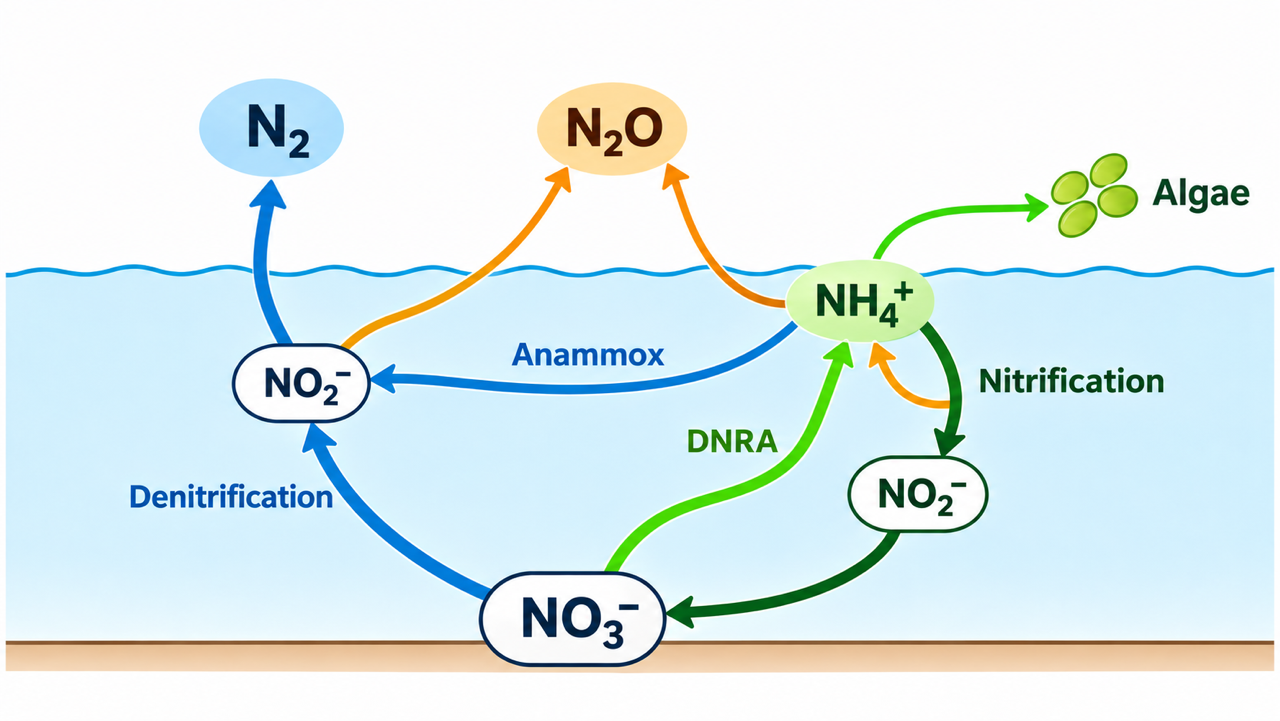
Diagram of nitrogen compounds moving through water via nitrification, denitrification, DNRA, anammox, and algal uptake, with arrows indicating pathways that produce nitrogen gas or nitrous oxide.

Coastal Nitrogen Cycling

Estuaries decide whether excess nitrogen leaves as N₂, escapes as the greenhouse gas N₂O, or is recycled as NH₄⁺ to fuel more algal growth. We pair ¹⁵N isotope-pairing rate measurements with functional-gene surveys (nirS, nirK, nosZ, amoA, hzo and nrfA) to map denitrification, nitrification, anammox and DNRA and the conditions that tip the balance.

Recent work follows seawater intrusion after dam opening in Korea's Nakdong Estuary, groundwater nutrient discharge through subterranean estuaries, methane cycling in salt marshes, and abiotic and fungal routes to N₂ and N₂O in soils. Study sites also include the York River, New River and Cape Fear estuaries, salt marshes, and Arctic deltas.

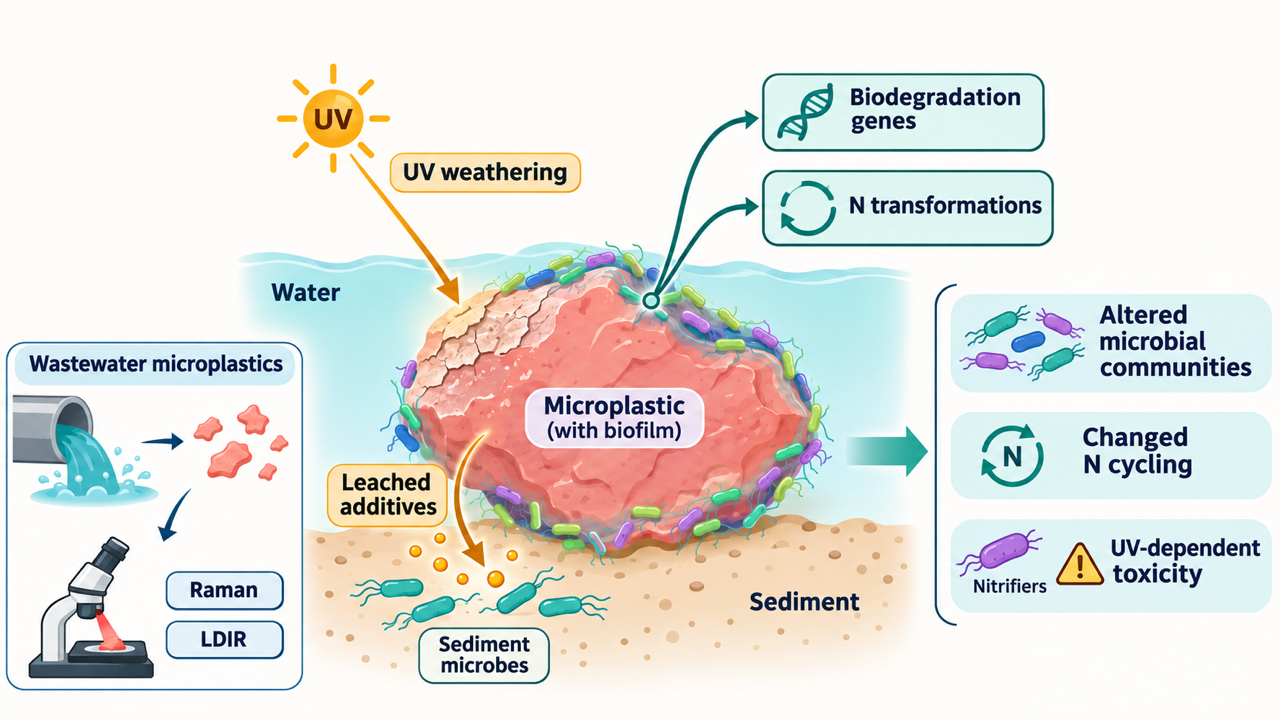
Diagram of wastewater microplastics entering water and sediment. UV weathering and microbial biofilms may alter the particles and release additives, with possible effects on sediment microbes, nitrogen cycling, and toxicity to nitrifying bacteria.

Microplastics and microbial function

Plastic particles carry their own biofilms and leach additives. With Robert Hale and Meredith Seeley, we showed that microplastics shift sediment microbial communities and nitrogen cycling, and that plastic biofilms can be hotspots for both biodegradation genes and nitrogen transformations. We also found that UV weathering changes microplastic toxicity affecting microbial activities.

We quantify microplastics in wastewater with Raman microspectroscopy and a Laser Direct Infrared (LDIR) Chemical Imaging System for the Hampton Roads Sanitation District. We also test how plasticizers such as triphenyl phosphite and UV weathering change toxicity to nitrifiers and other microbes.

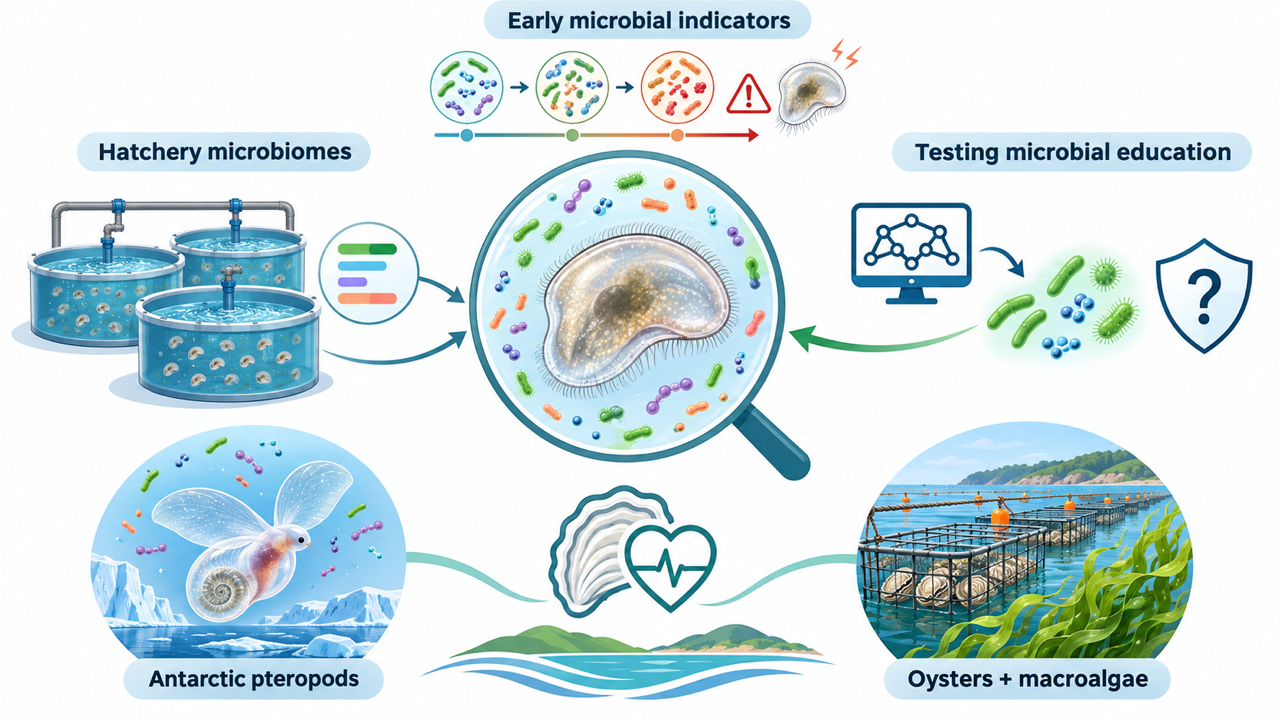
Diagram connecting hatchery microbiomes with early microbial signs of animal health. It also shows research involving Antarctic pteropods, oysters and macroalgae, and tests of microbial education.

Animal and algal microbiomes

Microbiomes shape the health of animals that coastal economies depend on. We compare oyster larval microbiomes across hatcheries, look for microbial indicators that precede die-offs, and are testing AI-guided “microbial education” of larvae to resist pathogens.

Further afield, an NSF project examines the microbiome diversity and potential function of Antarctic pteropods. New work pairs oyster aquaculture with macroalgae to improve sustainability. Other study systems include American lobster embryos and larvae and kelp.

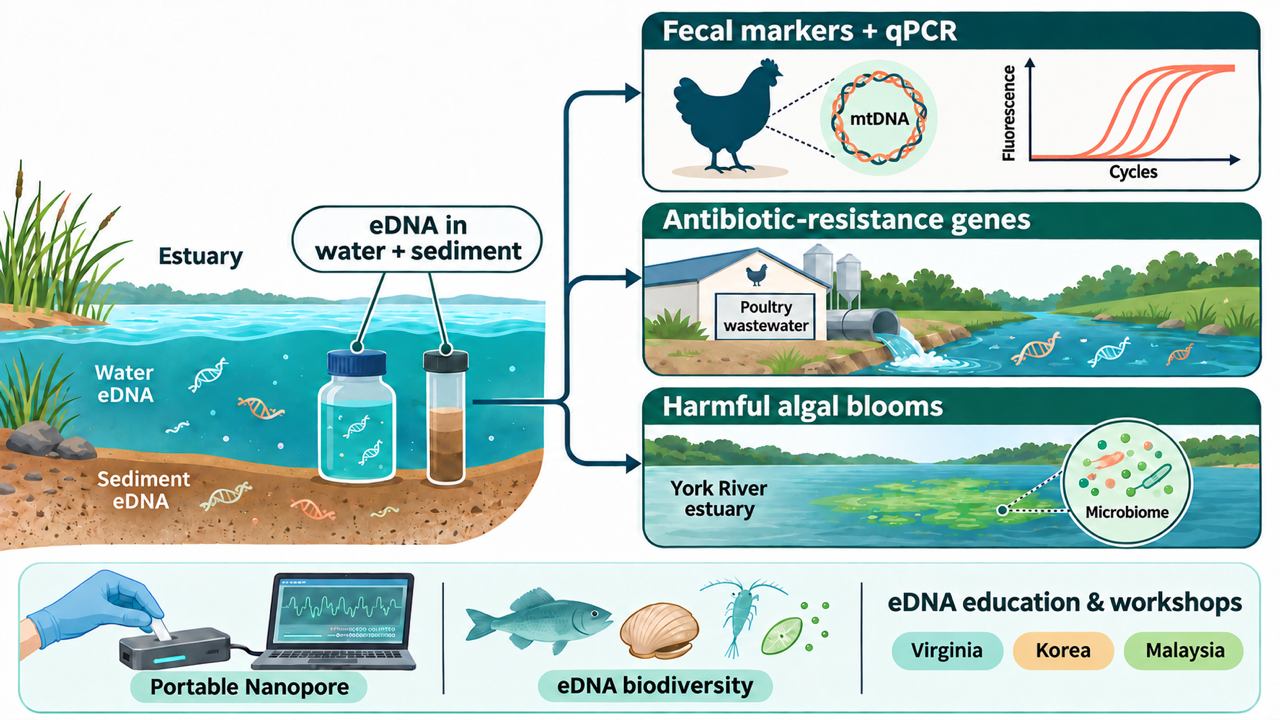
Diagram of water and sediment samples from an estuary used to study fecal contamination, antibiotic resistance, harmful algal blooms, and biodiversity. A lower panel shows portable sequencing and eDNA education workshops.

Environmental DNA and contamination

DNA left in water and sediment tells us which organisms have been there. We develop qPCR assays that detect and quantify fecal contamination, including a chicken mitochondrial marker. We also track antibiotic-resistance genes downstream of poultry wastewater and follow harmful algal blooms through the York River microbiome.

The same methods anchor our teaching: portable Nanopore sequencing and environmental DNA biodiversity surveys in courses and workshops in Virginia, Korea and Malaysia.

Contact

Microbiome Lab

Contact Us

Address

Bongkeun Song, Ecosystem Health Section Virginia Institute of Marine Science, William & Mary Gloucester Point, VA 23062