
Rainfall reshapes river ecosystems and food webs, study finds
Global warming is often treated as synonymous with climate change, but rising temperatures are only one consequence of the human-driven phenomenon. Changes in rainfall patterns are another, but their effects on ecosystems are less understood.
In fact, rain has an outsized impact on the ecology of rivers, according to a new study led by William & Mary’s VIMS & Batten School and published in the journal Ecology. Researchers found that less annual rainfall destabilizes stream ecosystems, reducing the complexity of the food webs and reorganizing the distribution of animal mass.
“Climate change is fundamentally changing the structure and function of these rivers. These shifting food webs might be an early warning sign we’ll need to pay attention to,” said lead author Bradley Strickland, a former postdoctoral research associate at the Batten School of Coastal & Marine Sciences & VIMS.
A natural laboratory in South Texas
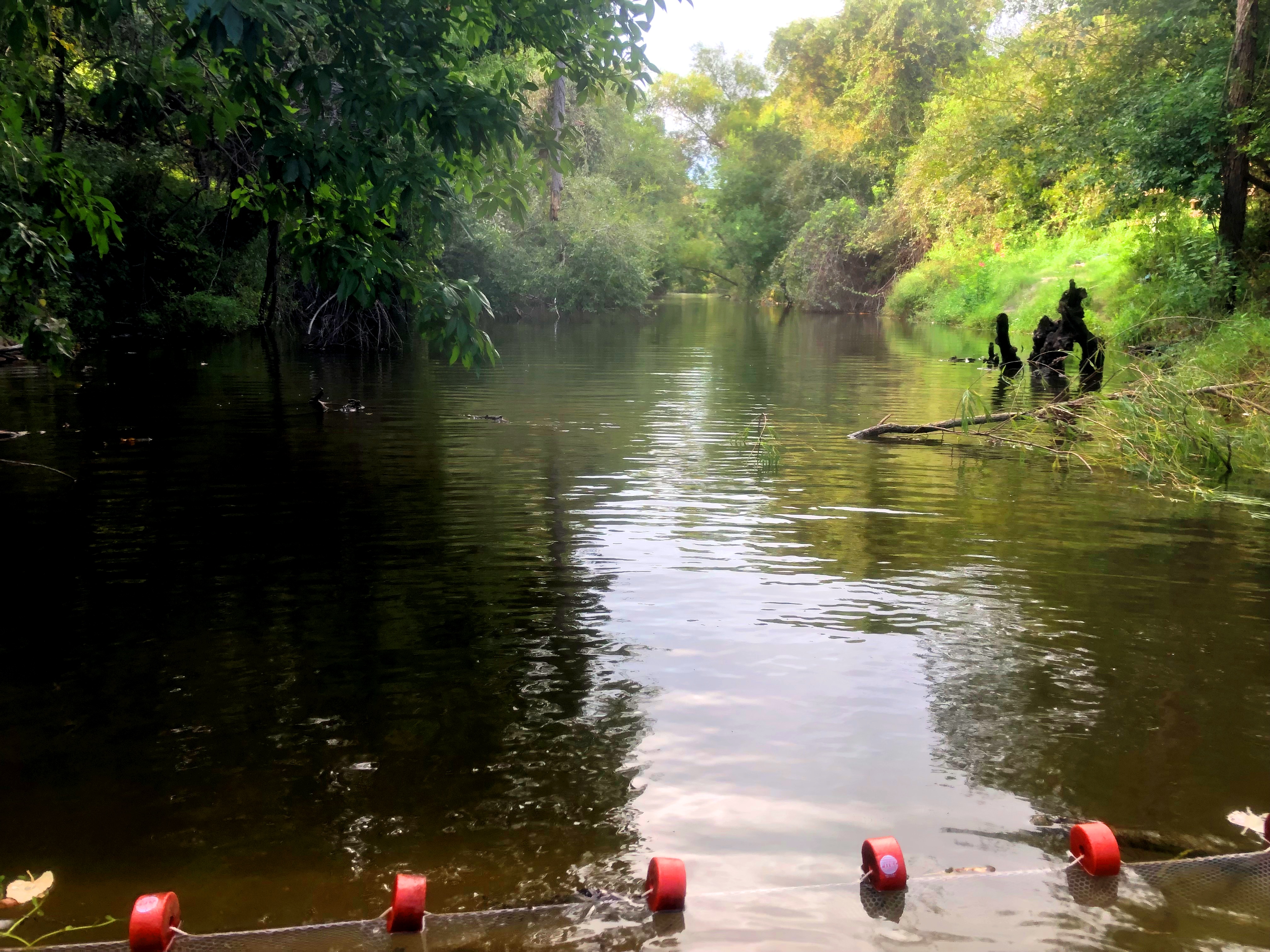
The study focused on nine rivers in the Gulf Coast prairie ecoregion of Texas, where dry air from the Chihuahuan Desert collides with moisture from the Gulf of Mexico to create a steep rainfall gradient. The rate of annual precipitation drops considerably over a short distance, making it ideal for measuring rain’s influence on riverine ecosystems.
“Anywhere else in the U.S., if you had a rainfall gradient like that, it would usually be because of some geologic feature, like a mountain range,” said co-author Chris Patrick, an associate professor at VIMS & the Batten School. “So you're not sure what's causing what. In South Texas, the only thing that's really changing is the rainfall. That makes it a nice natural laboratory. And it's unique, there's no other place in the continental U.S. like it. There may be very few other places like it in the world.”
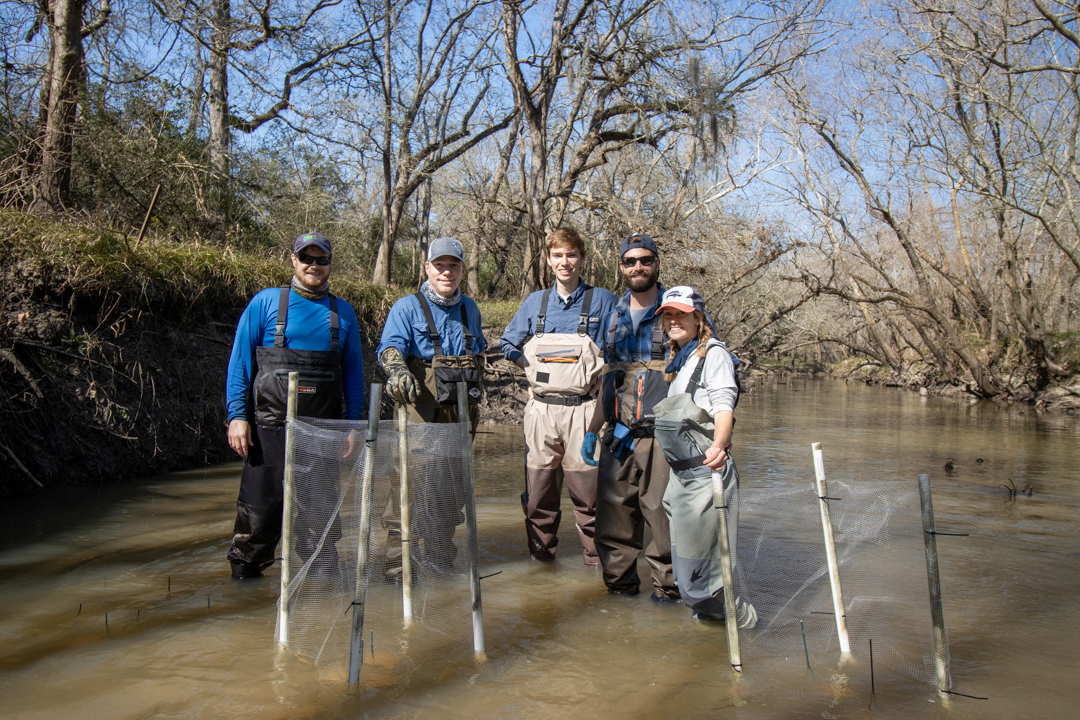
Over four years, Patrick’s team sampled fish, snails, algae and other organisms and took measurements of water quality, temperature, and more to build a groundbreaking dataset that tracked both vertebrate and invertebrate communities in these riverine ecosystems.
 The goal of gathering all of this data was to pin down a key metric to understanding the resilience of any ecosystem: secondary production.
“Secondary production is basically the growth of new animal tissue over time,” Patrick said. “It’s rare that people do secondary production empirically, directly measuring it rather than modeling it, for a single species. Doing it for a whole community is less common, but it happens. But to do it for both the invertebrate community and the fish community, and to do that for multiple years at multiple sites? That’s essentially unheard of. Nobody does that. And we did.”
Compared to simpler metrics like abundance and diversity, secondary production better reflects an ecosystem’s growth, turnover and energy flow, Strickland said. His role in the study was making sense of the dataset that Patrick’s team produced.
“Secondary production is truly one of the best measures we have for understanding the function of an ecosystem,” Strickland said, “because it integrates so many other measures of efficiency, ecological structure, population dynamics and community structure.”
An unexpected biomass pyramid
Analysis of the data confirmed what researchers expected: that as rainfall decreased along the gradient, secondary production in stream ecosystems would increase. Less precipitation means less tree cover, which means more light to grow algae.
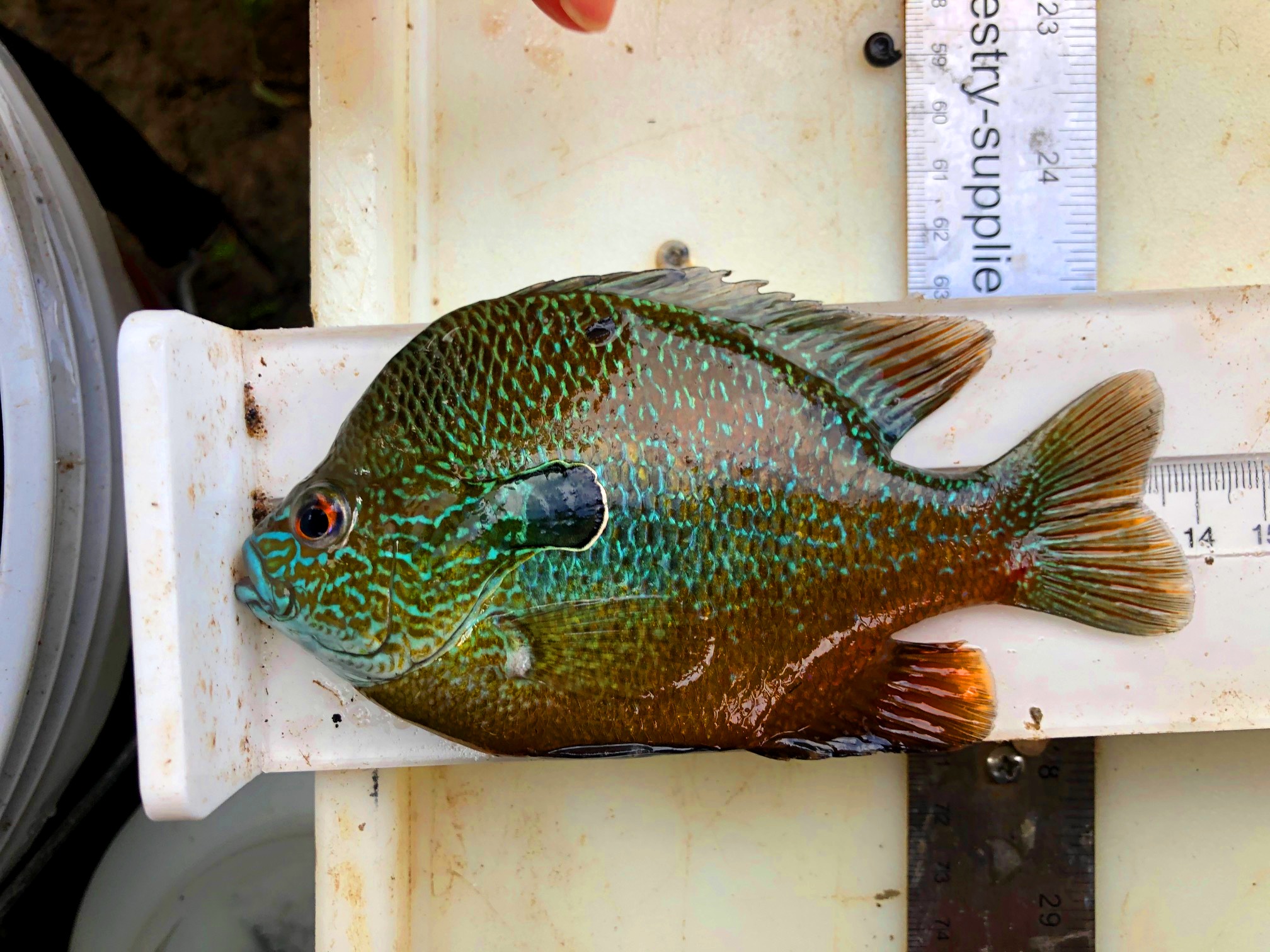
That abundant aquatic plant material feeds invertebrates like non-biting midges, but in the drier streams it also led to a higher proportion of herbivorous fish like sailfin mollies. Like invertebrates, these fish reproduce rapidly (female mollies reach sexual maturity within 32 days), and together they support a relatively smaller predator population, made up of fish like spotted gar.
 What surprised researchers was that this distribution of biomass in the more arid streams reflected a classic bottom-heavy pyramid – typical of terrestrial ecosystems, but not aquatic ones. Marine ecosystems, for example, usually have top-heavy pyramids due to rapidly cycling algae and phytoplankton at the bottom being eaten almost as fast as they reproduce.
“That tells us the whole energy pathway has changed across this rainfall gradient,” Strickland said. “Rainfall changes the amount and type of resources at the base of the food web, and our findings point to consumers responding dramatically.”
For the study sites that received more annual precipitation, an inverted biomass pyramid was observed, but not only because of algae. Researchers found that detritivorous invertebrates also supported these more diverse food webs, feeding on the animal carcasses, leaves and other litter that fell into the stream.
“It’s a slower, steadier way of living compared to the stressful, fast way of life seen in drier streams,” Strickland said.
Ultimately, the streams with less annual rainfall had twice the secondary production and biomass turnover rates as the others, despite being similar otherwise. For that reason, the study characterized rainfall as a master variable, one that has the power to reshape the foundations of ecosystems.
Understanding rainfall’s broader impact
That conclusion carries weight beyond the rivers of South Texas. When it comes to precipitation’s ability to control the flow of energy through animal communities, the study draws parallels to other ecosystems, from grasslands and savannas to coastal and marine ecosystems.
“As rainfall becomes more variable, based on this work we should expect big changes in productivity, energy flow and stability of river ecosystems,” Strickland said. “Though our work focused on rivers, it may hold that any rainfall-dependent system is likely to see some shift in energy flow as the climate continues to change.”
With that in mind, the study calls for creating better models and continuing to collect field data to help us understand rainfall’s effects on the biodiversity and productivity of all ecosystems to better predict how they may respond to climate change.
“There are some places where deserts will expand, others where it’s going to get wetter on average year-round,” Patrick said. “Rainfall is another important mechanism through which climate change is going to alter ecosystems.”