
Bangor University field course at the VIMS Eastern Shore Laboratory continues to dazzle international students
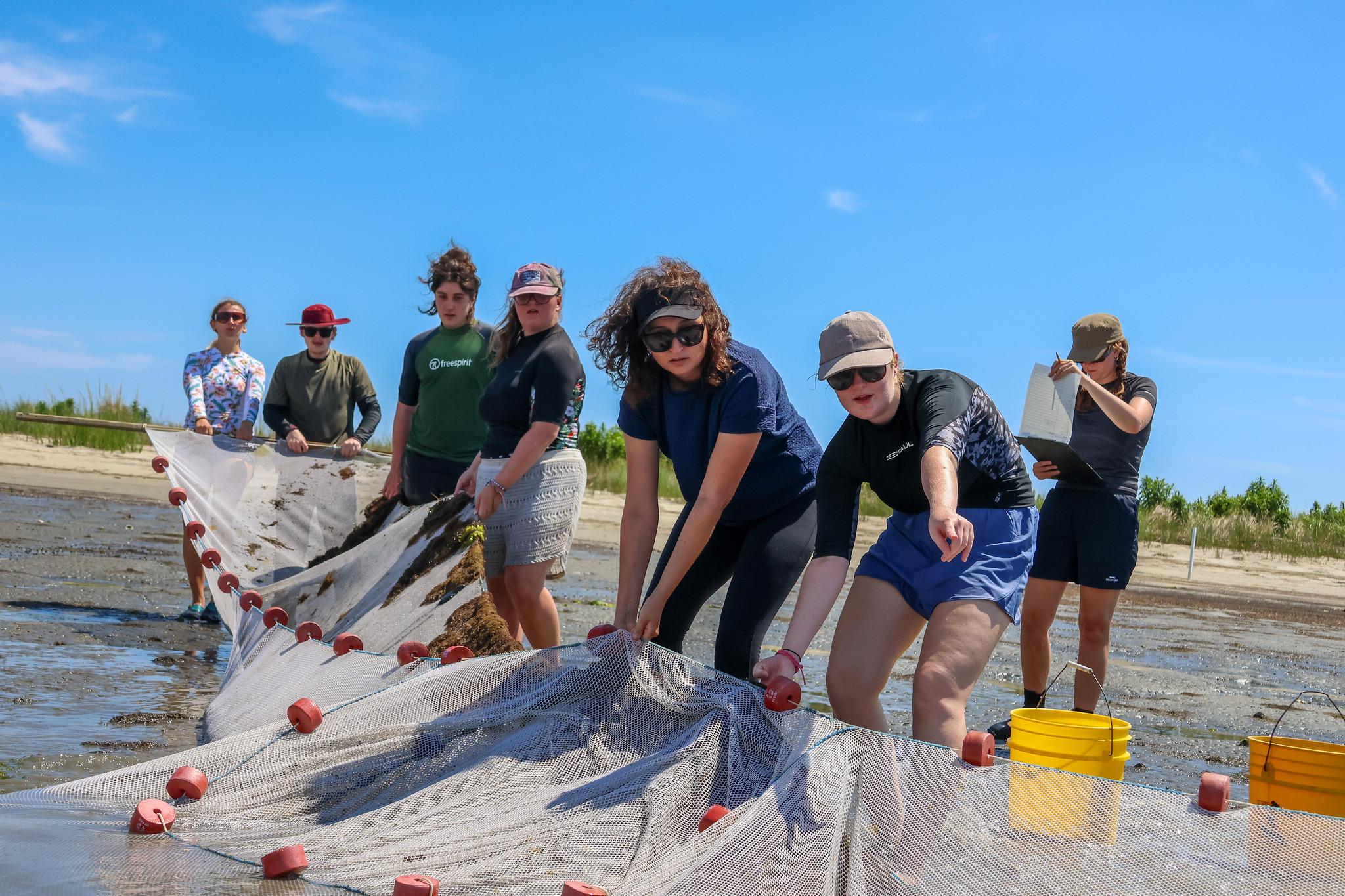
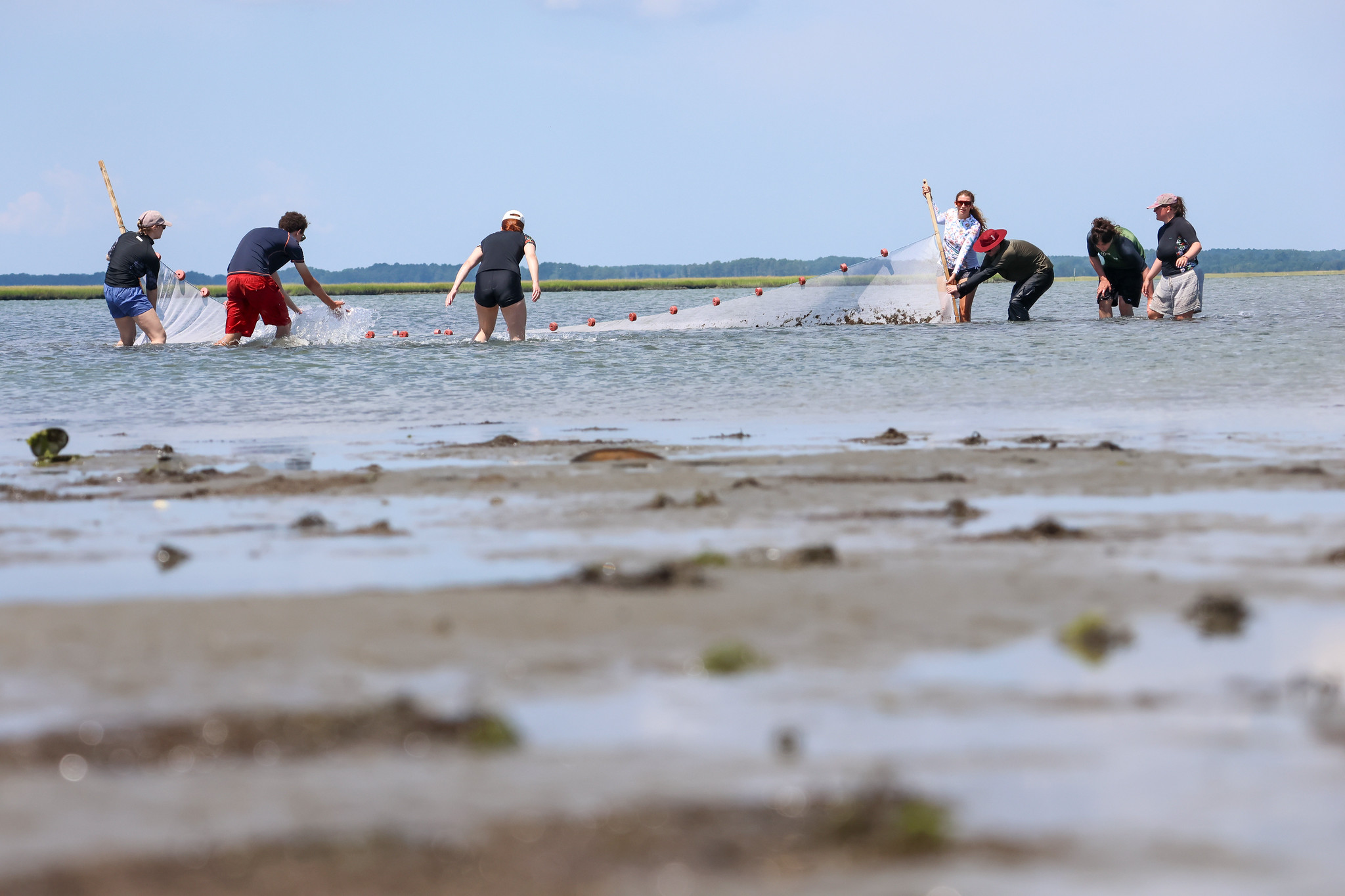 A group of British college students hop off a skiff after landing on a Cedar Island beach along the Eastern Shore of Virginia, anxious to start one of their field course activities at William & Mary’s Virginia Institute of Marine Science (VIMS) Eastern Shore Laboratory (ESL). They are given a seine net, with weights along the bottom and poles on either side, and told to start fishing with no other instructions.
As they scramble to figure out how to even properly hold the net, their instructor Charlotte Colvin, a Marine Biology Lecturer at Bangor University in Wales, watches them, remembering when she participated in the same field course as a student years ago.
“Are you trying to catch the boat?” she jokes, as the students, now waist deep in the water, look back in confusion.
“For me as a student, it was a hands-on experience with marine science. I absolutely loved it,” Colvin said. “Now that I’m running the field course, it’s really come full circle.”
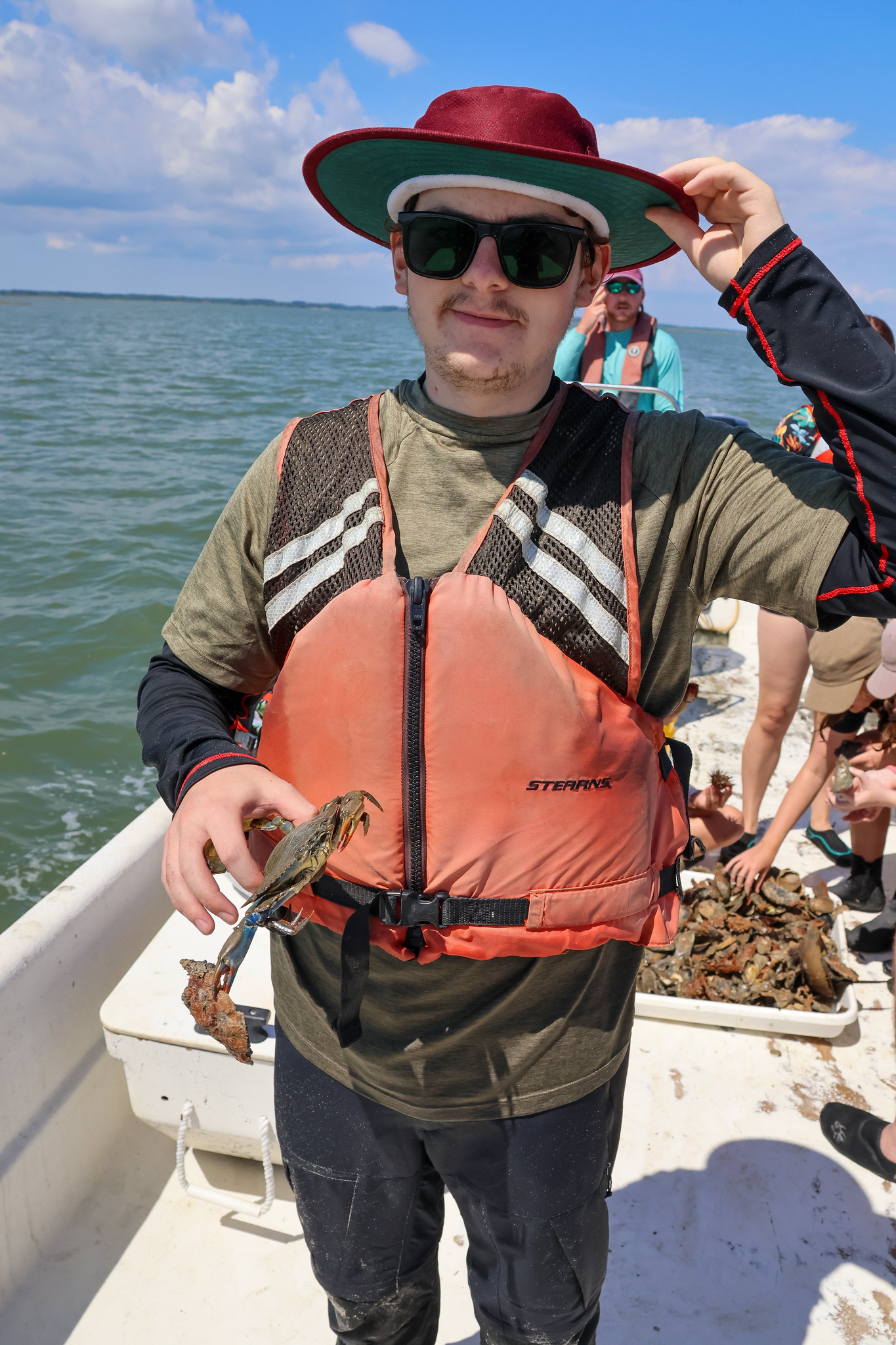
This year, the 26 undergraduates from Bangor University arrived at VIMS ESL in late August for the two-week field course, where they participated in field activities like seining as well as benthic dredging and bird surveys. As part of the course, they learn about the region’s habitats and organisms, sampling methods and more. In the second week, student groups design and conduct their own pilot research projects, which they present at the end of their stay, followed by a seafood cookout.
“There are so many more skills that you don’t get just by being in a classroom or having a lecture,” said James Cox, one of this year’s students. “It’s all practical. You’re doing stuff all day in boats, with live animals, working in the actual environment.”
The history of the field course
Bangor began bringing students to the VIMS ESL in 2003 based on connections that former VIMS Director & Batten School of Coastal & Marine Sciences Dean Don Wright had made with international colleagues. Wright tasked then-VIMS ESL Director Mark Luckenbach, now an emeritus professor, with cultivating the partnership. A handful of years later, Luckenbach decided he should try to establish a parallel course with W&M undergraduates studying in North Wales, which continues today.
“Nobody’s going into marine science because they want to sit and listen to a lecture,” Luckenbach said. “In both field courses, it’s the places that really make it. They’re pretty spectacular.”
For new VIMS ESL Director and Batten School Associate Professor Stacy Krueger-Hadfield, the VIMS ESL staff are also what make the experience so special for the Bangor students.
“The location and the facilities wouldn’t be what they are without the staff,” Krueger-Hadfield said.
Colvin recalls one year when a student group was working on a project involving blue crabs and had stored some live specimens in one of the VIMS ESL labs. The storage containers, however, were not covered properly, so overnight all the crabs escaped, and the next morning Seawater Lab Manager John Lewis walked into crabs crawling everywhere.
“It was just the funniest thing,” Colvin said, “but John didn’t get annoyed or angry. He also found it funny, but he then worked with the students to help them figure out what to do.”
“The fact that the students are able to have a laugh with the staff while still going through that learning process is really nice,” Colvin said.
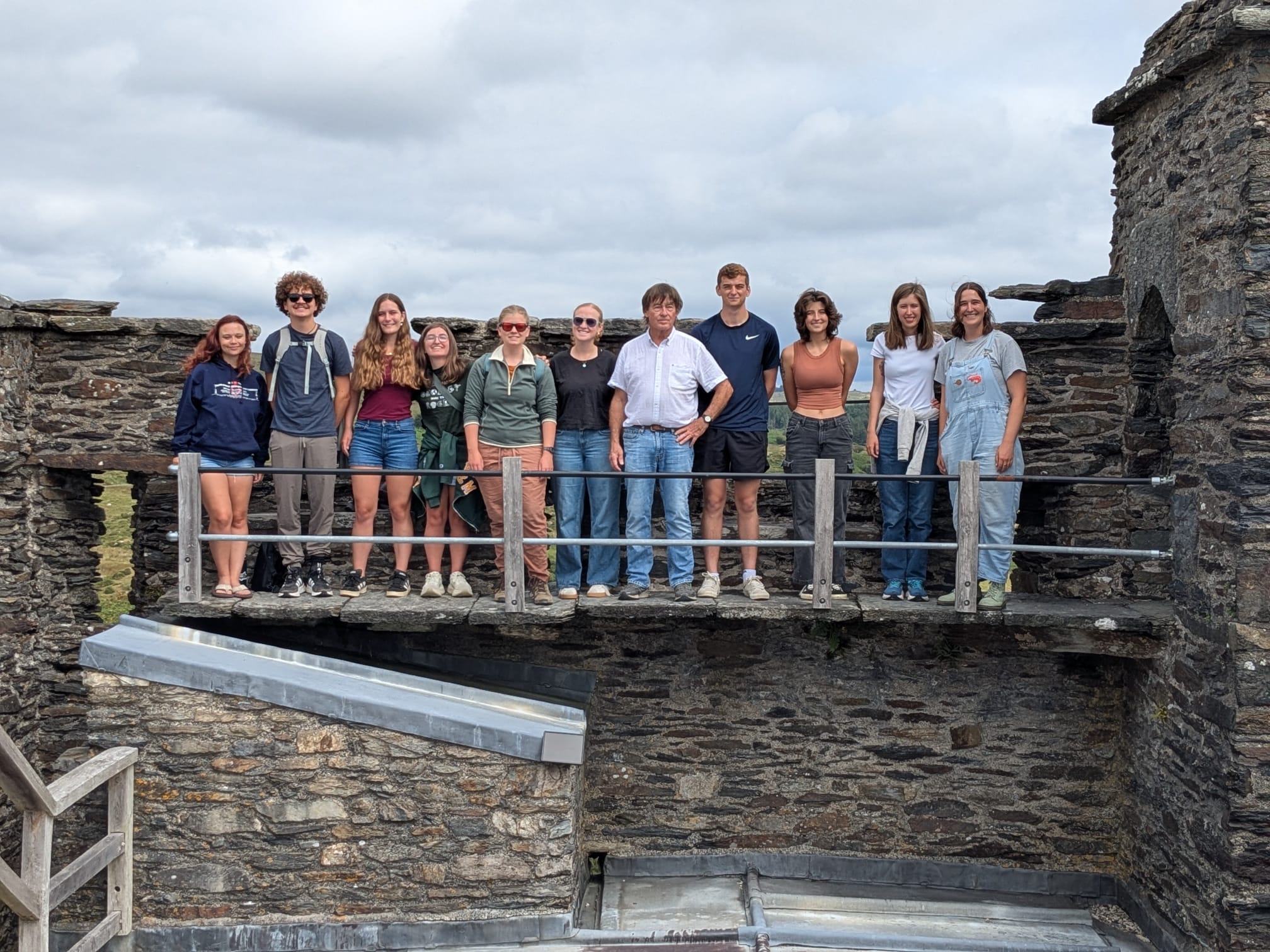 The future of the partnership
Beyond fieldwork, Colvin said that the field course gives students confidence that carries on to future endeavors. One of her former field course students developed a project for their master’s degree on using bivalves to mitigate environmental change, based on a pilot study they started at VIMS ESL.
Krueger-Hadfield said that the field course also exposes students to different career pathways in marine science and working environments. “It’s a great way for people to cross in the hallways, learn about how different academic systems work,” she said. “You never know what someone is going to do downstream in their career.”
The organizers of the field courses have discussed possible ways the two could be further integrated, such as collaborating on long-term data collection.
Whatever the future holds, the long-running partnership has resulted in close ties, with Colvin describing VIMS ESL as a “home away from home.”
The students engaged in the seining exercise grew closer too by the end of it. With some guidance from their instructors, they learned to work as a team. Some splashed at the ends of the net to drive the fish inward, others dragged the poles along the bottom, and one student was designated notetaker.
When they unfurled the net at the beach, they revealed dozens of glimmering silversides, killifish, and anchovies. Each was counted and released, added to the dataset of over 70 different fish species Bangor students have tallied since the course started.