

Chesapeake Bay blue crabs rebound; scientists urge continued caution
The annual Blue Crab Winter Dredge Survey shows improved juvenile recruitment, but adult female abundance remains low
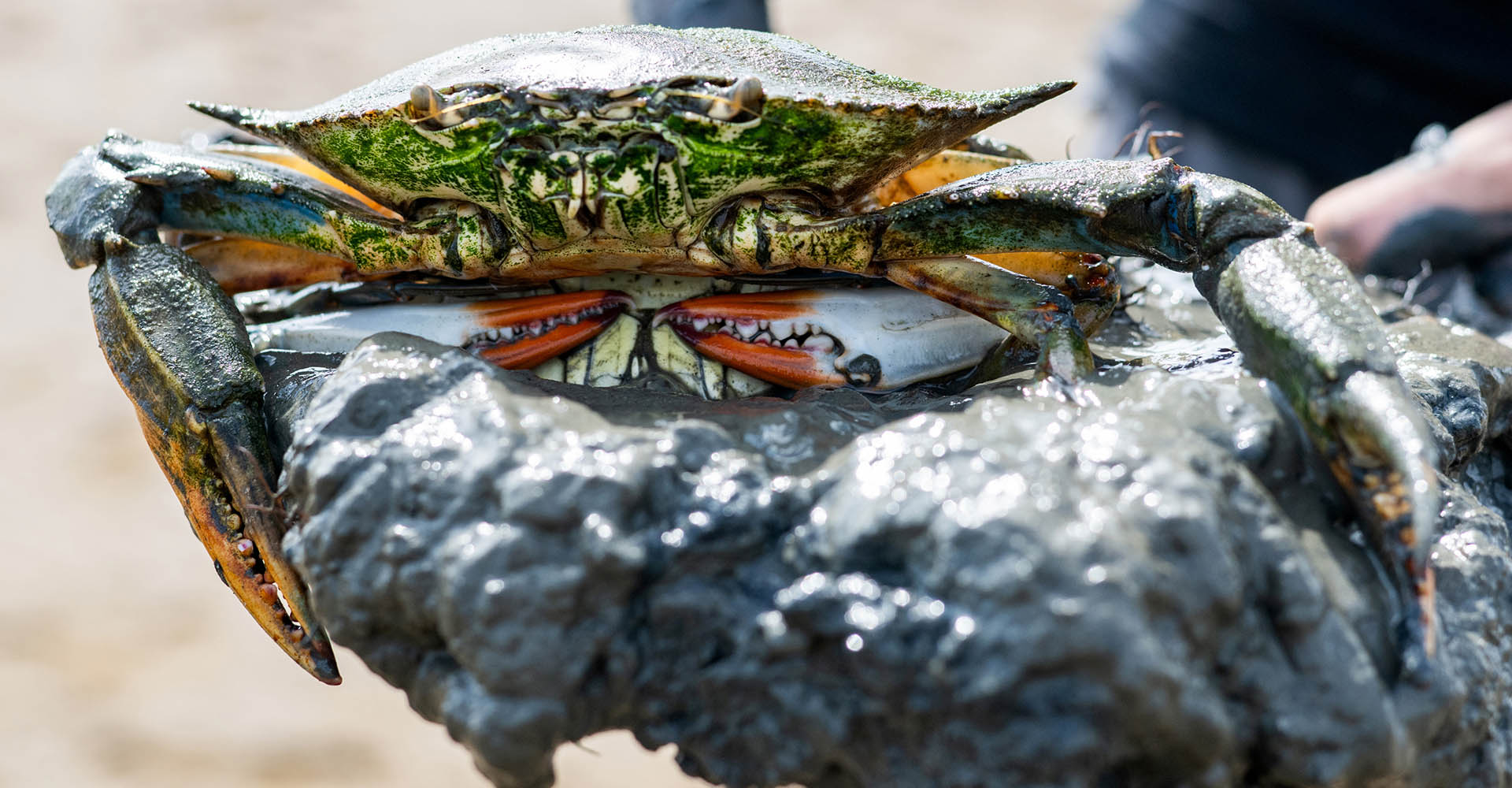 An estimated 349 million blue crabs live in the Chesapeake Bay, according to results from the annual Blue Crab Winter Dredge Survey conducted by William & Mary’s Batten School & VIMS and the Maryland Department of Natural Resources. This represents a 46% increase from the 238 million estimated in 2025.
Most of the gains came from juvenile crabs and adult males, which increased 121% to 228 million and 25% to 37 million, respectively. Scientists are encouraged by the juvenile numbers, which are at their highest levels since 2019. While the increase in adult male crabs is positive, they remain below the long-term average for the sixth consecutive year.
Less positive were the numbers of adult female crabs, which showed an annual 25% decline to an estimated 81 million. Female crabs are a key indicator used to assess the health of the fishery. This year’s count remains above the overfished threshold of 72.5 million crabs, but well below the management target of 196 million. In addition, this past winter’s severe cold caused above-average overwintering mortality, which likely influenced the abundance estimates.
“The blue crab population showed encouraging signs of improved recruitment this year, but adult abundance, especially among female crabs, remains low enough to warrant continued caution,” said Romuald Lipcius, a professor at the Batten School of Coastal & Marine Sciences & VIMS who leads Virginia’s portion of the survey. “Maintaining a strong spawning stock remains critical to supporting the long-term sustainability of both the population and the fishery.”
Preliminary estimates indicate the female exploitation rate — the percentage of female crabs removed by fishing — was 29% in 2025. That is slightly above the management target of 28% but remains below the 37% threshold used to determine whether overfishing is occurring.
“These findings reinforce the importance of maintaining precautionary conservation measures while researchers continue working to better understand the environmental and ecological factors influencing blue crab population dynamics,” said Lipcius.
The annual Blue Crab Winter Dredge Survey, conducted cooperatively between Virginia and Maryland since 1990, is considered one of the most comprehensive fishery-independent blue crab surveys on the East Coast. Scientists sample approximately 1,500 sites throughout the Chesapeake Bay each winter to estimate crab abundance by age and sex.
A benchmark stock assessment led by researchers from the Batten School & VIMS, the University of Maryland Center for Environmental Science and the Maryland Department of Natural Resources was recently completed. The assessment incorporates new models and data sources to reevaluate blue crab abundance and management reference points and began peer review in April 2026. Updated results incorporating data through 2025 are expected to help inform future management decisions beginning in 2027.