

Update on the harmful algal bloom in the Chesapeake Bay and Eastern Shore of Virginia
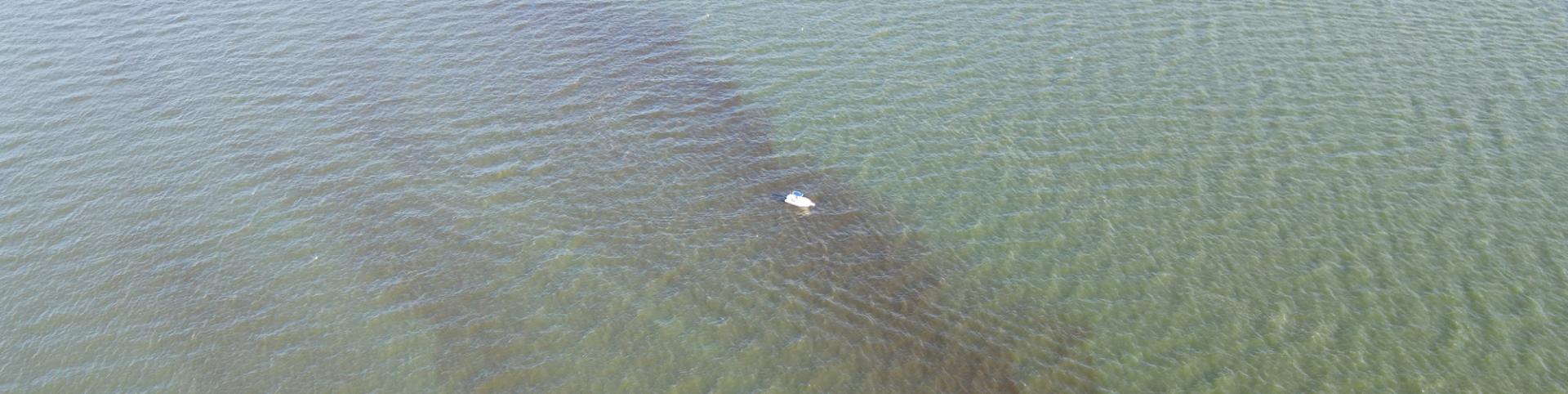 William & Mary’s VIMS & Batten School researchers are monitoring a harmful algal bloom (HAB) that has expanded from the mainstem Chesapeake Bay into waters along the bayside of Virginia’s Eastern Shore. HABs are a significant population increase of algae that can harm aquatic life, people or ecosystems. The bloom includes Alexandrium monilatum (commonly referred to as “Alex”), a species that can be harmful to fish, shellfish and other marine life.
What is happening?
A bloom of Alex that was first observed in the Chesapeake Bay expanded into nearshore waters along Virginia’s Eastern Shore. VIMS researchers collected samples from a near-continuous bloom extending from Cape Charles north to south of Nassawadox Creek, with bloom activity also observed in areas including Nassawadox, Hungars and Cherrystone creeks.
The bloom coincides with widespread reports of dead fish and other marine life, as well as oyster mortality reported by shellfish growers in affected areas. Researchers are continuing to investigate the extent of the bloom and its relationship to the observed mortality.
What is “Alex”?
“Alex” is short for Alexandrium monilatum, a naturally occurring microscopic alga known as a dinoflagellate. Alex tends to thrive in warm, relatively salty waters, and is typically observed when water temperatures reach about 28 degrees Celsius (82 degrees Fahrenheit) or higher and salinity exceeds approximately 20 parts per thousand. Under the right environmental conditions, Alex can reproduce rapidly and reach high concentrations, creating what is known as a harmful algal bloom.
Alex is also bioluminescent. At night, dense concentrations can produce a blue-green glow when the water is disturbed by waves, boats or other movement.
Why can Alex be harmful to marine life?
Alex produces a toxin called goniodomin A, along with other bioactive compounds that can damage cells and have harmful effects on aquatic organisms. The species has been associated with mortality of fish and invertebrates elsewhere and has also been linked to harmful effects on marine life in laboratory settings at VIMS.
VIMS researchers are investigating the current event and its potential role in the fish and oyster mortality being reported along the Eastern Shore. VIMS is also actively coordinating with and advising regional shellfish farmers.
Is the bloom responsible for the fish kills and oyster mortality?
The bloom coincides with widespread fish kills and reports of oyster mortality in affected areas, and Alex is known to have harmful effects on aquatic organisms. However, researchers are continuing to collect and analyze information to better understand the relationship between the bloom and the mortality being observed.
How did the bloom reach the Eastern Shore?
Researchers are investigating the specific conditions that contributed to the bloom’s movement and intensification. NOAA’s National Centers for Coastal Ocean Science had been tracking bloom activity in the mainstem Chesapeake Bay before Alex was detected at high concentrations along the Eastern Shore.
One possibility being investigated is whether prevailing winds and water circulation pushed bloom waters toward the Eastern Shore, allowing Alex to become concentrated in nearshore waters and creeks.
How are scientists monitoring the bloom?
VIMS researchers are collecting and analyzing water samples to identify the species present and determine where bloom concentrations are occurring. They are coordinating with the Virginia Department of Health (VDH), Virginia Department of Environmental Quality, NOAA, Old Dominion University, Virginia Tech, University of Virginia and other partners to monitor changing conditions and impacts.
VIMS also operates the Chesapeake Bay Environmental Forecast System, or CBEFS, which includes experimental HAB forecasts. The tool uses computer modeling and environmental conditions to forecast the probability of encountering harmful algal blooms in portions of the Chesapeake Bay. These forecasts can complement field sampling and other monitoring efforts but are experimental and intended for informational purposes.
Where can I see the HAB Forecast?
CBEFS provides an experimental forecast with maps showing current conditions and short-term forecasts for the probability of encountering harmful algal blooms in the Chesapeake Bay.
How long will the bloom last?
It is too early to know. Harmful algal blooms are influenced by many factors, including water temperature, nutrients, sunlight, salinity, winds and currents. Changes in weather and water circulation can cause a bloom to intensify, move, disperse or decline relatively quickly.
VIMS & Batten School researchers will continue monitoring the bloom and working with state and federal partners as conditions develop.
Is bioluminescent water a sign of a harmful algal bloom?
At this time of year in the Chesapeake Bay, bioluminescence in the water is likely to be caused by Alex, particularly given the bloom currently being observed. Alex can create a blue-green glow when the water is disturbed, including by waves, boat wakes or other movement. While bioluminescence can be a strong indication that Alex is present under current conditions, confirming the species at a specific location requires analysis of a water sample.
Is it safe to swim, fish or harvest shellfish during the bloom?
Conditions can change quickly and may vary considerably from one location to another. Members of the public should follow current guidance and advisories from the Virginia Department of Health and other appropriate state agencies regarding recreational water use, fishing and shellfish harvesting.
People should avoid areas with obvious signs of a bloom or fish kill, such as discolored water, large numbers of dead or distressed animals, or other unusual water conditions, and should keep pets away from affected water and dead marine life.