

Javier Pujols: Piecing together the blue carbon puzzle
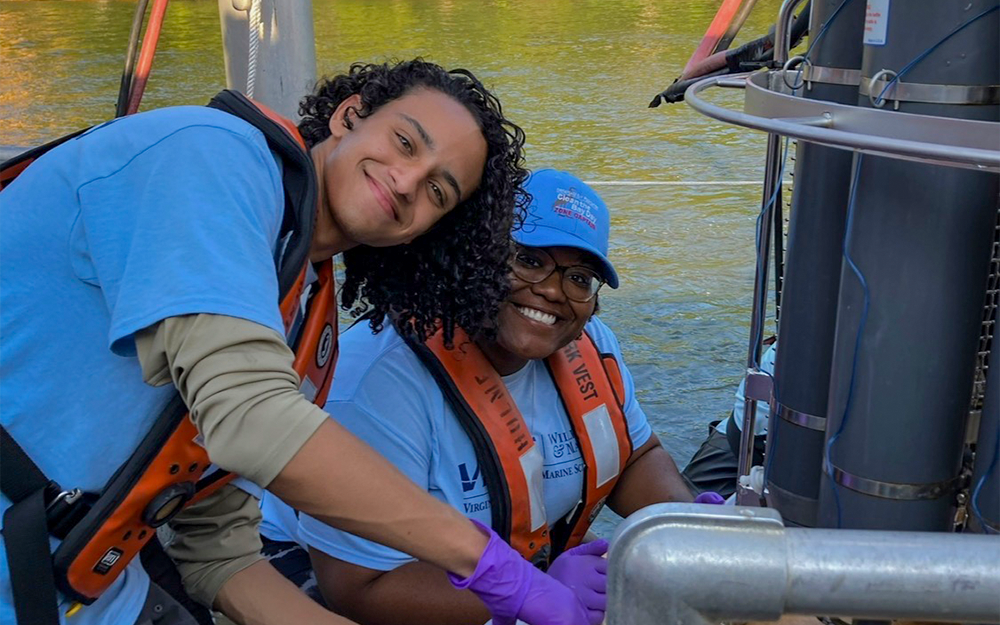 Javier Pujols M.S. ’26 grew up in the Dominican Republic not merely surrounded by the ocean, but fascinated by it. He turned that interest into an academic journey that led him to William & Mary’s Batten School & VIMS, where he studied how carbon and alkalinity are cycled in estuarine systems and is one of eight M.S. students graduating in 2026. Through his experiences, Pujols developed a strong background in both field work and science communication. As he prepares to complete his graduate studies in August, Pujols advises new graduate students to push themselves outside their comfort zone.
Here’s what Pujols had to say about his time at the Batten School of Coastal & Marine Sciences & VIMS:
On choosing the Batten School & VIMS:
I grew up in the Dominican Republic, surrounded by the ocean, so that curiosity started early. In high school, I worked in a coral physiology lab inside an open museum, which meant not just doing research on coral stress responses, but explaining it to visitors all day. That really shaped me. Later, after more interdisciplinary training during undergrad, I connected with Professor Emily Rivest. I knew I wanted to study with her, but the community and collaboration here also stood out to me.
 On the supportive community:
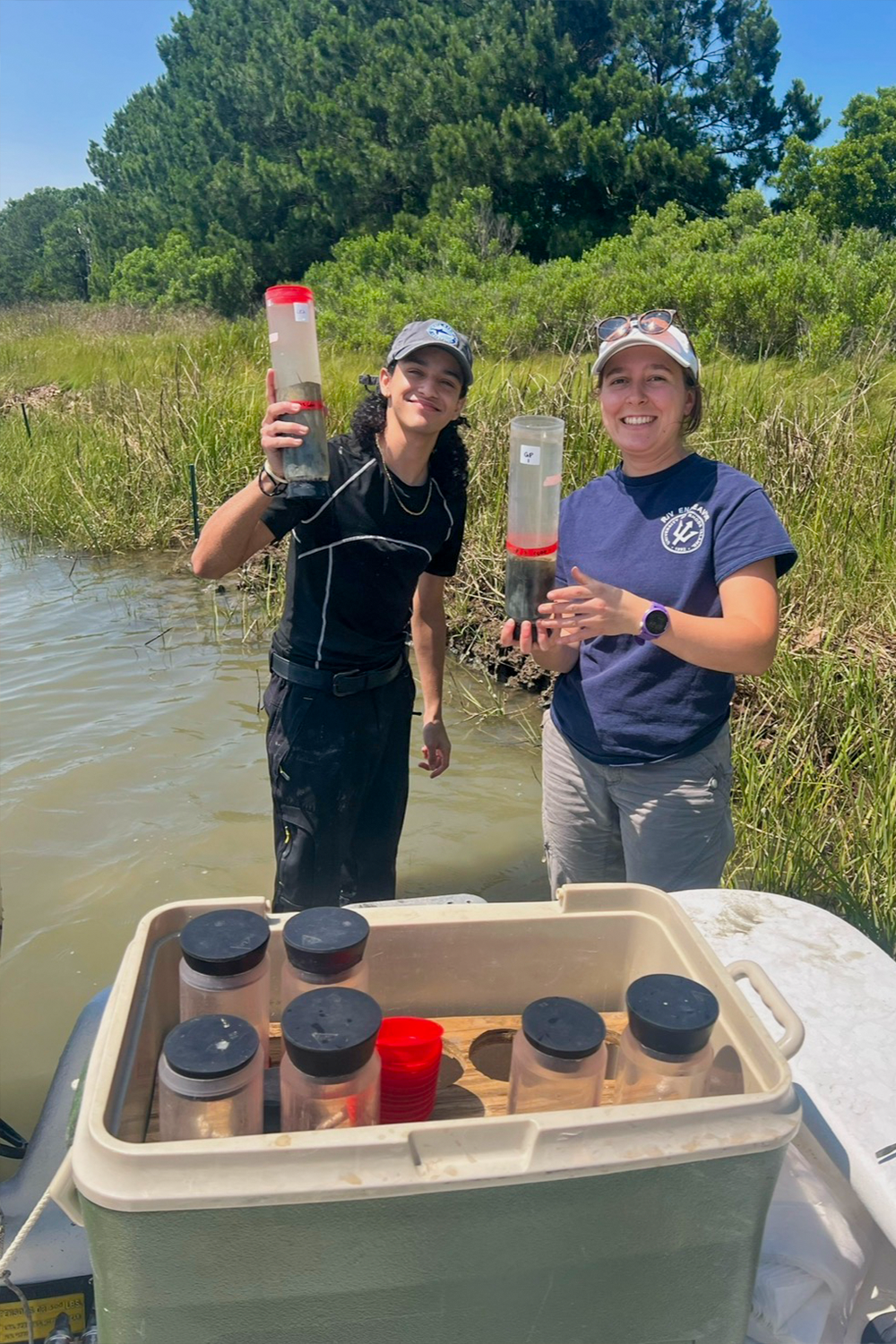
The Batten School & VIMS really prioritize interdisciplinary, collaborative science, stepping outside your little niche and looking at the whole system and how everything is interconnected. That’s huge. And the extracurriculars, such as being involved in Dive-In and the Graduate Student Association, have been just as formative. Having spaces where we can meet, chitchat, work together and just exist is important. Also, using my brain in areas outside the lab honestly makes me a better, more passionate researcher.
On his most memorable moments:
Grad school is always throwing stuff at you, so it’s hard to choose, but my most meaningful moments have been out in the field and in the lab — seeing science in action, running incubations, analyzing samples and treating every little task as pivotal because I’m learning so much. I also love sharing that work in outreach. Sparking curiosity in someone else’s eyes makes it clear that the possibilities in science are almost limitless. And my cohort is so close; I’ll have them forever and they’ll have me.
On support from mentors:
Emily Rivest — I genuinely don’t know where I’d be without her. She’s supported my intellectual and scientific journey, but also reminds me to take mental breaks, give myself grace and not get tunnel vision. Amber Hardison has been pivotal too, especially diving into chemical and biogeochemical pathways, and for being such a big advocate as I think about what’s next. Finally, Jenny Dreyer, through the invertebrate collection and Dive-In, has connected me to opportunities and let me geek out about invertebrates.
 On his primary field of study:
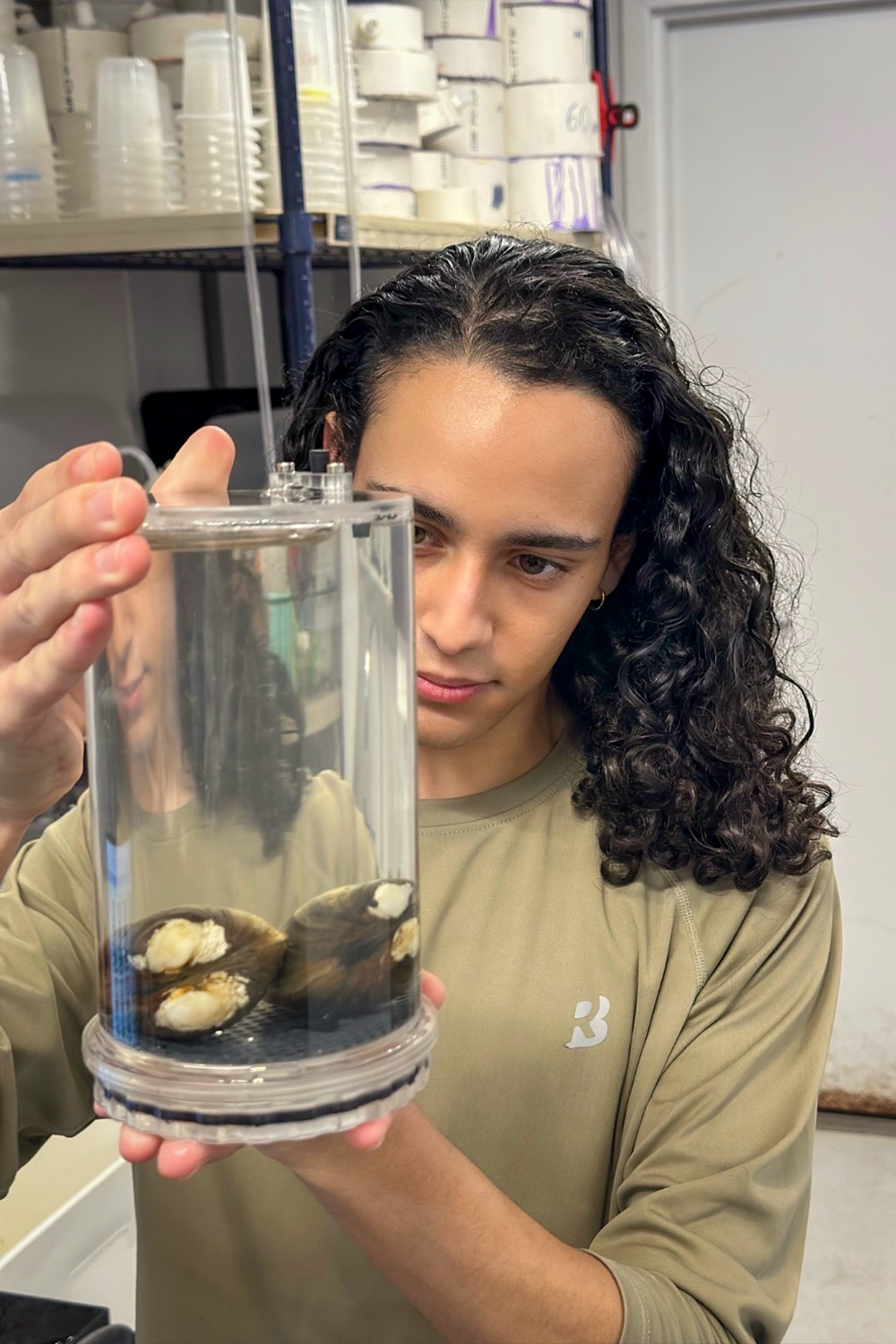
I came in under the Chesapeake Carbon and Alkalinity Study, this big interdisciplinary effort to understand how carbon and alkalinity are cycled in estuarine systems. My thesis focuses on live, shell-building invertebrates by running seasonal incubations to measure their physiological rates and how their metabolic activity influences biogeochemical cycling. It’s field work in wetlands, the York and Potomac Rivers, piecing together how those organismal-scale processes scale up and fit into the broader blue carbon puzzle.
On what’s next:
I have accepted an offer from the University of Florida to pursue a Ph.D. where I will be studying how sponges and sponge restoration contribute to system biogeochemistry. I am still conceptualizing the exact research question, but I would be particularly interested in better understanding how sponges contribute to carbon and nitrogen cycling.
On advice for new graduate students:
Grad school is unpredictable; things you didn’t plan for are bound to happen. Give yourself grace when the unexpected comes up and don’t spiral on outcomes you can’t control. I said yes to a lot, maybe too much at times, but I gained so many transferable skills. Above all, no one expects you to be an expert on day one; just be willing to grow, stay enthusiastic and push outside your comfort zone.
This alumni profile was published in May, 2026.