
A leader of “game-changing” educational experiences
Tami Lunsford M.S. ’02 uses lessons learned at the Batten School & VIMS to instruct students in the classroom and in the tropics
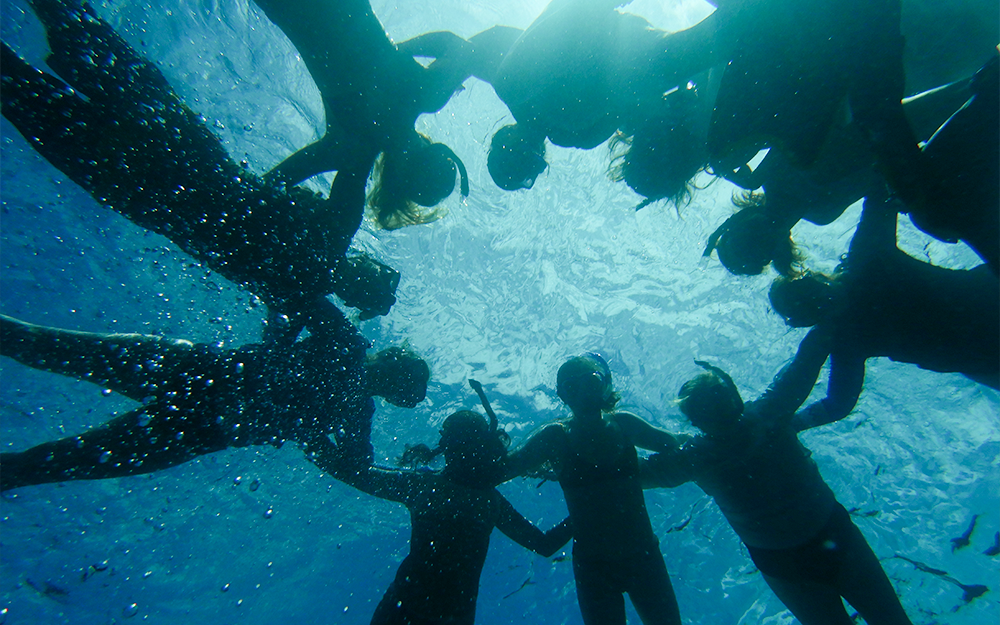 Marine science has never been confined to a lab or a lecture hall for Tami Lunsford, an alumna of William & Mary’s Batten School & VIMS. Today, her classroom spans coral reefs, research vessels and international field stations — immersive environments where high school students don’t just learn about science; they get hands-on experience doing it.
A marine scientist by training at the Batten School of Coastal & Marine Sciences & VIMS, and an educator by calling, Lunsford is currently a senior science team lead and instructor at Newark Charter School in Delaware, one of the largest schools in the state. Her role is split between teaching advanced biology and marine science and supporting science instruction across all grade levels.
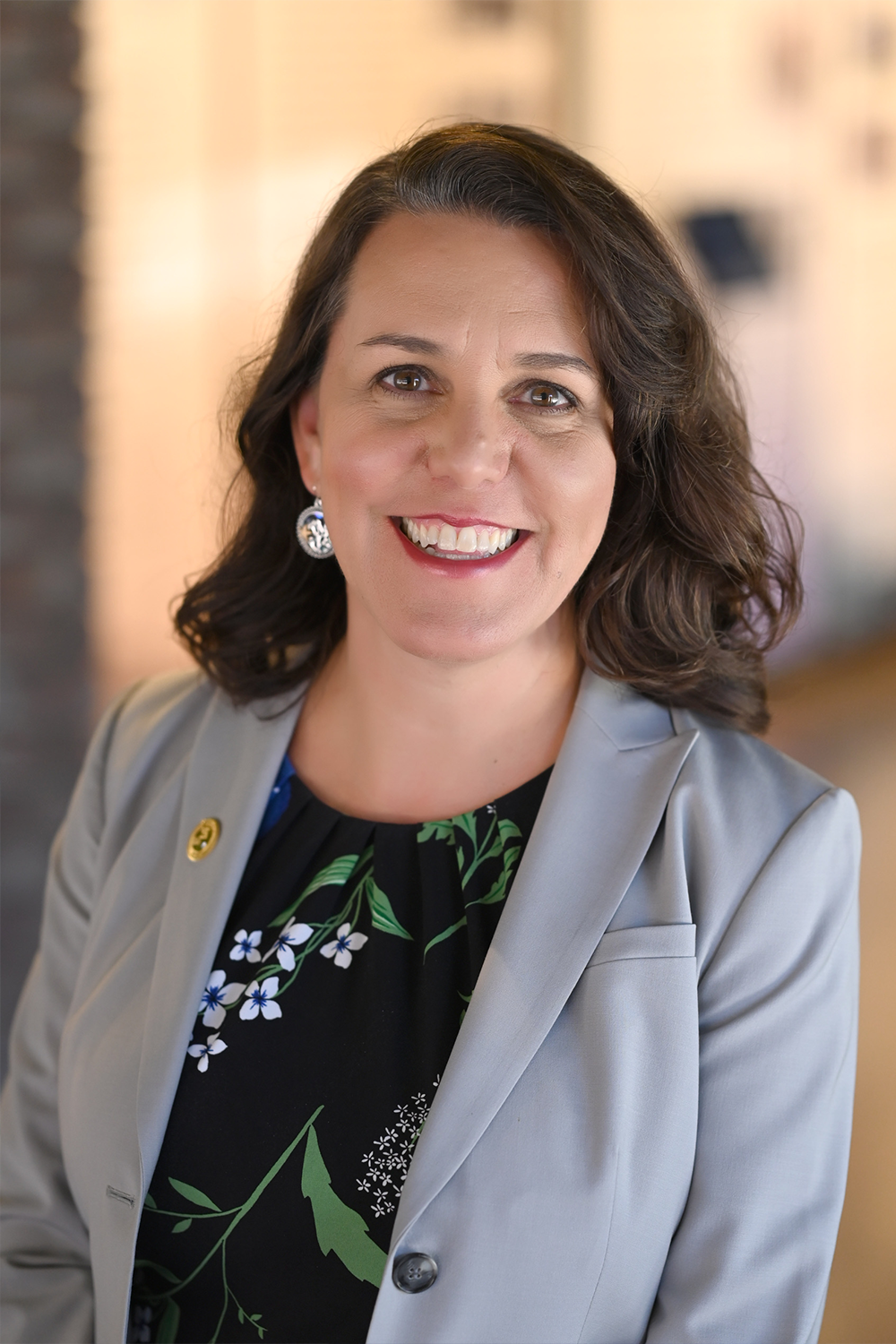 Lunsford works directly with K-12 teachers to, as she described, “increase their access to science resources, develop activities they don’t always have time to work on themselves and help them increase their confidence in both content understanding and hands-on science.”
Yet it is outside of the classroom where Lunsford’s work is especially distinctive. Drawing on the research foundation and professional network she developed at the Batten School & VIMS, she has built immersive international field programs that mirror real scientific practice. Approximately every other year, she leads groups of students abroad — most often to the Bermuda Institute of Ocean Sciences, which she first visited as a graduate student — for intensive marine research experiences.
“I try really hard to make it a true study abroad and not just ‘let’s go and lay on the beach,’” Lunsford said. Over the course of roughly ten days, students follow a demanding schedule that runs from dawn to dusk, engaging in coursework on coral reef ecology, fish identification, plankton, geology and marine technology. They then design their own research questions, develop methods, collect data while snorkeling, analyze results and present findings to peers and scientists at the end of the program.
For many participants, it is their first exposure to what science looks like beyond textbooks and school labs. "It's been game-changing for their college applications,” said Lunsford. “I encourage kids to follow their passion, even when it’s hard, because we need more people making a difference by doing what they love.”
These experiences are the culmination of Lunsford’s passion for teaching. Although her own graduate research focused on microbial nitrogen cycling in coastal systems, she long ago realized that her greatest impact would come through education. “I'm convinced that I've had an impact, because I have former students who are now doing really cool stuff in marine science,” she said. “And if nothing else, they love the ocean more and they make better world choices.”
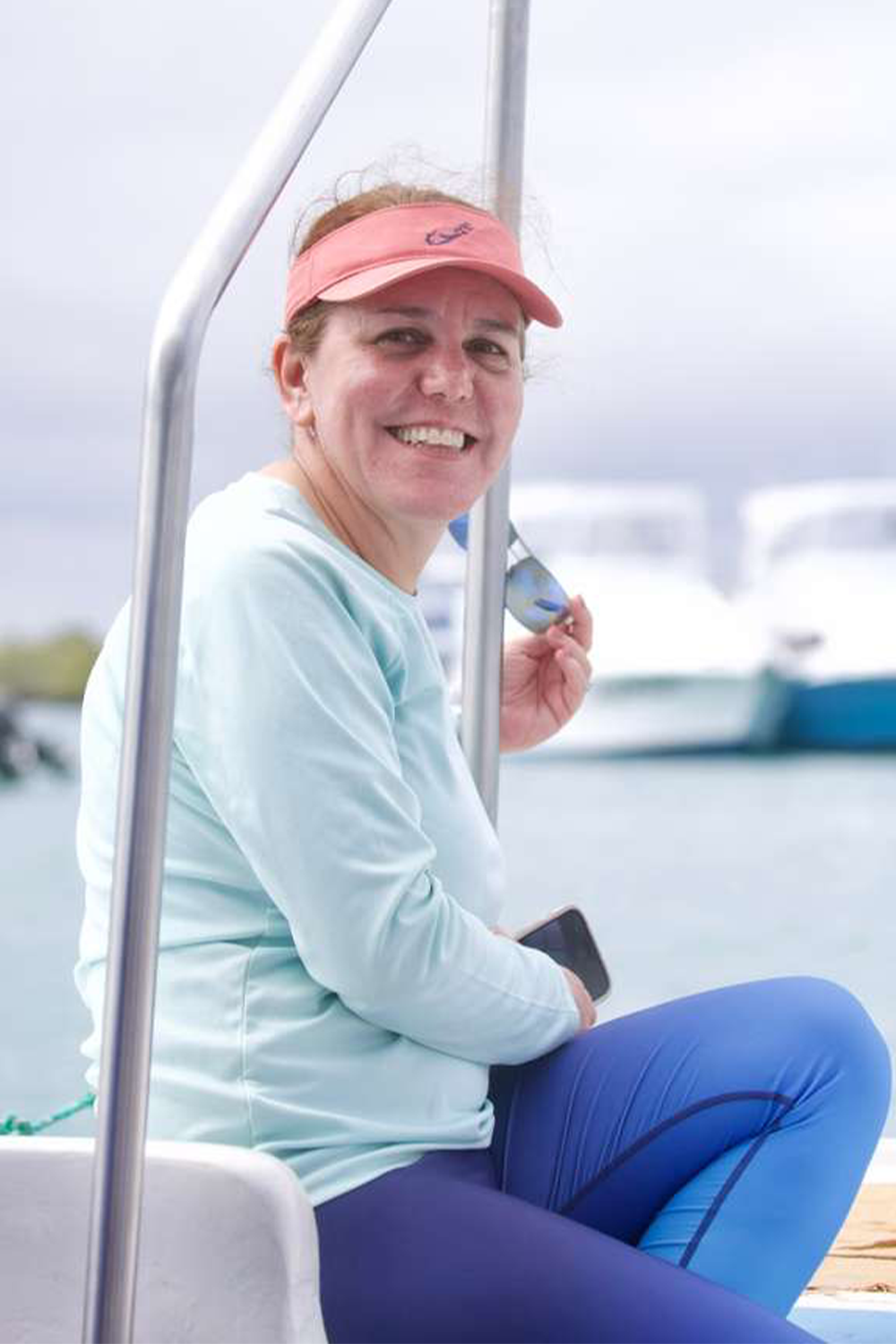 That sense of purpose traces directly back to her time at the Batten School & VIMS. On the Gloucester Point campus, she found a rare combination of rigorous fieldwork, interdisciplinary collaboration and community. “What made it so special was the people and the closeness that we all had,” she said. She credits mentors such as Iris Anderson and Susan Haynes for developing her as both a scientist and educator.
“Iris was my primary advisor and I spent a ton of time working with her, learning from her and understanding how to balance being a woman in science. She was a mom and a wife and a researcher and a professor. She showed me you could be smart and strong and follow your career path, but that shouldn't mean you have to sacrifice your personal life.”
However, it was an outreach opportunity with Virginia Sea Grant that truly altered her trajectory. “The person who completely changed my life while I was there was Susan Haynes,” said Lunsford. “She convinced me to start taking a bucket of animals into seventh grade classrooms. Very quickly, that one day a month became a highlight for me and I started writing lesson plans and doing other things with her, and Susan has remained a mentor and friend to this day.”
After graduation, Lunsford worked in Hawaii doing what she describes as “the most amazing job,” teaching marine science and biology while also working with Native Hawaiians to connect traditional land-use practices to the science of nitrogen cycling. From there, her career carried her to California, where she taught oceanography and led teacher professional development in underwater robotics and GIS, while also running a national internship program placing students on research vessels as marine technicians.
Eventually returning home to Delaware, she taught in public and vocational-technical high schools before becoming an adjunct professor at the University of Delaware. In 2013, she made a pivotal shift, leaving higher education to help build the science program at Newark Charter School as it expanded into a full K–12 system. “Clearly, nothing in my life has ever been linear,” Lunsford laughed.
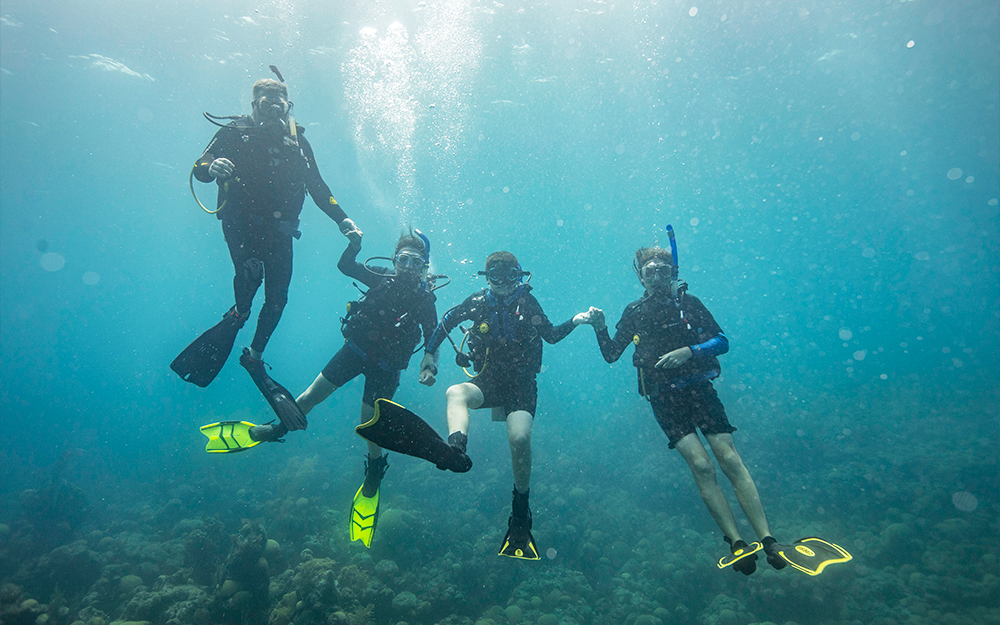 Today, Lunsford’s work continues to bridge worlds: research and education, local learning and global exploration, instructing students and training teachers. In addition to her own instructional programs, she facilitates professional development for educators through NOAA Ocean Exploration, runs marine science camps with the University of Delaware and remains deeply connected to the broader marine education community. She is the only Delaware recipient of the prestigious Milken Educator Award, known as “the Academy Award of teaching,” and is currently serving a second term as president of the National Marine Educators Association, the only individual ever elected to the office twice.
Looking back, Lunsford no longer sees her winding path as unusual. “You have no idea where the journey’s going to take you,” she said, “but whatever it is, you’ll be ready for it.” For her students, many of whom conduct their first real research under tropical skies, that lesson is not abstract; it is reflected in Lunsford’s own remarkable journey that began at the Batten School & VIMS.
With a final piece of advice to students, Lunsford made a passionate call-to-action: “Remember who helped you get where you are and shoot them a text or email. Let them know the positive impact they had on your life. That means everything.”
This alumni profile was published in February, 2026.