

The Importance of Asking “So What?”
From oyster management to executive speechwriting, Taylor Goelz M.S. ’19, MPP ’19 has built an impressive career by connecting science, policy and people
 When Taylor Goelz M.S. ’19, MPP ’19 prepares a speech for the CEO of the U.S. Green Building Council, she might spend hours researching the environmental impacts of data centers and consulting experts on building decarbonization. Those efforts help her translate complicated technical information into a message that resonates with national — and international — audiences.
It's a long way from the oyster management research she conducted as a graduate student at William & Mary’s Batten School of Coastal & Marine Sciences. But to Goelz, who earned dual master's degrees in marine science and public policy, the work is remarkably similar.
“That's the question that's been at the heart of my education and my career: So what? Why do we care?” she said. “I ask that question of myself and of other people all the time, trying to get to why something matters.”
Searching for “the why” has guided Goelz through an unconventional career spanning marine science, federal policy, international environmental initiatives and executive communications. Along the way, she's discovered that the skills developed through a marine science education can be valuable well beyond coasts and oceans.
Drawing outside the lines
Growing up in landlocked Arizona, Goelz didn't initially envision a career in marine science. Yet while studying abroad as an undergraduate, she became intrigued by both marine science and the possibility of studying environmental issues through a human lens. A chance encounter with a Virginian while conducting fieldwork in the U.S. Virgin Islands introduced her to William & Mary, to which she soon applied and was accepted.
“It felt like someone had thrown some of the smartest, most interesting people that I'd ever met into this one community,” said Goelz of conducting research at the Virginia Institute of Marine Science alongside her Batten School peers. “It was consistently fascinating.”
Under the mentorship of Professor Troy Hartley, Goelz pursued an M.S. in marine science at the Batten School alongside a master's in public policy from W&M's College of Arts & Sciences. The combination reflected her interest in understanding not only environmental problems, but also the people and institutions responsible for addressing them.
“I've always been interested in the human side of environmental problems,” she explained. “Fish don't care where you draw boundaries. You have to manage the people and, to do that, you have to understand them.”
At the time, Goelz was one of the only non-economist social scientists researching at VIMS. While many of her Batten School peers focused on the biological and physical sciences, she examined the relationships, communication and decision-making processes that shape environmental management.
“I purposefully tried to draw outside of the lines a little bit, and I prided myself on shaking things up and asking interesting and difficult questions,” she said.
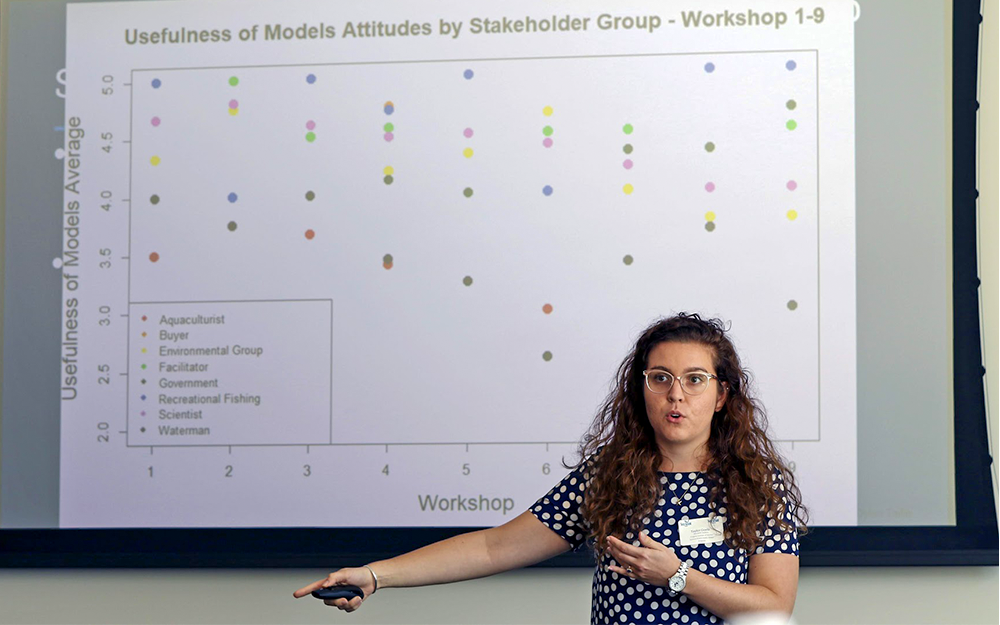
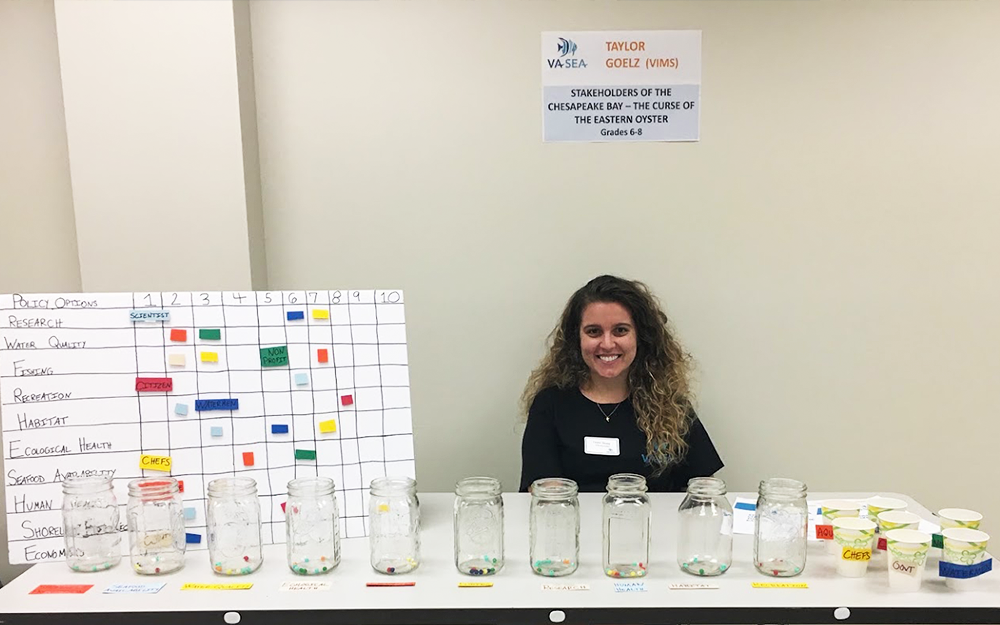
Goelz’s thesis focused on Oyster Futures, a collaborative oyster management initiative on Maryland's Eastern Shore. The project brought together watermen, aquaculture farmers, nonprofits, academics and government officials to explore management scenarios.
Rather than studying oyster populations themselves, Goelz investigated how participation in the process affected relationships among stakeholders. Using surveys and social network analysis, she tracked changes in communication and trust through observations over several years.
“At the time, I did appreciate how unique it was, but looking back I'm even more astounded. It was like a microcosm of how policy works and doesn't work, how you engage stakeholders and how you don't. It was firsthand experience with expert facilitation, which I've now done quite a lot.”
The experience provided a firsthand look at how science informs policy, and why that relationship isn't always straightforward. That unique work in marine social science, combined with an interdisciplinary education, became foundational to her career.
Learning to communicate impact
Goelz credits her mentors with encouraging her to explore unfamiliar territory.
Hartley, in particular, gave her the freedom to experiment. “He gave me permission to figure things out and to ask questions and to fail,” she said. “He was my constant champion, which I really appreciated.”
She also found inspiration in Professor Mary Fabrizio, whose leadership provided an important example for women pursuing careers in fisheries science. “Mary is one of the smartest women I've ever met, and very open to different ways of thinking. Getting to see an example of a woman in leadership, especially in fisheries, was so important.”
Meanwhile, her public policy coursework with Professor and Director of Strategic Initiatives Alexandra Joosse, among others, introduced her to the art of writing concise, persuasive memos, a skill she continues to use daily.
“How do you synthesize a lot of information quickly and come up with a good recommendation?” she asked, reflecting on lessons learned from the MPP program.
Following graduation, Goelz received a prestigious John A. Knauss Marine Policy Fellowship, joining the National Oceanic and Atmospheric Administration (NOAA) in 2020. As the first fellow assigned to support the United Nations Decade of Ocean Science for Sustainable Development, she helped develop NOAA's communications plan for the international initiative and coordinated outreach across agencies and scientific organizations.
Goelz also discovered an unexpected passion for storytelling. After a podcast guest appearance, she was encouraged to host a show of her own. Through The Ocean Decade Show podcast, Goelz interviewed prominent ocean leaders such as Fabien Cousteau and explored subjects ranging from global ocean priorities to local research initiatives.
“It was a passion project that came from being in the right place at the right time and being willing to say yes, even if I didn’t know much about podcasting at the time” she recalled.
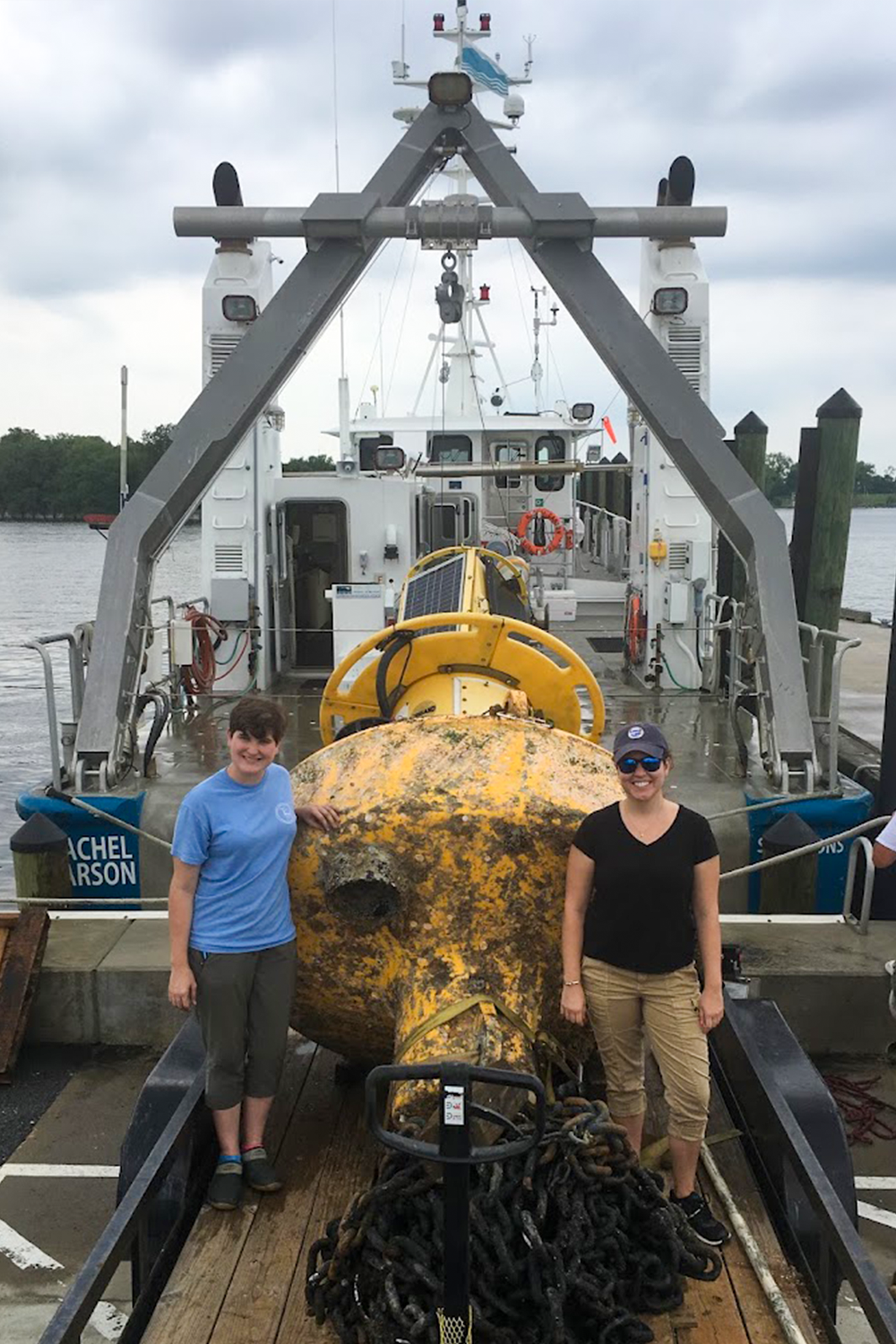
That willingness to embrace unfamiliar opportunities continued at the Aspen Institute, where she became the first employee hired for a new maritime decarbonization initiative.
Goelz helped build the program, collaborating with corporate leaders, policymakers and other stakeholders to advance cleaner maritime transportation.
The program grew into the Zero Emission Maritime Buyers Alliance (ZEMBA), which was recently honored as a 2026 finalist for a prestigious Earthshot Prize. It’s an incredible accomplishment for a program Goelz helped launch, and yet not entirely unsurprising for someone naturally inclined to connect experts and create meaningful programs.
“I like to initiate things. I like to build things. I like to start things,” she said.
A scientist, no matter what
In May 2026, Goelz joined the U.S. Green Building Council as director of executive communications, moving beyond the marine sector for the first time.
Today, she serves as the head speechwriter and communications strategist for the organization's CEO and executive leadership, helping communicate complex issues related to sustainable buildings, energy efficiency and environmental resilience.
“I call myself a technical communicator, because of my science background,” Goelz said.
Although the subject matter has changed, Goelz sees direct connections to her graduate education. Her scientific training taught her to evaluate evidence critically and to ask probing questions. Her social science research demonstrated the importance of understanding stakeholders. And her policy education strengthened her ability to distill complicated information into actionable messages.
“Half the time I'm sitting and writing and thinking deeply,” said Goelz, “and the other half of the time I'm talking to some of the smartest people I've ever met on issues like indoor air quality or embodied carbon or decarbonization strategies for buildings.”
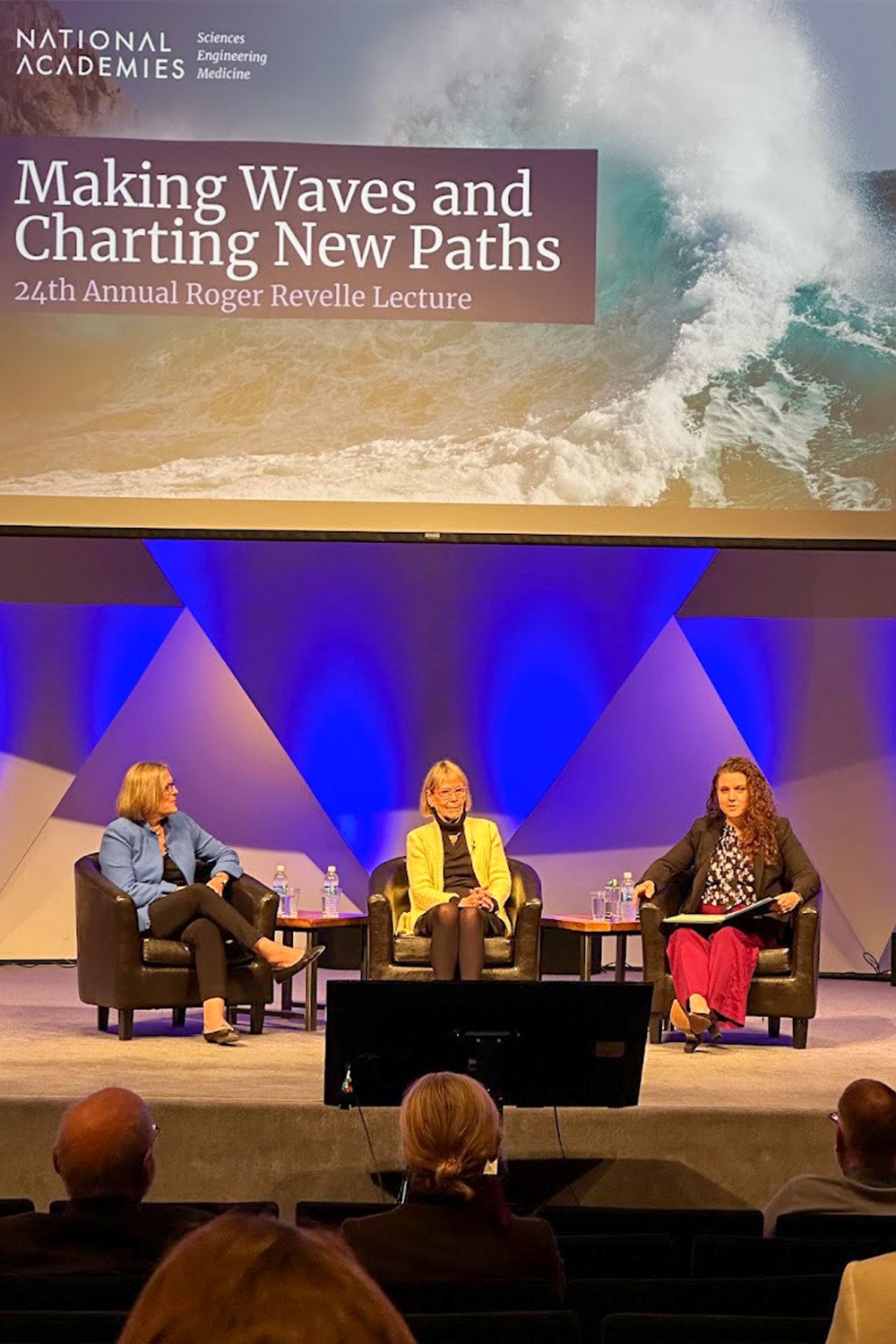
Betting on herself
Looking back, Goelz recognizes that her professional journey required more than transferable skills; it also demanded a willingness to take risks.
After receiving an offer for a state policy fellowship, she declined it while waiting to hear about the Knauss Fellowship. Later, she turned down a federal job offer to pursue the opportunity at Aspen. Both decisions required considerable uncertainty, and she acknowledges that not everyone has the flexibility to make similar choices.
Still, she encourages students to recognize their own strengths and resist narrow expectations about where a marine science degree should lead.
“You are your own best advocate,” she said. “You can have mentors and other people who support you, but you have to fight for your own future. And don’t limit yourself. The world will already try to put you in a box. Be willing to break out and bet on yourself; that’s so important.”
Goelz’s own professional growth has meant remaining open to opportunities she never could have anticipated when first studying marine science. And while she may no longer work directly in the field, her experience at VIMS & the Batten School continues to shape how she approaches new challenges.
“I’m still trying to draw outside the lines,” she said. “I’ve been thinking a lot about impact, and I want to maintain my interest in jumping into things, betting on myself and leaping forward.”
This alumni profile was published in November, 2026.