

“There’s no limit to what you can do.”
James Gartland Ph.D. ’24 shares how W&M’s VIMS & Batten School showed him a world of endless possibilities in marine science
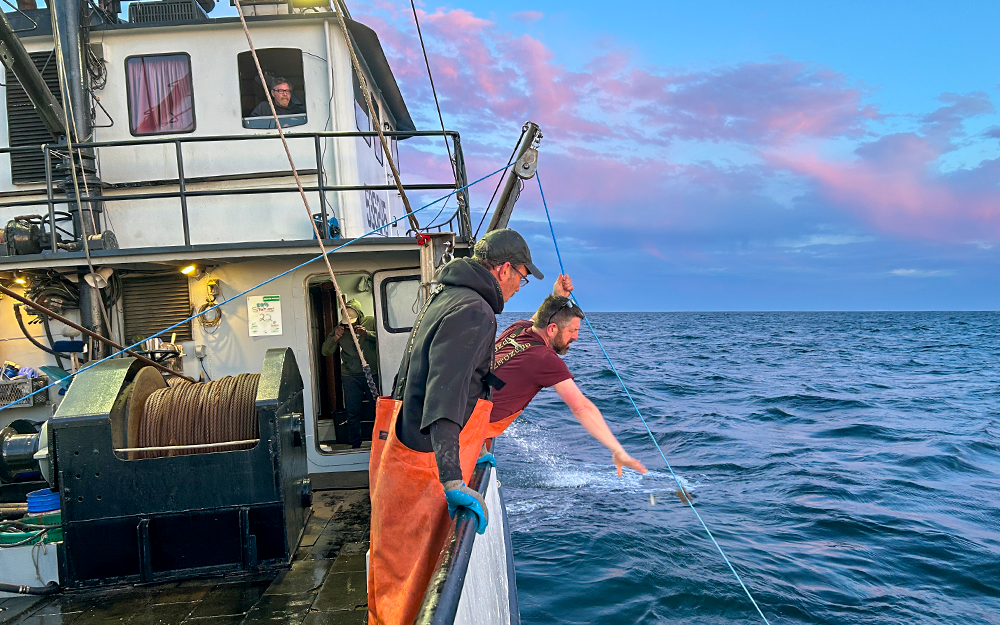
James “Jim” Gartland was already familiar with fish when he arrived at William & Mary’s VIMS & Batten School. Growing up, he spent numerous weekends fishing off the Jersey Shore with his father and uncle, something he believes inspired him to become a marine scientist. However, by the time he was a senior at the University of Miami, he felt lost.
While Gartland knew he wanted a career in marine science — focused on fish, especially — he didn’t know where to go. That’s when a friend recommended VIMS & the Batten School of Coastal & Marine Sciences.
“I came up here and I just loved the work that was going on,” he said. “I met Herb Austin, the professor who I was going to work with. At the time, he had a seine survey for bluefish, and he said I could do a master's looking at bluefish ecology. As a kid growing up catching bluefish, I thought, ‘Oh my gosh, this is perfect.’”
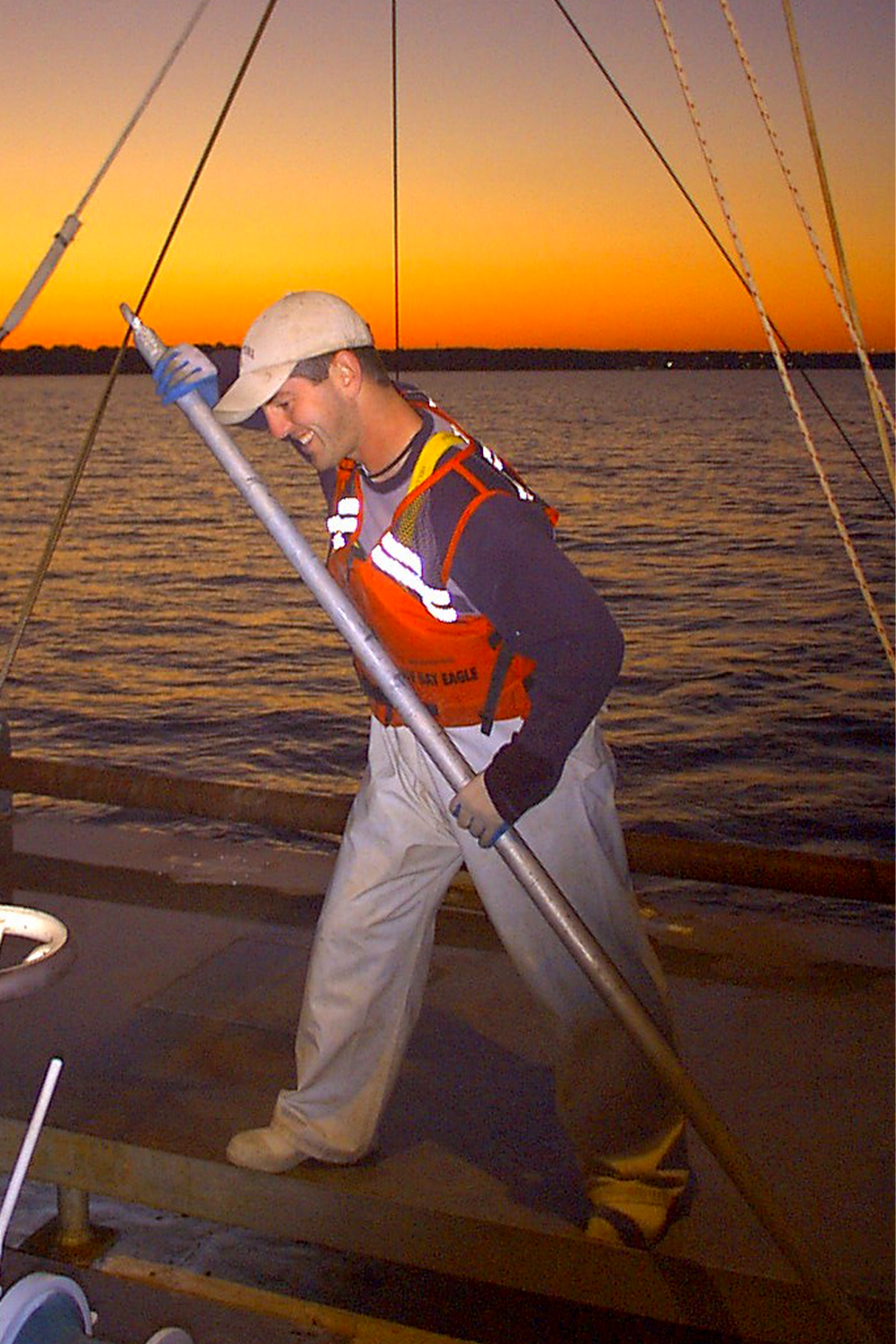
Initially, Gartland only planned to earn his M.S., focused on the trophic ecology of bluefish, and afterwards return to Florida. “As I was finishing up, I had every intention of going back down to Miami because I wanted to fish in South Florida,” he said. “But, I guess the world had other plans for me.”
Instead of returning to Miami, Gartland decided to stay and work at VIMS, a decision influenced by getting to know two key people: Professor Robert Latour and another colleague named Kristin, whom Gartland would go on to marry.
Though they’d met previously, Gartland and Latour truly got to know each other in 2001, when Latour and fellow scientist Chris Bonzek were beginning the Chesapeake Bay Multispecies Monitoring and Assessment Program (ChesMMAP) trawl survey. “Rob and Chris were looking for a program manager for the survey,” Gartland explained. “I applied for it, and we've been working together ever since.”
As work on the ChesMMAP survey continued to develop, Gartland’s relationship with Kristin blossomed. At the time, Kristin was working in John Graves’ genetics lab and, after being introduced, she and Gartland quickly became inseparable. Though Gartland didn’t return to Miami as planned, he said the trade-off of remaining at VIMS was worth it. “Meeting Kristin and getting a job with Rob were the best things to ever happen to me.”
An unconventional return to school
From 2002 to 2015, Gartland worked alongside Latour as they developed the ChesMMAP trawl survey, as well as several others, such as the Northeast Area Monitoring and Assessment Nearshore Trawl Program, the Striped Bass Program, the VIMS shark longline survey, and the Regional Industry-Based Bottom Trawl Survey. During this time, Gartland spent an estimated 110 to 120 days each year on the water, catching, surveying and releasing a variety of fishes.
While the work was fulfilling, Gartland found himself in a position similar to the one he had been in at the end of his undergraduate career: “The field work was fantastic, but I kind of knew I wanted a little bit more out of it,” Gartland said.
Looking for advice, Gartland sat down with Latour to discuss his career. Latour told Gartland that if he wanted to further develop and analyze his research, then he should pursue his Ph.D. “I was 38 or 39 at the time. I had a full-time job with VIMS, a couple of kids, a wife and all that. And I thought, ‘What the heck? Let's add a part-time Ph.D. program to it," Gartland joked.
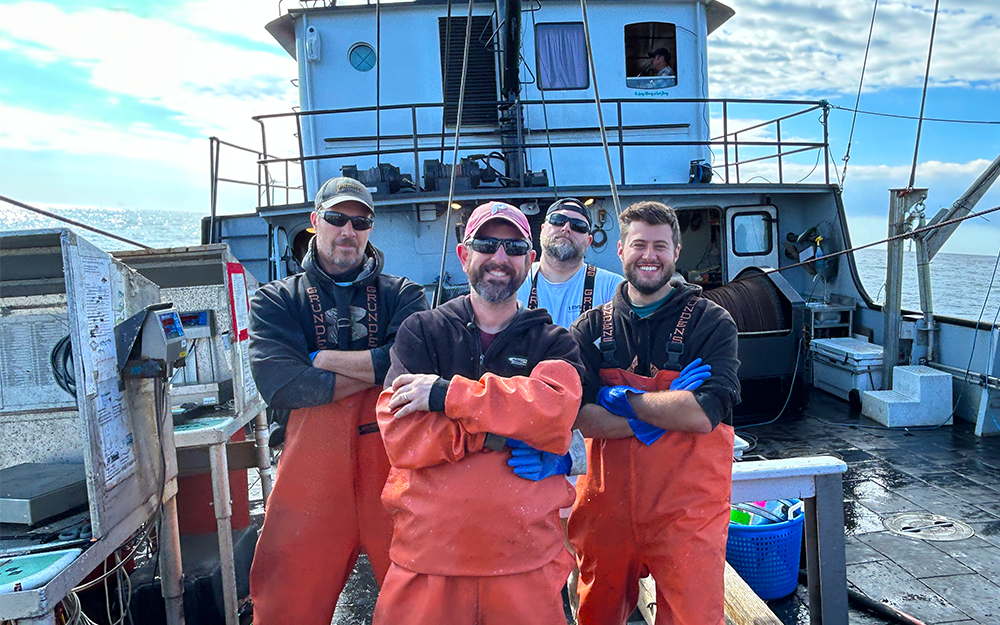
In 2016, Gartland re-enrolled in the Batten School to pursue his Ph.D. His doctoral studies focused on the ecology of the Mid-Atlantic Shelf, analyzing its trophic and community ecology as well as the potential effects of proposed policies.
For his return to academia, Gartland knew he wanted to improve some of the skills he gained during his time as a master’s student, including data analysis. “The first time around, my work was very field heavy. In hindsight, I wasn’t as strong as I should’ve been with the statistics,” Gartland said. “That flip-flopped the second time.”
Gartland used the data he collected from the numerous surveys he and Latour had conducted over recent years as the basis for his dissertation, which helped enhance his skills in data analysis. When Gartland completed his Ph.D. in 2024, he left his academic career not only as a stronger student, but as a stronger scientist.
An experience like no other
Today, Gartland continues to work for VIMS as a senior research scientist. In his position, he ensures that the trawl and longline surveys remain funded and coordinates between various research groups to manage resources and schedule field days. He also oversees audits of the collected data before it is submitted to the long-term databases or used to support graduate research projects. He also manages several of his own analytical projects as part of his job. “Every day is something a little bit different,” he said.
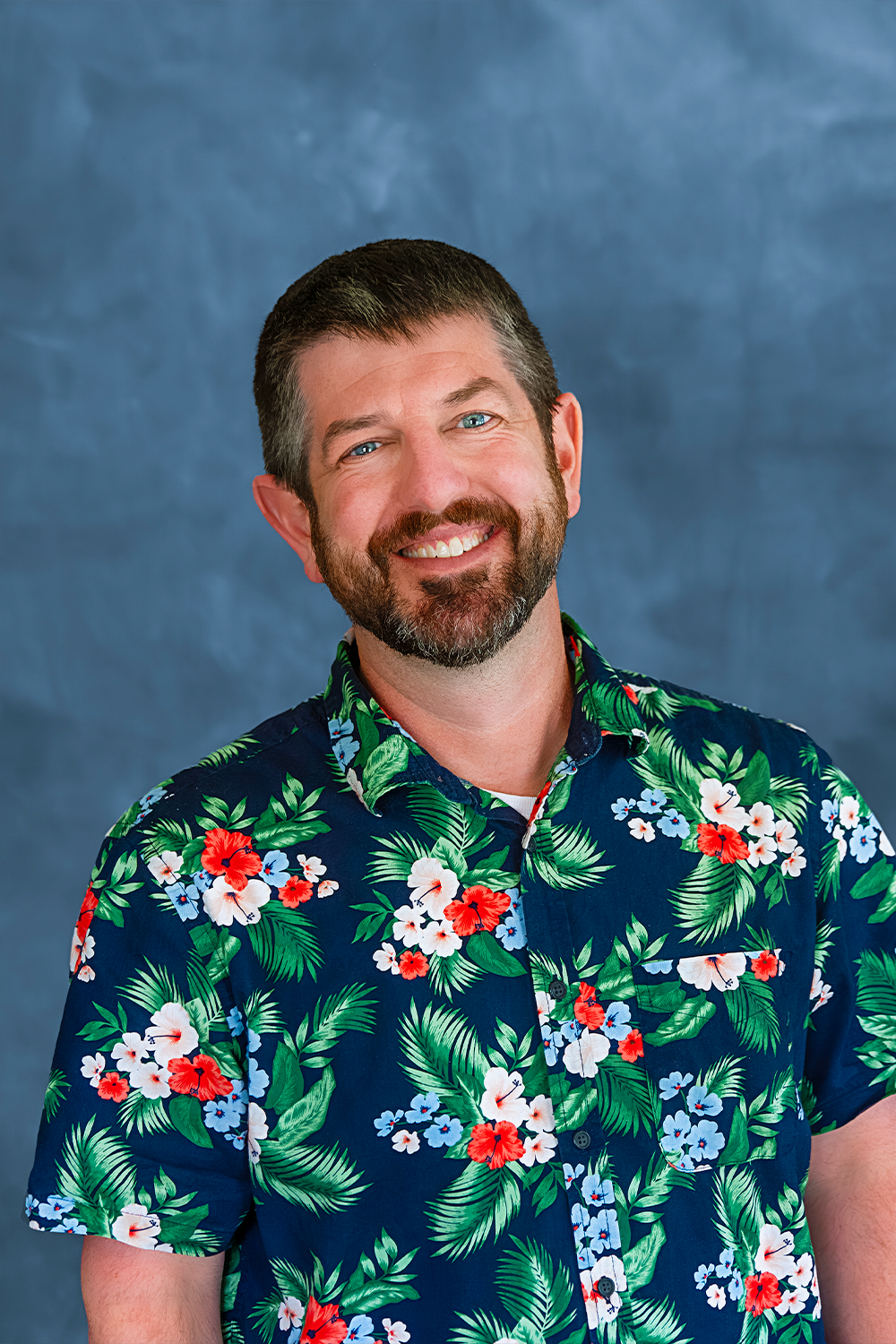
For students considering earning their Ph.D., Gartland has one piece of advice: Don’t wait. “You only get more responsibilities in life, and it only gets harder to juggle all of it,” he said. “Put a timeline on when you’re going to go back and stick to that timeline. Don’t let it drift.”
This advice is taken directly from Gartland’s experience at VIMS & the Batten School. While he is undoubtedly grateful to have earned his Ph.D., there were moments where finding a balance between work, life and school took a toll. It was in these moments that Gartland relied on the community around him to keep him afloat.
“Rob and I would talk a lot about finding a balance between all three,” he said. “There were a couple of times he said, ‘Man, just go home and get straight. Don't worry about things here. They'll be here when you get back.’”
Gina Ralph and Jameson Gregg were also instrumental to Gartland successfully earning his Ph.D. “They made sure nothing at work slipped and gave me time to focus on my dissertation during the final home stretch.”
Though Gartland’s journey toward his degree may have been stressful at times, he remarks that the experience holds a special place in his heart.
“I remember in March 2024 sitting in my office hustling to get everything done and out to my committee,” he said. “I had the window open, the radio on, and I thought, ‘You know what? You better soak this in because you're going to miss it when it's over.’ Even though it’s hard, grad school is a period of your life when you’re accomplishing something special, so appreciate it while it lasts.”
This alumni profile was published in September, 2026.