
From the Chesapeake Bay to the North Pacific
For John Field ’87, M.S. ’91, a career in international fisheries leadership started at W&M’s Batten School & VIMS.
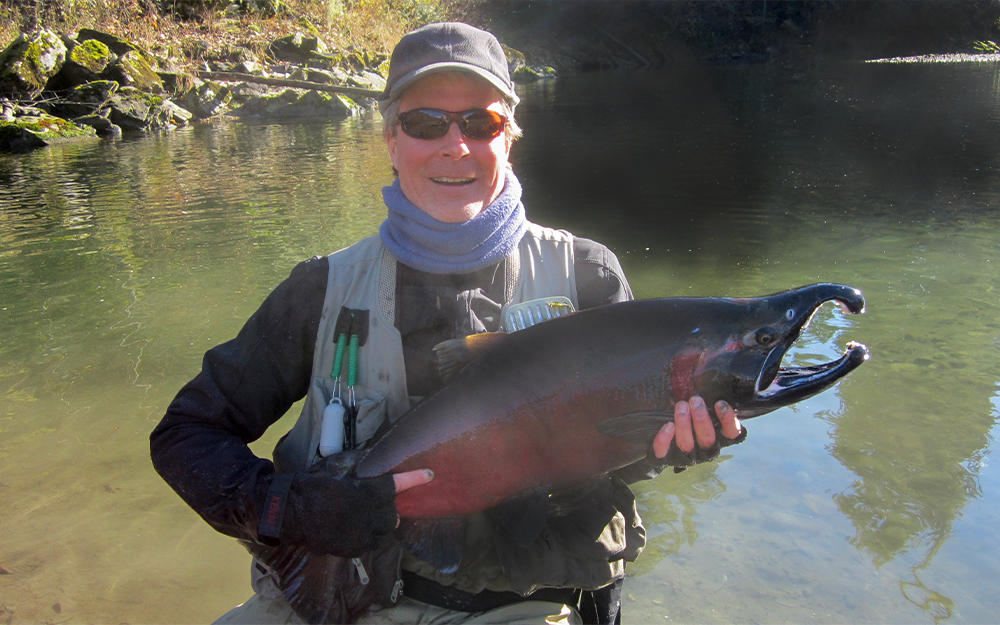 John Field traces his role as an international leader in fisheries policy back to an early and enduring fascination with coastal waters and the fish that live within them. “I became quite convinced at an early age that I really liked being around the shore. I liked being around the ocean. In particular, I liked fish,” Field said, recalling childhood fishing trips with his father in New England.
A piece of advice relayed through a family friend who worked in marine biology helped set his course: choose a great university that was near a marine science lab where he could gain hands-on experience. That guidance ultimately led him from his home in Michigan to William & Mary, a great university with its own marine science lab: the Batten School of Coastal & Marine Sciences & VIMS.
As an undergraduate at W&M, Field spent multiple summers working at the Batten School & VIMS, first in the Benthic Ecology Lab and later in the Larval Fish Lab under the late Professor John Olney ’71, M.A. ’78, an influential mentor who encouraged Field to apply for a master’s degree.
Beyond research opportunities, Field was also drawn to the Batten School & VIMS’ unique culture, which included lunchtime volleyball games and the occasional pig roast. “It was fantastic,” he said, describing the small but tight-knit community. “Doctoral students and master’s students all mingled and worked together. John loved to socialize and host people at his house. It was the first time I’ve really felt part of a community of like-minded academics.”
Field’s master’s research placed him at the intersection of science and applied problem solving, foreshadowing his eventual career. His work focused on striped bass eggs and larvae during a period of severe population decline along the East Coast. Traditional sampling methods were ineffective in the Chesapeake Bay’s turbid waters, so Field helped adapt a novel, non-destructive plankton camera system to local conditions.
 “To earn my master’s degree, I had to be part scientist, part welding foreman and part photo technician,” he joked. “I probably spent more time in the dark room developing film than I did out in the field, but I was able to show proof-of-concept.”
As graduation approached, Field faced a crossroads familiar to many graduates: pursue a Ph.D. or chart a different path. In the end, he said, “I felt more compelled to try to launch a career that was applying science to policy problems, applying science to social issues like fisheries management.” That decision set him on a trajectory that moved steadily from the Chesapeake Bay into the international arena.
Field initially worked with NOAA and the National Ocean Service as a marine biologist before joining the Atlantic States Marine Fisheries Commission (ASMFC) as striped bass coordinator, serving as an ombudsman between scientists and managers at a critical moment for a fishery reopening after decades of closure.
“I found it fascinating,” he said, “this notion that independent jurisdictions had to collaborate on migratory resource management and states had to get on the same page to share the resource, with the Chesapeake Bay, Delaware Bay and Hudson River as the engines and the rest of them wanting a fair share of the catch as fish moved through their waters.”
Those experiences exposed Field to international fisheries collaboration, first with Canada and eventually other nations as Field was named assistant director for ASMFC’s Interstate Fisheries Management Program and his work expanded into American eels, shad, river herring and sturgeon. He then joined the U.S. Fish and Wildlife Service, working on international trade in marine species under the Convention on International Trade in Endangered Species.
“That just kinda melted my face,” Field said with a laugh. “All of a sudden, I was traveling to Africa and Asia. I'd be in Europe one week and Africa the next and South America the month after that. And that was really compelling stuff: watching countries collaborate on sharing resources and undergo cross-border diplomacy to get what they wanted.”
Field later accepted an offer to serve as a senior foreign affairs officer in the U.S. Department of State, largely in their office dedicated to fisheries treaties. However, after seven years at the State Department — and over 20 years total in D.C. — Field said he wanted to move on from federal service, which made an offer from the Pacific Salmon Commission in British Columbia especially appealing.
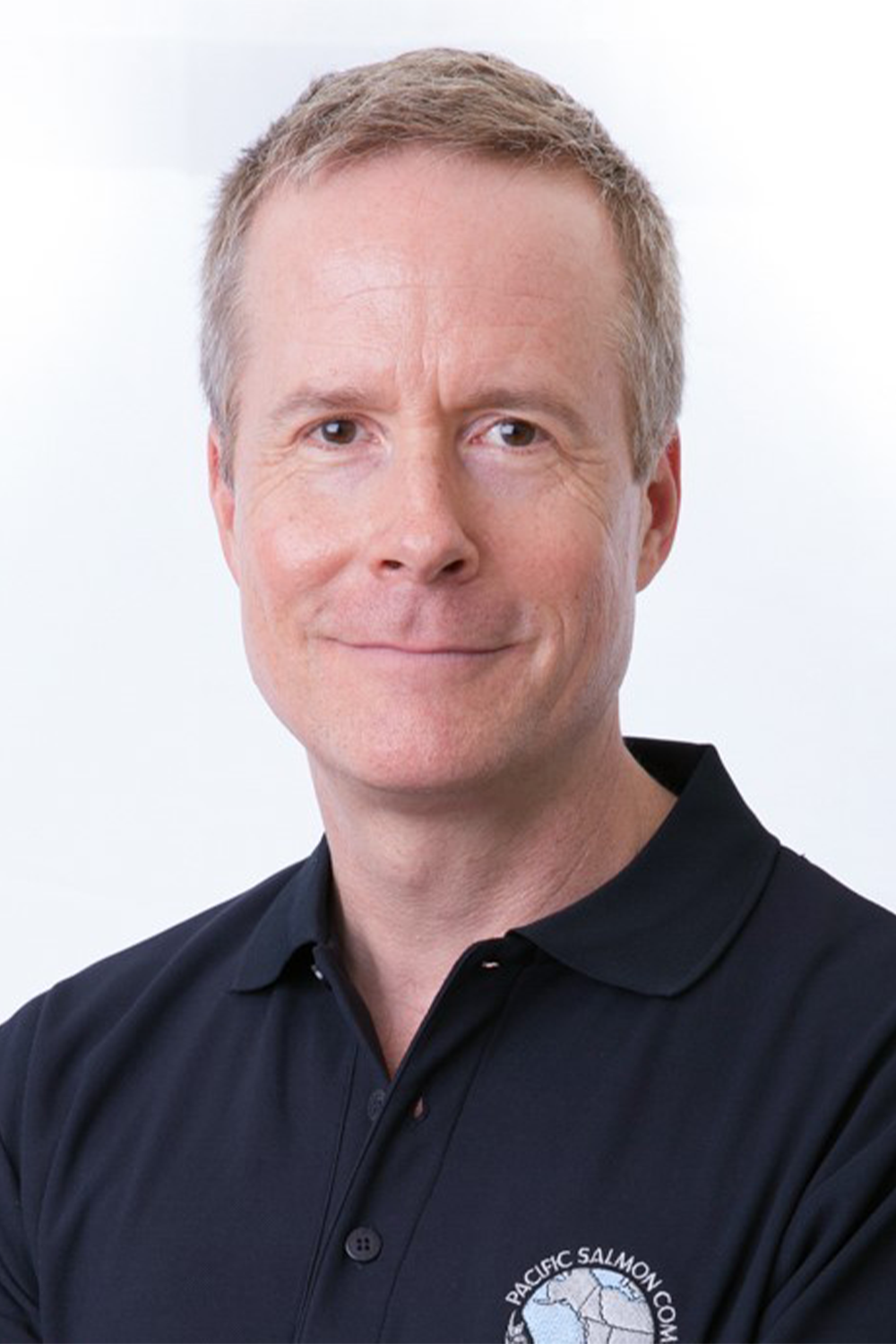
 As executive secretary, Field helms the Vancouver-based organization tasked with coordinating salmon management between the U.S. and Canada. Even 13 years later, he still finds the work energizing.
“One of the reasons I really like it is because it’s hard to predict what one day to the next is going to look like,” he said. Field’s responsibilities range from organizational leadership and staff development to international relations and guiding the future of the binational treaty, while also helping ensure Indigenous societies are food-secure and culturally protected.
Reflecting on the Batten School & VIMS from the opposite coast — and another country — Field acknowledges he hasn’t been able to stay physically connected, but when he did return for his advisor’s memorial service in 2010, he was struck by how much the campus had changed, and by how much it had shaped him. “It still holds a really near and dear place in my heart,” Field said. “I went through a lot of personal and academic growth while I was there, and I’d recommend VIMS to anyone.”
Asked what advice he would offer today’s students, Field emphasizes reflection and breadth. “Take every opportunity you can to learn about other aspects of marine science,” he said. “Just because you're researching a particular Chesapeake Bay ecosystem or species doesn’t mean that you’re constrained. You can live just about anywhere if you want to.”
For students preparing to graduate, his advice is both practical and reflective: understand who you are, what kind of work energizes you, and what you value beyond a paycheck. “I’ve come to see compensation as so much more,” Field said. “The issues you’re working on, the people you’re working with, where you live. All of that is important.”