

Finding her place in the bigger picture
Krisa Arzayus Ph.D. ’02 draws on her marine science education to connect disciplines, support researchers and lead partnerships that serve the public
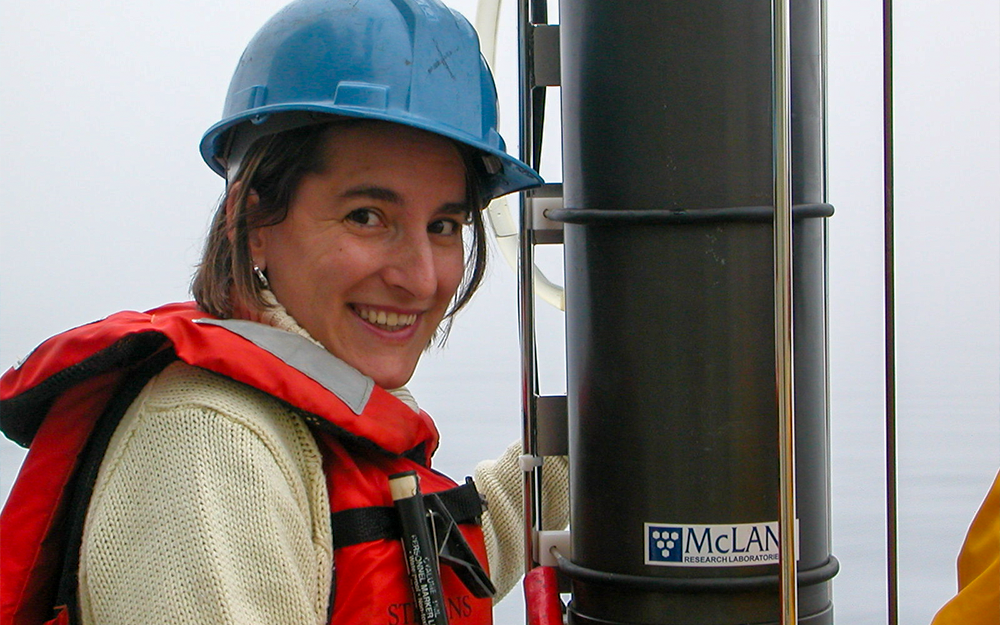 According to Krisa Arzayus Ph.D. ’02, the most rewarding part of being a marine scientist is seeing how different research disciplines fit together.
“I'm more of a big picture person,” she said. “I'm more interested in looking a mile wide and an inch deep. I want to know the whole landscape. What does the whole puzzle look like, and not just one little piece?”
Unsurprisingly then, Arzayus’ career at the National Oceanic and Atmospheric Administration (NOAA) requires understanding research across disciplines, helping scientists secure resources and bringing people together around shared goals. As acting director of NOAA’s U.S. Integrated Ocean Observing System (IOOS) office, she applies that perspective to partnerships around the country.
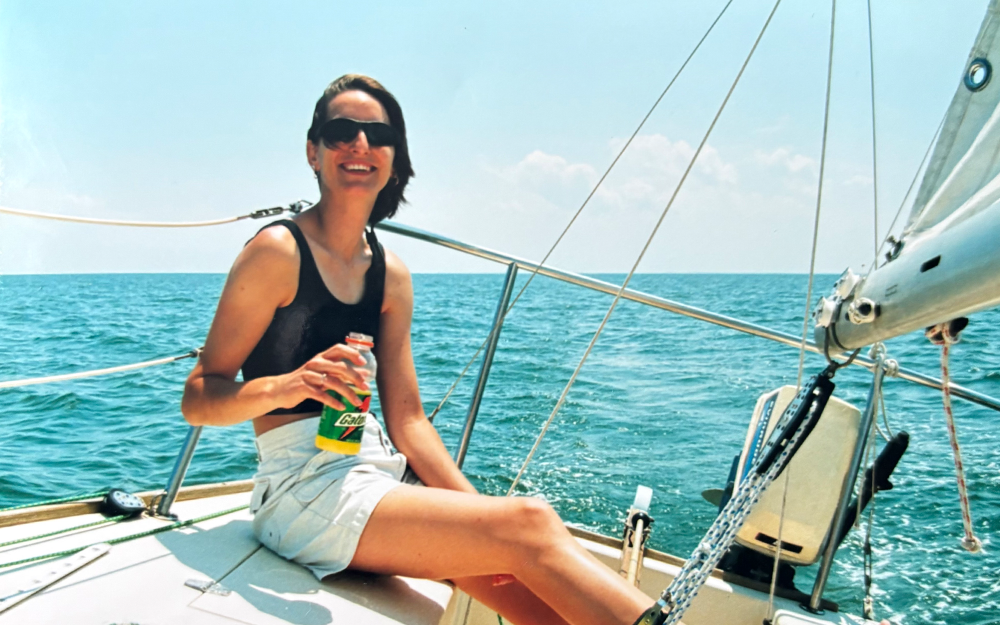 The foundation for the work she does today took shape at William & Mary’s Batten School of Coastal & Marine Sciences, where she discovered both the breadth of oceanography and a collaborative scientific community.
Room to grow as a scientist
Arzayus earned her undergraduate degree in chemistry knowing she wanted to work on environmental issues. She considered environmental law, but after spending much of her senior year in a windowless laboratory for a research project, Arzayus realized she wanted to get outside, which led to pursuing oceanography for her advanced degree.
While the subject area offered a combination of fieldwork and analysis, the Batten School offered something equally appealing: room to discover where she belonged. Conducting research at the Virginia Institute of Marine Science (VIMS), Arzayus was given the freedom to find her path.
“I wasn’t sure exactly what area I wanted to focus on,” she recalled, “but I felt that VIMS had a lot more diversity of research topics and opportunities for me to explore.”
For her graduate work, Arzayus studied organic geochemistry with VIMS & Batten School Professors Elizabeth Canuel and Rebecca Dickut. She investigated how organic carbon and associated contaminants accumulate in Chesapeake Bay sediments, including how different depositional environments influence their fate. The dissertation work connected chemistry, geology and environmental factors, while fieldwork on other projects introduced her to collaboration beyond her degree focus.
That breadth of learning and experience continues to serve Arzayus well. Her current work focuses primarily on physical oceanography, an area she admits was not her favorite in graduate school. However, the foundation to understand a range of marine science subjects has proven valuable.
 “One thing I've always loved about marine science and oceanography is that they're not just one discipline,” she said. “There's chemistry, biology, geology, physics, and it all works together. I think VIMS really instilled that interdisciplinary aspect of marine science, and that is very persistent in my career today.”
Seeing what was possible
Some of the most influential lessons came from the people around her. Canuel and Dickut shared laboratory space, creating opportunities for Arzayus to work closely with both scientists. In fact, most of her graduate committee consisted of women, surrounding her with examples of accomplished scientific careers. Yet at the time, she did not fully appreciate how consequential that environment would be.
“As a woman in science, I never felt like there was anything out of reach, because I always had them as examples,” she said.
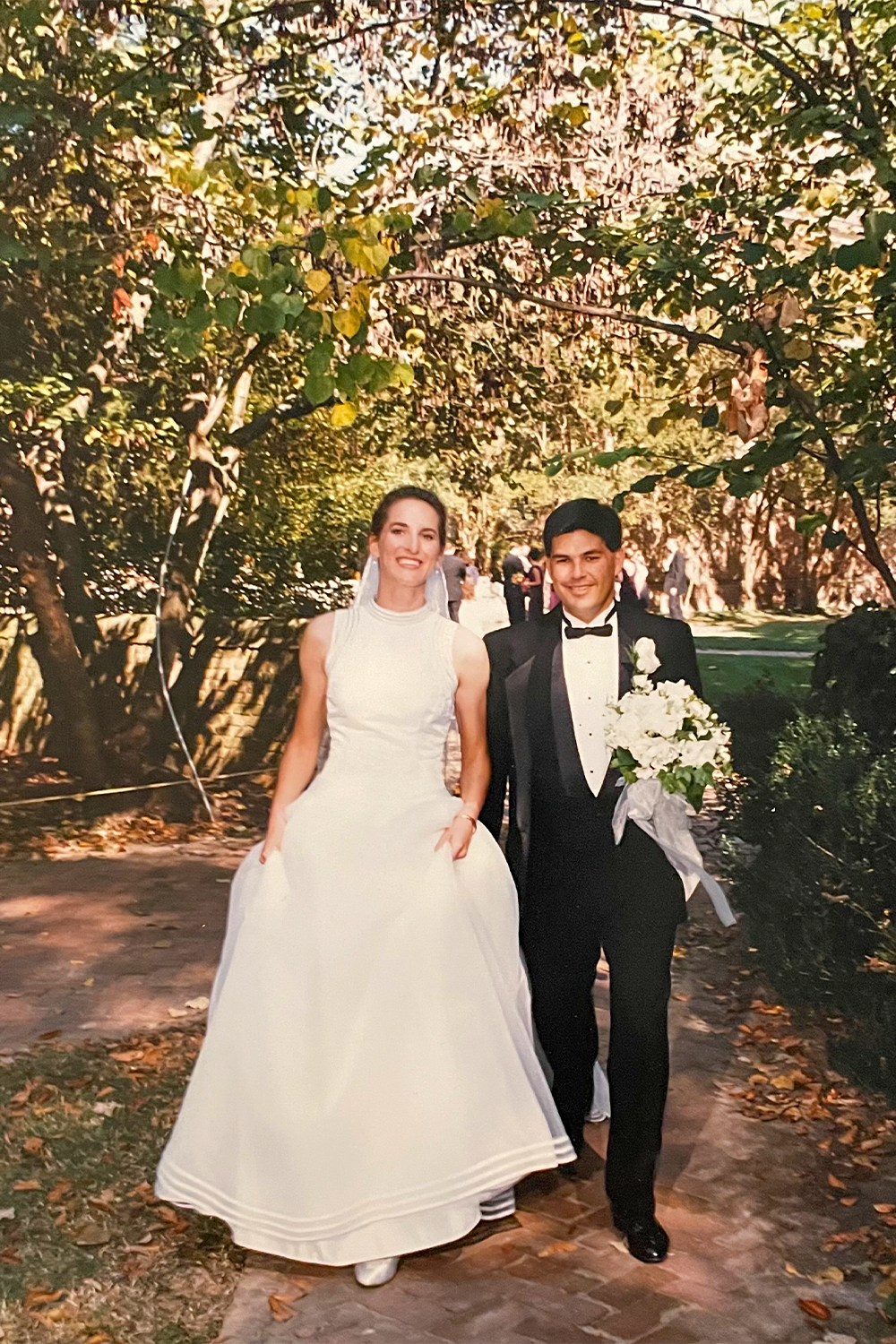
First-year graduate courses helped Arzayus form immediate bonds with other students. Research cruises, fieldwork, lab work and gatherings like Halloween parties and pig roasts strengthened connections, even across disciplines. And importantly, on one research cruise, she met her future husband and fellow Batten School alum, Felipe Arzayus M.S. ‘00.
“I just thought that’s how all graduate schools were,” she said of the supportive community culture. “After I left, I quickly learned that was not the case. VIMS is a very special place for that.”
Those kinds of memories reflected the selfless collaboration of the VIMS & Batten School culture and previewed a central theme of her professional career: scientists helping one another succeed.
Exploring the wider landscape
As her training progressed, Arzayus began questioning whether a conventional academic career would suit her. Instead, she wanted to explore the wider landscape surrounding individual research questions and understand how programs connected, where their interests overlapped and what they could accomplish together.
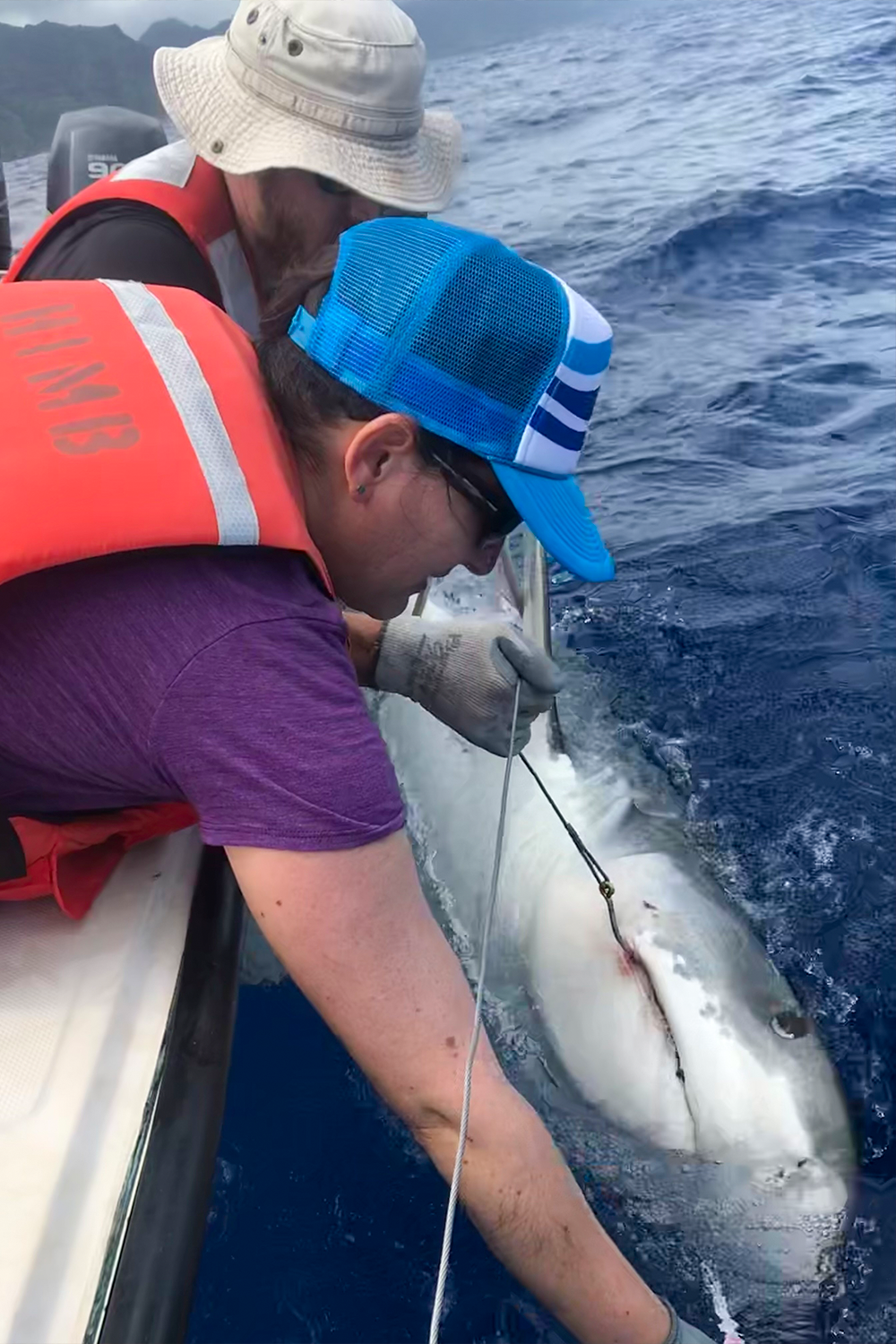 A 2001 Knauss Sea Grant Fellowship introduced her to that possibility. Working with what is now NOAA’s Climate Program Office, she helped support carbon-cycle research and discovered how much there was still to learn beyond her Ph.D. specialty. After a detour to a postdoctoral appointment that confirmed academia was not the right fit, Arzayus joined NOAA as a federal employee, returning to the climate research community she had encountered during her fellowship.
Back at NOAA, the work required understanding climate activities across fisheries, weather and ocean programs. As Arzayus advanced into supervision and budget planning, she found that she enjoyed working with the NOAA laboratories to translate their research needs into proposals for additional resources. In short, helping fellow scientists succeed became a professional focus of its own.
Bringing people together
When Arzayus was later recruited to lead the Data Stewardship Division at NOAA’s National Oceanographic Data Center (now the National Centers for Environmental Information), it was a challenge unlike any she had previously faced. With limited experience managing structured metadata and data formats, and tasked with merging teams that historically struggled to work together, Arzayus had to lean on her background in interdisciplinary collaboration like never before.
“That was a huge growth opportunity for me, and I learned a lot about myself,” she said. “I had spent so many years planning budgets, but I never got to see how they were executed. Then, I became responsible for spending the money and actually getting the work done. That was pretty rewarding and required new skills in prioritization and resource management. Building trust and merging teams that didn’t see eye to eye was also a new challenge.”
Those experiences now inform her leadership at IOOS, where coordination is central to an office that supports ocean observations, data management and modeling through a national network of 11 regional observing systems. Due to recent federal changes, the office recently lost five of approximately 25 staff members, including several senior leaders, and Arzayus has stepped into the position of acting director.
“My day is full of meetings and problem solving in a team environment; that's just how we get our work done,” said Arzayus. “There's so much effort and time put into coordinating IOOS with other NOAA offices and outside partners, because our mission is so broad. I spend a lot of my time being a champion for our program and supporting my team, my branch chiefs, so they can step up and find ways to optimize our efforts through all the recent changes.”
 Counsel for current students
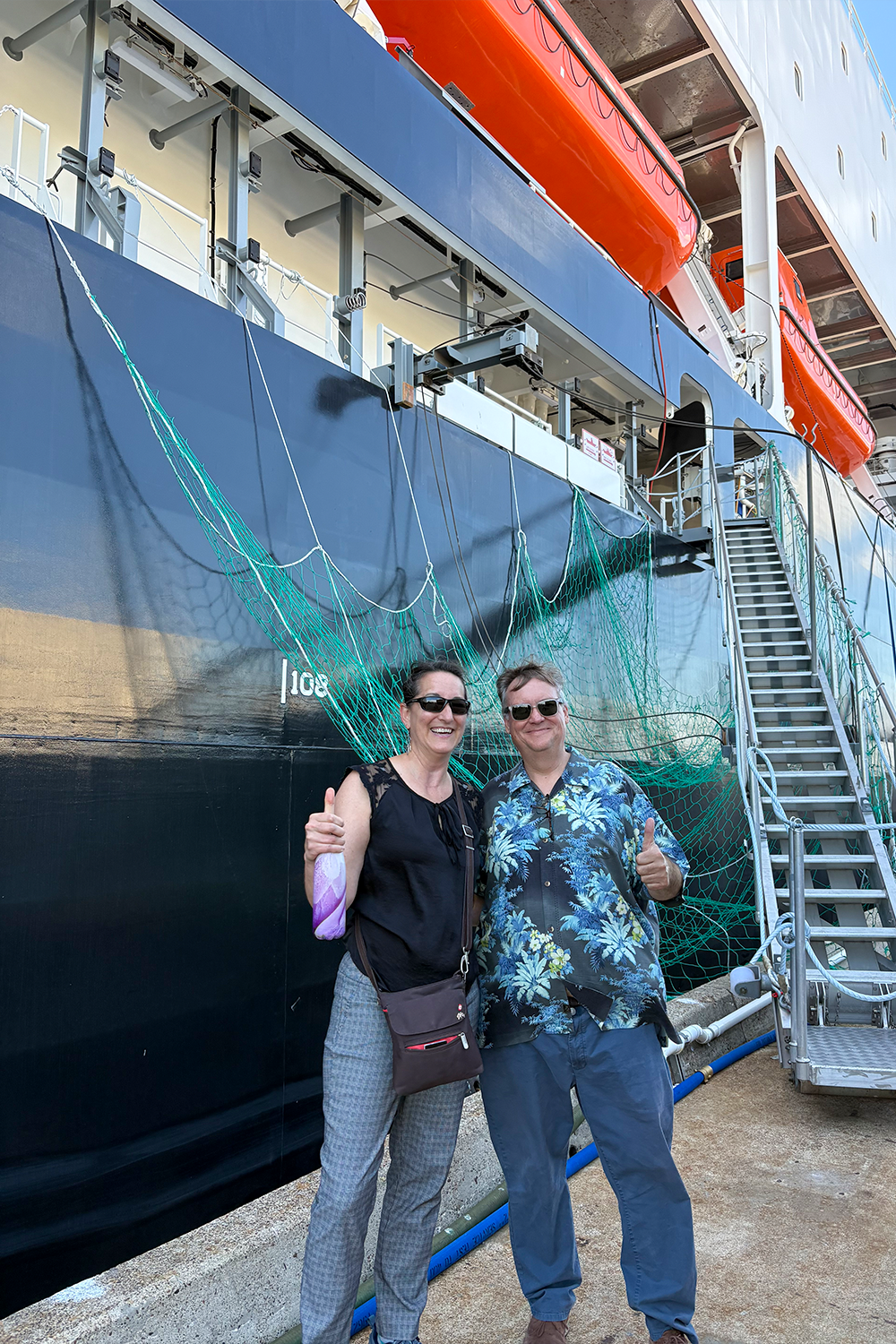
Arzayus returns to the VIMS campus whenever she can, typically when she and Felipe are passing by during summer camping trips. She also regularly keeps in touch with other members of her cohort, both personally and through an alumni Facebook group. In October 2026, she was invited by fellow Batten School alum, Timothy Dellapenna Ph.D. ’98, to give a seminar at Texas A&M in Galveston, sharing her career path and experience working at NOAA.
She encourages current Batten School students to explore their options and follow their passions. “Pursue what you love and try to get as much experiential learning as possible,” she said. “VIMS is a great place to go for that applied aspect of marine science and seeing all the different ways it can make a difference in people's lives.”
Arzayus also promotes the power of networking, a skill she wishes she had developed sooner herself. “I was never the best at networking, because I felt like I was supposed to do it all on my own, but you really can’t do anything alone,” she said. “There's so much to learn from other people, and there are plenty of people that want to help you. So talk, network, get names of people, learn about their career journeys and their career paths, because there's so many different ways to get where you might want to go.”
Ultimately, Arzayus’ own career shows how a marine science education can remain relevant far beyond a dissertation topic. She no longer studies organic geochemistry, but the interdisciplinary skillset she developed at VIMS & the Batten School helps her bring together the work of specialists across ocean science every single day.
“If I had to do it all over again,” she said, “I think I would do it exactly the same.”
This alumni profile was published in November, 2026.