

A career at the intersection of science, policy and research management
How Mary Beth Armstrong M.A. ’24 found her footing at W&M’s VIMS & Batten School
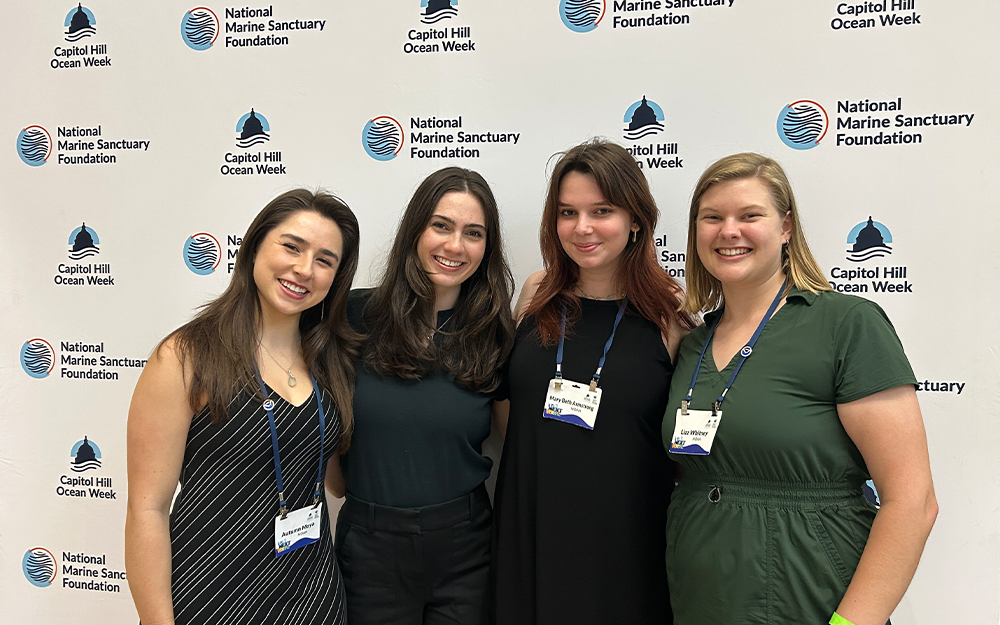 While Mary Beth "MB" Armstrong’s career as a program manager for the Arctic Research Program may not be what she first imagined for herself in high school, she wouldn’t have it any other way.
"I never really envisioned myself being a program manager,” she said, "but I love this job because I get to work with scientists everyday while helping connect research, collaboration and science communication.”
Despite growing up in landlocked Iowa, a career in marine science was never out of the question for Armstrong. "I had an amazing marine biology program when I was in high school,” she said, "so I knew I wanted to go into marine science when I was applying to undergrad.”
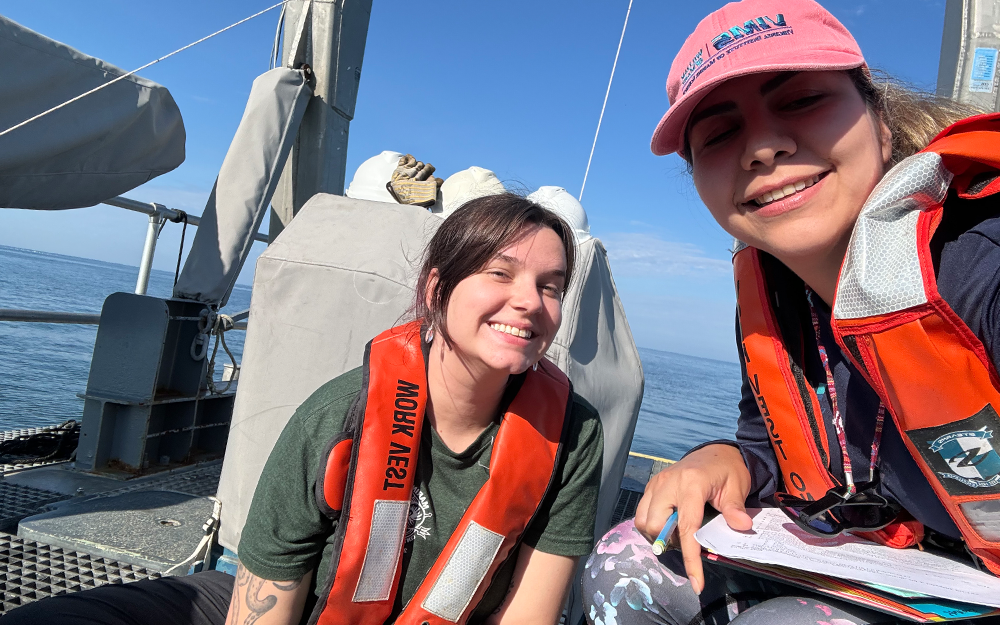 A passion for marine science, combined with competitive debate skills, led Armstrong to attend George Mason University.
Throughout her time at GMU, Armstrong continued to foster her love for debate by participating in competitions and coaching local high school debate teams. By balancing her environmental studies and passion for competitive debate, Armstrong quickly realized that a policy-focused career in marine science was the perfect path for her, and that William & Mary’s VIMS & Batten School was the perfect destination.
"The M.A program seemed to give me that option of being involved at a marine science institution taking the same courses that M.S and Ph.D. students take, but then being able to apply those in a way that was more policy focused,” she explained. Armstrong arrived at VIMS & the Batten School of Coastal & Marine Sciences as part of the second cohort of the M.A program.
"I felt at home.”
From the moment she arrived on the Gloucester Point campus, Armstrong instantly formed a connection with her peers. "I immediately found community there,” she said. "I felt at home."
During her time in graduate school, Armstrong had no problem staying busy. In her second year, she joined the Graduate Student Association and served as treasurer, helping guide financial decisions while being part of crucial discussions that helped shape the future of the M.A program. She also participated in the Roanoke Roundup and, though she wouldn’t describe herself as a "fish person,” the time spent with peers made the experience one to remember.
What Armstrong remains most proud of from her time at VIMS & the Batten School is her research capstone, which focused on Chesapeake Bay water quality and finding policy-based solutions to combat nutrient runoff.
"I came in knowing that I wanted to identify a problem within the water quality of the Chesapeake Bay,” she said. "Dr. Nicole Millette, my advisor, said that she picked me out of the application bucket because I had written specifically about wanting to do water quality work in the Chesapeake Bay for my research, and because it aligned with the research she was doing as a phytoplankton ecologist.”
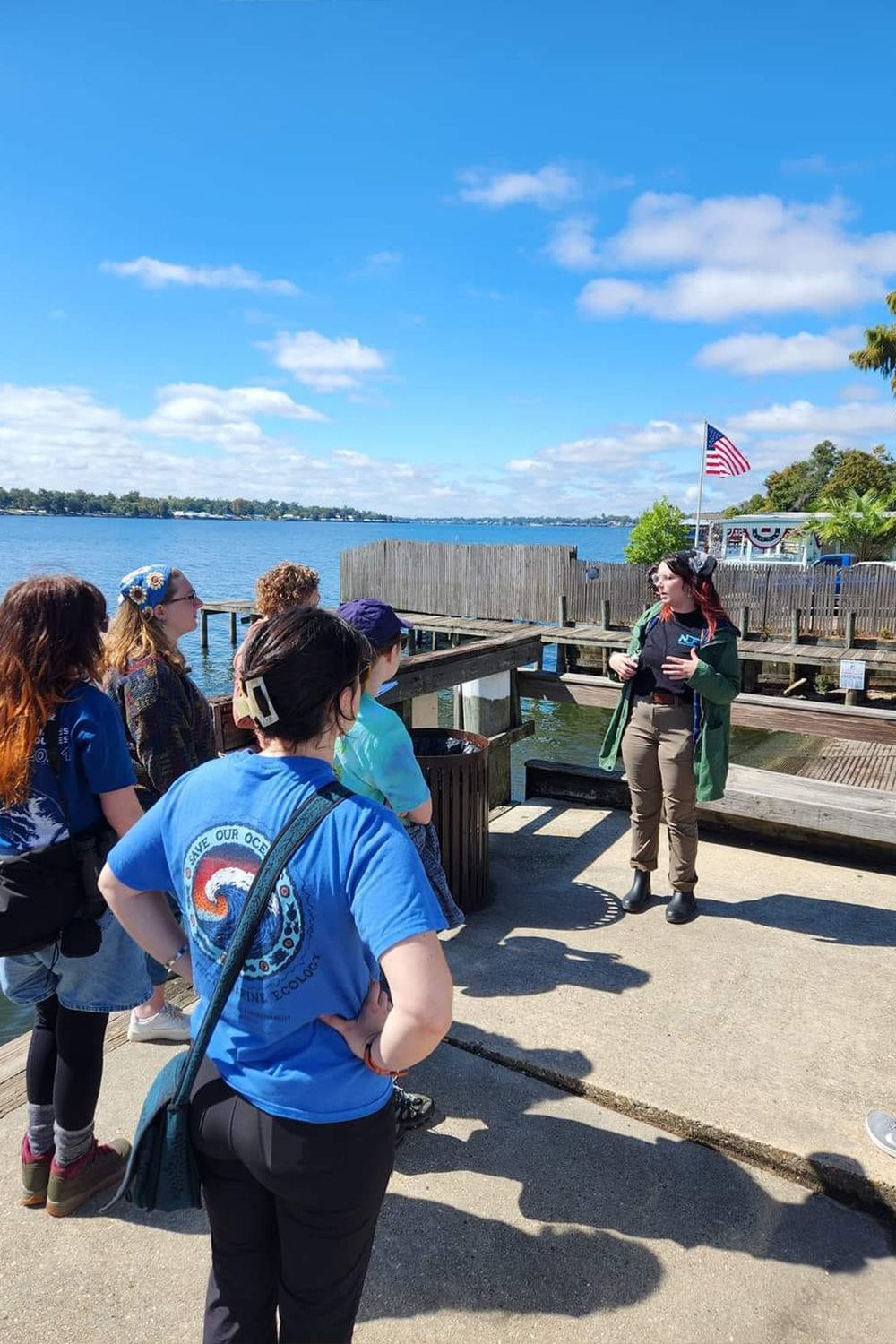
For her capstone, Armstrong studied how tidal flooding impacted nutrient runoff in the Lafayette River and Chesapeake Bay and what potential policies could be drafted to combat the issue. She collaborated with the Virginia Department of Environmental Quality (DEQ) to develop solutions. Some of the suggested solutions involved retrofitting green infrastructure applications to account for tidal flooding, as well as updating water quality models to better account for nutrient input caused by tidal flooding. Her studies culminated in a research paper developed in collaboration with DEQ and her VIMS & Batten School advisors.
Armstrong said that the unpredictable nature of conducting research and learning how to improve solutions prepared her well for a career in science. "Having to learn to pivot and think about other ways you can achieve your goals taught me that I am much more adaptable than I thought I was,” she said. "And that really prepared me for my current role.”
From VIMS & the Batten School to NOAA
After graduating from VIMS & the Batten School, Armstrong was awarded a National Oceanic and Atmospheric Administration (NOAA) Knauss Fellowship with Virginia Sea Grant. Through the program, fellows work alongside scientists at NOAA to learn how policies that impact oceans, coasts and the Great Lakes are drafted into legislation. For Armstrong, her fellowship placed her with the Arctic Research Program (ARP) in the office of the Global Ocean Monitoring and Observing (GOMO) Program.
Six months into the fellowship, Armstrong found herself faced with an unexpected challenge. Due to sudden staffing changes in ARP, she had to assume the role of coordinating editor of the Arctic Report Card, the annual report released by NOAA that details the health of the Arctic. While some may have panicked at the unforeseen change, Armstrong did not fold under pressure and instead exercised the adaptability she learned at VIMS & the Batten School to successfully manage the project.
"I learned in grad school how to adapt on the fly,” Armstrong said. "I taught myself Python to create some of the graphics for the Arctic Report Card. I just had to remember that I can figure it out, that I can do it, and a lot of that I picked up at VIMS & the Batten School.”
If the Knauss fellowship was a test for Armstrong, it was one she passed with flying colors, which prepared her well for a full-time position with ARP. Today, as a program manager, she maintains her role as a coordinating editor for the Arctic Report Card while also managing a portfolio of Arctic research, working closely with principal investigators to support long-term observation efforts. She also prioritizes program investments and coordinates collaborations across federal agencies.
"It's collaboration on what Arctic activities are occurring throughout NOAA and how can we better situate ourselves to work with others,” she said.
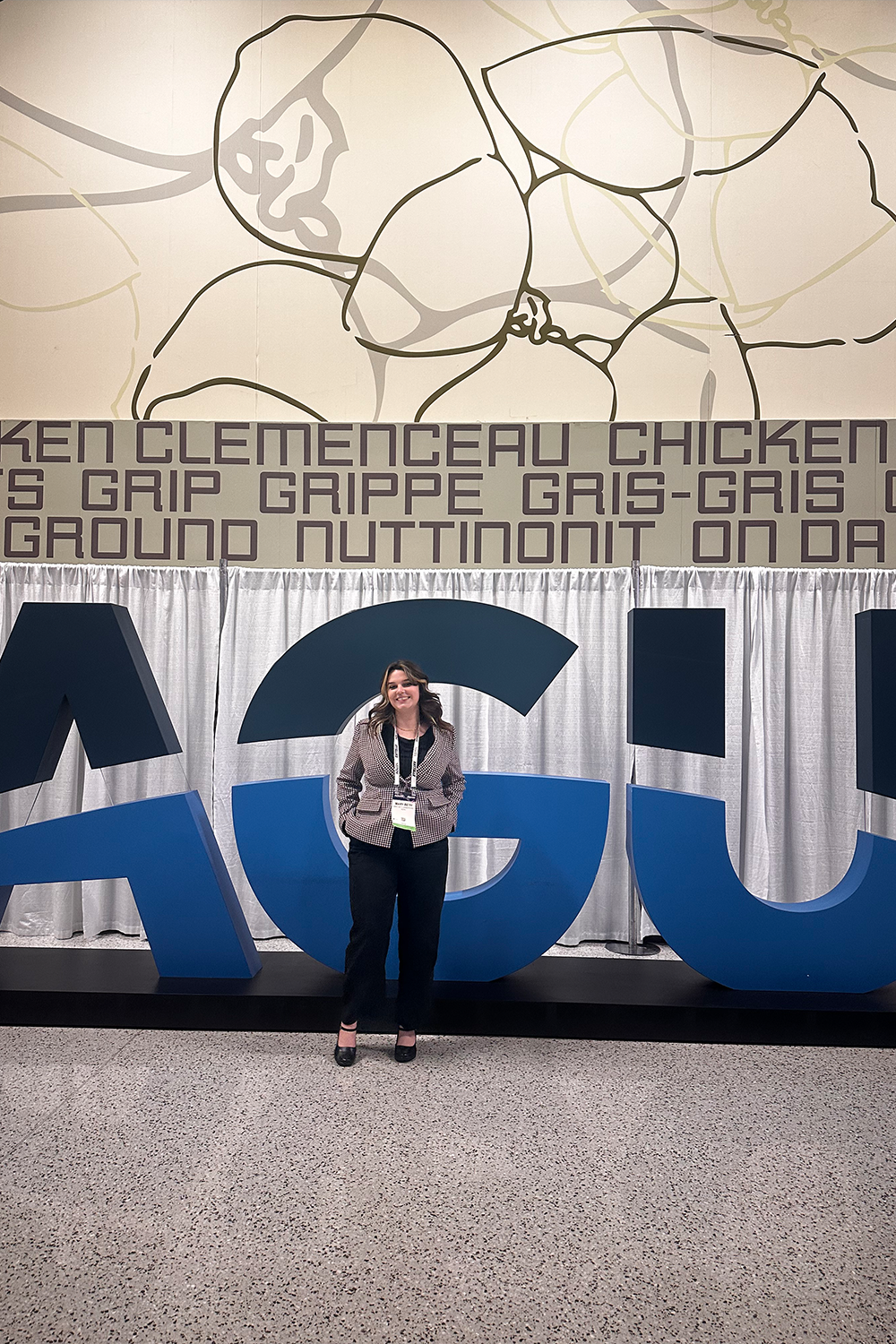 Armstrong has grown to love her role with the ARP. The benefits of directly supporting research that has global implications fulfills Armstrong in a way she couldn’t have previously imagined. "It's rewarding to support the work that advances our understanding of the Arctic and helps ensure our work reaches the people who can use it.”
Through it all, VIMS & the Batten School remain cornerstones of Armstrong's professional development. Armstrong believes that her success as a program manager could not be possible without the groundwork laid during her time in graduate school.
"The culmination of my course work, capstone and graduate assistantship with the Office of Research and Advisory Services created the perfect path for a career in program management,” she said. "VIMS & the Batten School taught me to think across disciplines and prepared me more broadly for a career at the intersection of science, policy and research management.”
For any student considering graduate school, Armstrong encourages them to take every moment to their advantage. She urges students to get involved in as many projects as possible, whether it be through volunteering with local organizations or assisting with someone else’s research.
"My biggest piece of advice is to take all the opportunities that you can,” she said. "Even opportunities that might be a little outside of your wheelhouse. You never know what you might like.”
This alumni profile was published in July, 2026.