More Information:
  • Directory
  • Maps and Directions
  • VIMS AtoZ

rounded corner

Home » Research & Services » Topics » Fisheries & Aquaculture

Fisheries & Aquaculture

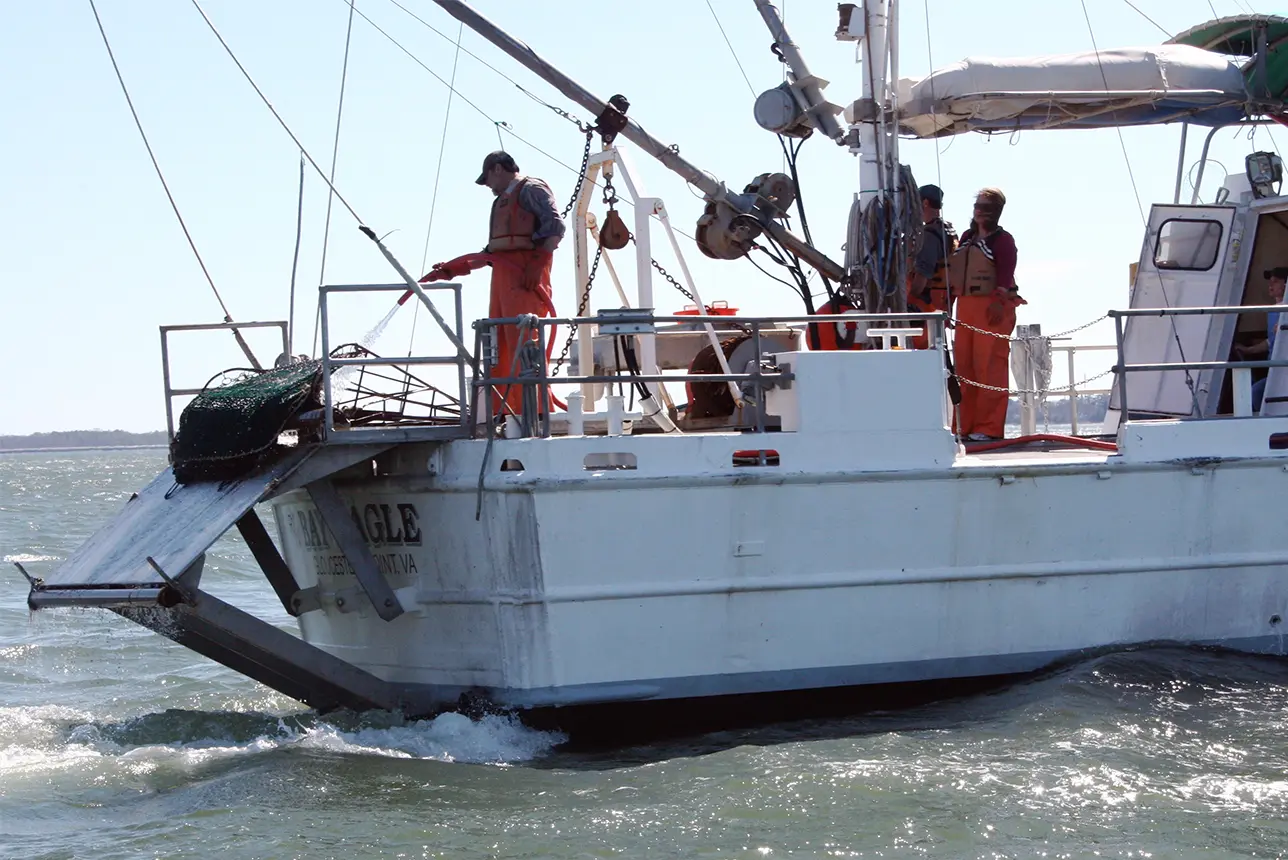
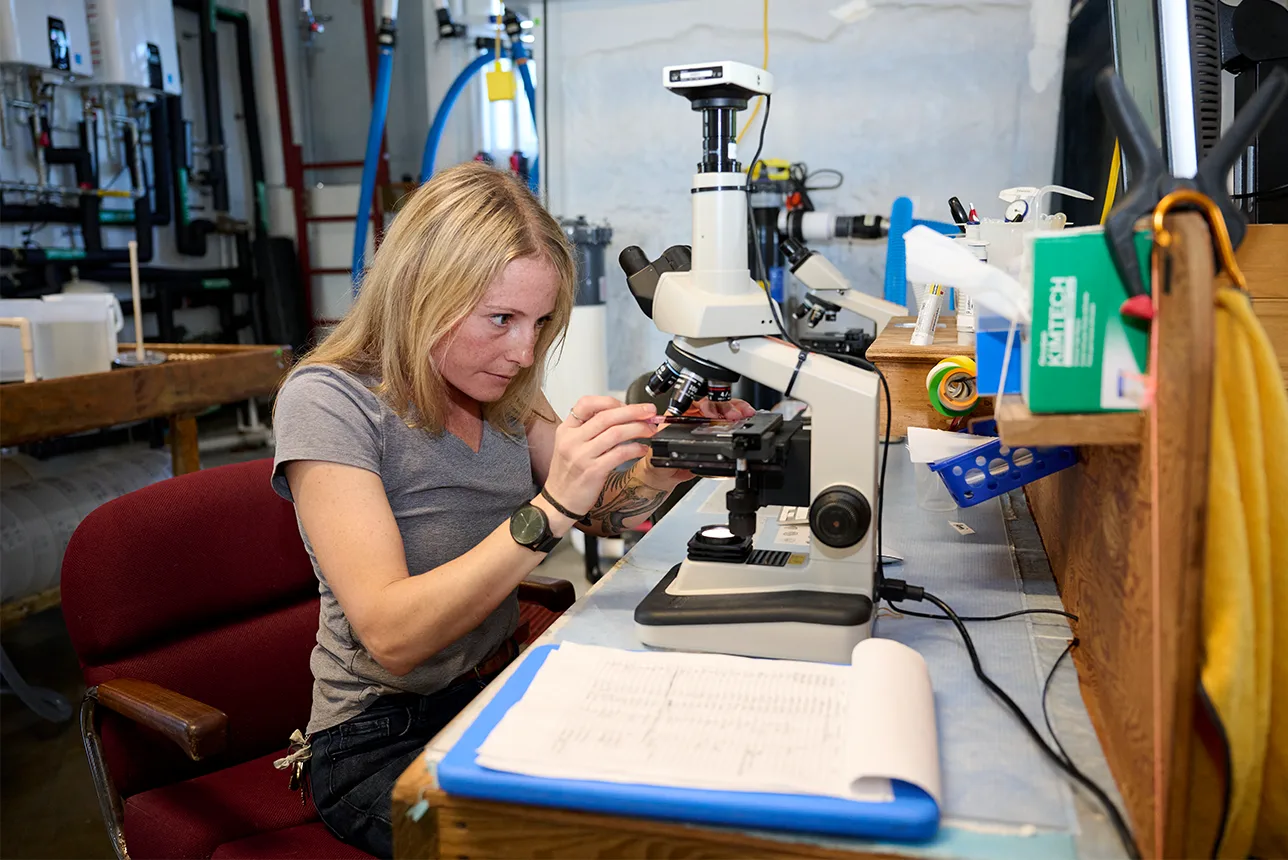
Humanity's growing demand for seafood is met by harvesting of wild stocks and, increasingly, aquaculture of finfish and shellfish. VIMS researchers help illuminate and guide both endeavors—including efforts to monitor, restore, and sustainably manage wild fisheries, and to steer the development of aquaculture towards maximum healthy yields and minimal environmental impact. Visit our oyster and blue crab pages for additional information specific to those organisms.

Top Stories | Crest Articles | Adv Service Reports | Labs & Groups | SRAMSOE | Articles | Dissertations | Links

Top Stories

Study suggests a third of shark and ray species are threatened (October 2010)
VIMS emeritus professor Jack Musick oversees a global study suggesting that 33% of shark, skate, and ray species are threatened with extinction.

VA waters produce average crop of young striped bass in 2010 (October 2010)
VIMS' annual survey suggests that an average number of young-of-year striped bass will enter the adult population in 2011. That's good news for anglers and the Bay ecosystem.

VIMS and VMRC partner to collect and study summer flounder (August 2010)
Agencies ask anglers to donate fish for scientific study of recreational harvest and life history of male and female summer flounder.

Report shows $11M direct loss to VA oyster industry from Gulf spill (August 2010)
Report estimates total, "water-to-table" losses of $30.1 million as imports of Gulf oysters dry up

Va. Aquaculture Survey shows growth in oysters, shift in clams (July 2010)
Sales of Virginian-grown shellfish show mixed response to the slowing economy. Plantings and projections of Virginia's oysters and clams were also mixed in 2009.

VIMS scallop surveys help set catch limits (July 2010)
VIMS researchers board industry vessels to conduct scallop surveys in two areas typically closed to fishing but scheduled to open for a limited time in spring 2011.

Senator Warner visits VIMS to discuss oyster restoration (July 2010)
Visit coincides with a growing recognition that increased disease resistance, a local surge in oyster aquaculture, and recently announced federal restoration goals promise new opportunities for restoring Bay oysters.

VIMS researchers monitor status of American eel (April 2010)
Tracking the spring migration of juvenile eels helps with management and protection of this troubled species.

Blue crab population booms (April 2010)
VIMS winter dredge survey shows a 60% increase in Chesapeake Bay's blue crabs since last year, reaching the highest level measured since 1997.

Ghost pot program a "win-win" (March 2010)
Out-of-work commercial watermen pulled up more than 9,000 derelict "ghost pots" from Chesapeake Bay and its tributaries during the second year of Virginia's landmark Marine Debris Removal Program.

Menhaden appear to have little net impact on Bay water quality (March 2010)
A recently published VIMS study suggests that filter feeding by Atlantic menhaden has little net effect on overall water quality in Chesapeake Bay.

VIMS research lays foundation for sturgeon restoration (February 2010)
Decades of work by VIMS researchers has laid the foundation for construction of a spawning reef for Atlantic sturgeon in the James River.

VIMS a partner in Coastal America Award (January 2010)
The Lynnhaven River Oyster Restoration Team is honored for innovative efforts to restore the river's oyster population.

Proposals sought for Virginia Fishery Resource Grants (November 2009)
The Virginia Sea Grant Marine Extension Program is now accepting applications for funding as part of the Virginia Fishery Resource Grant Program.

VA waters produce average crop of young striped bass in 2009 (November 2009)
VIMS' annual survey suggests that an average number of young-of-the-year striped bass will enter the adult population in 2010. That's good news for the anglers who pursue this popular game fish.

Vogelbein investigates Bermudian fish kill (October 2009)
VIMS professor Wolfgang Vogelbein provides expertise to the Bermudian government concerning a recent reef-fish die-off.

VIMS researchers use contaminants to reveal origin of Atlantic tuna (October 2009)
Professor Rebecca Dickhut and colleagues use chemical contaminants to reveal the birthplace of bluefin tuna in the Atlantic Ocean.

VIMS shark researchers featured on CNN (October 2009)
CNN reports on the VIMS Shark Survey, the longest-running study of shark populations in the world.

VIMS trains interns in oyster aquaculture (June 2009)
VIMS begins a new program to train the skilled workers needed to advance Chesapeake Bay’s rapidly growing oyster-farming industry.

‘Ghost Pot’ program benefits Bay and watermen (May 11, 2009)
Virginia’s one-of-a-kind program to remove derelict crab traps from Chesapeake Bay yields data that will improve next year’s recovery effort and further reduce inadvertent trapping of Bay organisms.

Winter survey supports 2008 blue crab management actions (April 2009)
Winter dredge survey shows that bi-State management actions are having the desired effect.

Researchers show that three fish families are one (January 2009)
An international team of scientists including VIMS Asst. Professor Tracey Sutton resolves a long-standing biological puzzle by showing that a group of deep-sea fishes previously classified into 3 separate families are actually the larvae, males, and females of a single family—the whalefishes.

Graves named to leading fisheries advisory panel (November 2008)
VIMS Professor John Graves has been named to the nation’s top fishery advisory body.

Study shows bacterial disease can kill striped bass (October 2008)
Study is first to show that Chesapeake Bay stripers are succumbing to mycobacteriosis.

Dickhut puts pollutants to good use (October 2007)
VIMS Professor Rebecca Dichkhut is using persistent organic pollutants to help measure the degree of mixing between Mediterranean and western Atlantic stocks of bluefin tuna.

Pair contribute to Caribbean fisheries management (June 2007)
Prof. John Hoenig participates in the 3rd annual Stock Assessment Meeting of the Caribbean Regional Fisheries Mechanism.

Jamestown studies (May 2007)
This National Geographic video features Drs. Chris Hager and Julie Harding as they discuss their use of sturgeon scutes and oyster shells to shed light on environmental conditions during the early years of the Jamestown Settlement. 

Graves wins award (February 2007)
The International Game Fish Association honors Prof. John Graves with its individual Conservation Award for his groundbreaking research and management efforts in regards to billfish and tuna.

Ghost pots (Sep 2006)
Dr. Kirk Havens leads a project to identify, map, and assess derelict crab pots and their impacts on the health and economy of Chesapeake Bay. 

Tagged flounder (Jul 2006)
VIMS researchers release specially tagged summer flounder to determine movement patterns associated with underwater structure.

Lobsters avoid sick neighbors (May 2006)
Nature article on spiny lobsters by researchers at ODU and VIMS marks the first record of healthy animals avoiding diseased members of their own species in the wild.

VIMS updates Fishing Report (Dec 2005)
VIMS researchers update their seminal 1997 study of how commercial and recreational fishing contribute to Virginia's economy.

Dual-sex crab (Jun 2005)
VIMS researhers study a half-male, half-female blue crab whose genetic condition could help researchers better understand sexual development and breeding behavior in this species. 

Researchers investigate fish kill (May 2005)
VIMS researchers found no conclusive evidence of the cause of a fish-kill event in Peninsula waterways, despite the presence of  Pfiesteria shumwayae

Partnership aids sturgeon restoration (May 2005)
Researchers with Virginia Sea Grant and VIMS collaborate with local fishermen to restore Chesapeake Bay's sturgeon population.

VIMS helps restore Wicomico oysters (March 2005)
A disease-tolerant oyster strain developed at VIMS underpins the latest and largest effort to restore native oysters to Chesapeake Bay.

Swordfish work in the news (Jan 2005)
Dr. Rich Brill and colleagues discover that the swordfish's ability to keep its eyes  warmer than surrounding waters allows the fish to better track its prey.

Crest Articles

VIMS to assess menhaden value
A 3-year study seeks input from stakeholders to  assess the social and economic value of menhaden in Chesapeake Bay.

Pair aid Caribbean fisheries management
VIMS Professor John Hoenig and student Lynn Waterhouse take part in the 3rd annual Stock Assessment Meeting of the Caribbean Regional Fisheries Mechanism.

New faculty member studies old fishes
Dr. Eric Hilton is an internationally recognized expert in sturgeon biology and fish evolution.

Fabrizio elected AFS President
VIMS Assoc. Professor Mary Fabrizio has been elected President of the 9,000-member American Fisheries Society (AFS), the oldest and largest association of fisheries professionals in the world.

Advisory Service Reports

Oysters
Non-natives
Native Oysters and Restoration
Blue Crabs
  • Chesapeake Bay Stock Assessment Committee Blue Crab Advisory Report
  • Shellfish Diseases
    VIMS Juvenile Fish Survey
    • Estimating Relative Juvenile Abundance of Ecologically Important Finfish and Invertebrates in the Virginia Portion of Chesapeake Bay, Annual Report
    • 2007 | 2006 | 2005 | 2004 | 2003 | 2002

    Labs, Centers, and Groups

    Special Reports in Applied Marine Science and Ocean Engineering (SRAMSOE)

    1. Van Engel WA. 1999. Laws, Regulations, and Environmental Factors and Their Potential Effects on the Stocks and Fisheries for the Blue Crab, Callinectes sapidus, in the Chesapeake Bay Region, 1880-1940. Report 347. 89 pp.
    2. Lipcius RN, and MM Montane. 1999. Interannual Decline, Compensatory Exploitation, and Conservation of the Chesapeake Bay Blue Crab Population in Winter. Report 358. pp.
    3. Kirkley JE. 1997. Virginia's Commercial Fishing Industry : Its Economic Performance and Contributions. Report 337. 77 pp.
    4. Hata DN. 1997. Comparisons of Gears and Vessels Used in the Virginia Institute of Marine Science Juvenile Finfish Trawl Survey. Report 343. 244 pp.
    5. O'Reilly RL, HM Austin, and Virginia Marine Resources Commission. 1996. Status of Stock Assessment Knowledge Used to Manage Important Virginia Finfish Species : Including Key Assessment Terms, Species Bibliographies. Report 332. 65 pp.
    6. Barber BJ, and R Mann. 1991. Estimation of Standing Stock of Oysters in the James River, Virginia, Using Commercial Fishing Records. Report 310. pp.
    7. Bochenek EA, NJ Chartier, and J Lucy. 1989. Virginia's Recreational Marlin and Tuna Fishery, 1983-1988 : A Report to the Fishermen. Report 298. 25 pp.
    8. Hargis WJ, and DS Haven. 1988. The Imperilled Oyster Industry of Virginia : A Critical Analysis with Recommendations for Restoration. Report 290. 130 pp.
    9. Kvaternik AC, WD DuPaul, and TJ Murray. 1983. Price Flexibility Analysis of Virginia Hard Clams : Economic Considerations for Management of the Fishery. Report 266. 53 pp.
    10. Atran SM, JG Loesch, WH Kriete, and B Rizzo. 1983. Feasibility Study of Fish Passage Facilities in the James River, Richmond, Virginia : Job Completion Report for Virginia Dingell-Johnson Project F-30-P, Study V, Job 5. Report 269. pp.
    11. Austin HM, BL Norcross, and MI Ingham. 1982. An Annotated Bibliography of Climate and Fisheries Interactions. Report 263. pp.
    12. Murray TJ, and WD DuPaul. 1981. Feasibility of Crab Meal Processing in the Chesapeake Bay Region. Report 248. pp.
    13. Marshall AR, and JA Lucy. 1981. Virginia's Charter and Head Boat Fishery : Analysis of Catch and Socioeconomic Impacts. Report 253. pp.
    14. Johnson HB, JG Loesch, WH Kriete, JG Travelstead, EJ Foell, and MA Hennigar. 1981. Biology and Management of Mid-Atlantic Anadromous Fishes under Extended Jurisdiction. Report 236. 191, xi, 201 pp.
    15. Zaborski J, and DS Haven. 1980. Oyster Mortalities in the Upper Rappahannock River and in the Virginia Tributaries of the Lower Potomac : Their Association with High River Discharge and Low Salinity. Report 241. pp.
    16. Zaborski J. 1980. Location of Foreign Fishing Vessels Harvesting Squid in the Mid-Atlantic Region of the United States, 1970-1976. Report 235. pp.
    17. Fritz LW. 1980. An Investigation of Sea Scallops (Placopecten magellanicus) of the Mid-Atlantic from Commercial Samples in 1979. Report 237. pp.
    18. Colvocoresses JA, and JA Musick. 1980. A Preliminary Evaluation of the Potential for a Shark Fishery in Virginia. Report 234. pp.
    19. Zaborski J. 1979. A Description of the Commercial Marine Fisheries of Virginia. Report 233. pp.
    20. Merriner JV, and JW Smith. 1979. A Report to the Oyster Industry of Virginia on the Biology and Management of the Cownose Ray (Rhinoptera bonasus, Mitchill) in Lower Chesapeake Bay. Report 216. pp.
    21. Merriner JV, and JW Smith. 1979. Gear Feasibility Study for the Cownose Ray, Rhinoptera bonasus. Report 227. 27 pp.
    22. Hedgepeth MY, LL Stehlik, and CC Sharman. 1979. Distribution and Depuration of Kepone in American Eels, Anguilla rostrata, from the James River, Virginia. Report 230. 26, v, 39 pp.
    23. DuPaul WD, and SH Baker. 1979. The Economic Impact of the Sea Scallop Placopecten magellanicus Fishery in Virginia. Report 222. pp.
    24. DuPaul WD, and SH Baker. 1979. The Economic Impact and Status of the Offshore Fishing Industry in Virginia. Report 225. pp.
    25. Haven DS, WJ Hargis, and PC Kendall. 1978. The Oyster Industry of Virginia : Its Status, Problems and Promise. Report 168. 149 pp.
    26. Loesch JG, WH Kriete, HB Johnson, JG Travelstead, EJ Foell, and MA Hennigar. 1977. Biology and Management of Mid-Atlantic Anadromous Fishes under Extended Jurisdiction : Annual Report, Anadromous Fish Project. Report 236. pp.
    27. Davis J, NB Theberge, and MN Strand. 1977. Alternative Management Schemes for the Surf Clam Fishery. Report 103. pp.
    28. Davis J. 1976. Plans for Management of the Fisheries of the Tidal Potomac River. Report 117. pp.
    29. Virginia Division of State Planning and Community Affairs, United States Economic Development Administration, and Spindletop Research, Inc.,. 1975. Multi-Purpose Fact Finding and Pre-Planning Study, Eastern Shore of Virginia. Report 20. 473 pp.
    30. Davis J, JM Gates, and NB Theberge. 1975. Proposal for Research on Alternative Management Measures for the Surf Clam Fisheries : Final. Report 103. pp.
    31. Burrell VG, M Castagna, and RK Dias. 1972. A Study of the Commercial and Recreational Fisheries of the Eastern Shore of Virginia, Accomack and Northampton Counties : History Review and Recommendations for Improvements. Report 20. pp.
    32. Andrews JD. 1955. Reports on Freshwater Kill of Oysters in Rappahannock River Caused by Hurricanes Connie and Diana. Report 1. 78 pp.

    Journal Articles

    1. Moss, J. A., and coauthors. 2007. Pathogens in Craassostrea ariakensis and other Asian oyster species: implications for non-native oyster introduction to Chesapeake Bay. Diseases of Aquatic Organisms 77(3):207-223.
    2. Mann, R., and E. N. Powell. 2007. Why oyster restoration goals in the Chesapeake Bay are not and probably cannot be achieved. Journal of Shellfish Research:905–917.
    3. Calvo, L. M. R., and coauthors. 2007. Influence of host genetic origin and geographic location on QPX disease in Northern quahogs (=hard clams), Mercenaria mercenaria. Journal of Shellfish Research 26(1):109-119.
    4. Moss, J. A., E. M. Burreson, and K. S. Reece. 2006. Advanced Perkinsus marinus infections in Crassostrea ariakensis maintained under laboratory conditions. Journal of Shellfish Research 25(1):65-72.
    5. Carlsson, J., C. L. Morrison, and K. S. Reece. 2006. Wild and aquaculture populations of the eastern oyster compared using microsatellites. Journal of Heredity 97(6):595-598.
    6. Azevedo, C., and coauthors. 2006. Ultrastructural and molecular characterization of Haplosporidium montforti n. sp., parasite of the European abalone Haliotis tuberculata. Journal of Invertebrate Pathology 92(1):23-32.
    7. Kaattari, S., E. Bromage, and I. Kaattari. 2005. Analysis of long-lived plasma cell production and regulation: Implications for vaccine design for aquaculture. Aquaculture 246(1-4):1-9.
    8. Encomio, V. G., S. M. Stickler, S. K. Allen, and F. L. Chu. 2005. Performance of "natural dermo-resistant" oyster stocks-survival, disease, growth, condition and energy reserves. Journal of Shellfish Research 24(1):143-155.
    9. Liu, Z. J., and J. F. Cordes. 2004. DNA marker technologies and their applications in aquaculture genetics. Aquaculture 242(1-4):735-736.
    10. Elston, R. A., C. F. Dungan, T. R. Meyers, and K. S. Reece. 2004. Perkiasus sp infection risk for manila clams, Venerupis philippinarum (A. Adams and Reeve, 1850) on the Pacific coast of North and Central America. Journal of Shellfish Research 23(1):101-105.
    11. Carnegie, R. B., and N. Cochennec-Laureau. 2004. Microcell parasites of oysters: Recent insights and future trends. Aquatic Living Resources 17(4):519-528.
    12. Burreson, E. M., N. A. Stokes, R. B. Carnegie, and M. J. Bishop. 2004. Bonamia sp (Haplosporidia) found in nonnative oysters Crassostrea ariakensis in Bogue Sound, North Carolina. Journal of Aquatic Animal Health 16(1):1-9.
    13. Frankic, A., and C. Hershner. 2003. Sustainable aquaculture: developing the promise of aquaculture. Aquaculture International 11(6):517-530.
    14. Elston, R. A., C. F. Dungan, T. R. Meyers, and K. S. Reece. 2003. Perkinsus sp infection risk for manila clams, Venerupis philippinarum (A. Adams and Reeve, 1850) on the Pacific coast of North and Central America. Journal of Shellfish Research 22(3):661-665.
    15. Cotton, C. F., R. L. Walker, and T. C. Recicar. 2003. Effects of temperature and salinity on growth of juvenile black sea bass, with implications for aquaculture. North American Journal of Aquaculture 65(4):330-338.
    16. Carnegie, R. B., B. J. Barber, and D. L. Distel. 2003. Detection of the oyster parasite Bonamia ostreae by fluorescent in situ hybridization. Diseases of Aquatic Organisms 55(3):247-252.
    17. Kator, H., and M. Rhodes. 2001. Elimination of fecal coliforms and F-specific RNA coliphage from oysters (Crassostrea virginica) relaid in floating containers. Journal of Food Protection 64(6):796-801.
    18. Calvo, G. W., M. W. Luckenbach, S. K. Allen, and E. M. Burreson. 2001. A comparative field study of Crassostrea ariakensis (Fujita 1913) and Crassostrea virginica (Gmelin 1791) in relation to salinity in Virginia. Journal of Shellfish Research 20(1):221-229.
    19. Burreson, E. M., N. A. Stokes, and C. S. Friedman. 2000. Increased virulence in an introduced pathogen: Haplosporidium nelsoni (MSX) in the eastern oyster Crassostrea virginica. Journal of Aquatic Animal Health 12(1):1-8.
    20. Smolowitz, R., D. Leavitt, and F. Perkins. 1998. Observations of a protistan disease similar to QPX in Mercenaria mercenaria (hard clams) from the coast of Massachusetts. Journal of Invertebrate Pathology 71(1):9-25.
    21. Shields, J. D., M. A. Buchal, and C. S. Friedman. 1998. Microencapsulation as a potential control technique against sabellid worms in abalone culture. Journal of Shellfish Research 17(1):79-83.
    22. Calvo, L. M. R., J. G. Walker, and E. M. Burreson. 1998. Prevalence and distribution of QPX, Quahog Parasite Unknown, in hard clams Mercenaria mercenaria in Virginia, USA. Diseases of Aquatic Organisms 33(3):209-219.
    23. Blake, S. G., N. J. Blake, M. J. Oesterling, and J. E. Graves. 1997. Genetic divergence and loss of diversity in two cultured populations of the bay scallop, Argopecten irradians (Lamarck, 1819). Journal of Shellfish Research 16(1):55-58.
    24. Burreson, E. M., R. S. Alvarez, V. V. Martinez, and L. A. Macedo. 1994. Perkinsus marinus (Apicomplexa) as a Potential Source of Oyster Crassostrea virginica Mortality in Coastal Lagoons of Tabasco, Mexico. Diseases of Aquatic Organisms 20(1):77-82.
    25. Shpigel, M., and R. A. Blaylock. 1991. The Pacific Oyster, Crassostrea gigas, as a biological filter for a marine fish aquaculture pond. Aquaculture 92(2-3):187-197.

    tTheses & Dissertations

    1. Moss, J. A. 2007. Characterization of exotic pathogens associated with the suminoe oyster, Crassostrea ariakensis. Ph.D. Dissertation. The College of William and Mary, Gloucester Pt. VA.
    2. Li, C. 2007. The infection dynamics of PaV1 in the Caribbean spiny lobster Panulirus argus. Ph.D. Dissertation. The College of William and Mary, Gloucester Pt. VA.
    3. Walter, J. F., III. 2006. Incorporating space into stock assessments of marine species. Ph.D. Dissertation. The College of William and Mary, Gloucester Pt. VA.
    4. Ihde, T. F. 2006. Development of generalized index-removal models, with particular attention to catchability issues. Ph.D. Dissertation. The College of William and Mary, Gloucester Pt. VA.
    5. Hoffman, J. C. 2006. Natal-river to estuary migration of American shad: Estimating the value of essential rearing habitat. Ph.D. Dissertation. The College of William and Mary, Gloucester Pt. VA.
    6. Ha, D. S. 2006. Ecology and conservation of Virginia shark species: Analysis of thirty years of Virginia long-line shark census data, 1974--2004. Ph.D. Dissertation. The College of William and Mary, Gloucester Pt. VA.
    7. Gedamke, T. 2006. Developing a stock assessment for the barndoor skate (Dipturus laevis) in the Northeast United States. Ph.D. Dissertation. The College of William and Mary, Gloucester Pt. VA.
    8. Carpenter, L. W. 2006. Physiological consequences of high water flow on the coral Montastrea annularis (Ellis and Solander, 1786). Ph.D. Dissertation. The College of William and Mary, Gloucester Pt. VA.
    9. Kerstetter, D. W. 2005. Description and evaluation of the United States coastal pelagic longline fishery interactions with target and non-target species in the western North Atlantic. Ph.D. Dissertation. The College of William and Mary, Gloucester Pt. VA.
    10. Conrath, C. L. 2005. Nursery delineation, movement patterns, and migration of the sandbar shark, Carcharhinus plumbeus, in the eastern shore of Virginia coastal bays and lagoons. Ph.D. Dissertation. The College of William and Mary, Gloucester Pt. VA.
    11. Stickler, S. M. 2004. Natural dermo resistance and related defense mechanisms in eastern oysters, Crassostrea virginica, with implications for restoration. Ph.D. Dissertation. The College of William and Mary, Gloucester Pt. VA.
    12. Nestlerode, J. A. 2004. Evaluating restored oyster reefs in Chesapeake Bay: How habitat structure influences ecological function. Ph.D. Dissertation. The College of William and Mary, Gloucester Pt. VA.
    13. Hager, C. H. 2004. Ichthyofaunal and dietary analysis of sympatric piscivores in a Chesapeake Bay littoral zone: Including bioenergetic models of growth and diel temperature sanctuary use. Ph.D. Dissertation. The College of William and Mary, Gloucester Pt. VA.
    14. Gauthier, D. T. 2004. Pathobiology of mycobacteria in striped bass (Morone saxatilis). Ph.D. Dissertation. The College of William and Mary, Gloucester Pt. VA.
    15. Encomio, V. G. 2004. A study of the eastern oyster, Crassostrea virginica: (1) Dermo tolerance, survival, growth, condition and Hsp70 expression in different geographic stocks; (2) Heat tolerance and effects of sublethal heat shock on survival and Hsp70 expression of infected and uninfected oysters. Ph.D. Dissertation. The College of William and Mary, Gloucester Pt. VA.
    16. Gascoigne, J. C. 2003. A theoretical and experimental study of Allee effects. Ph.D. Dissertation. The College of William and Mary, Gloucester Pt. VA.
    17. Burge, E. J. 2003. A Mycobacterium-inducible Nramp in striped bass Morone saxatilis. Ph.D. Dissertation. The College of William and Mary, Gloucester Pt. VA.

    Suggested Links